

History and Archaeology
The Missing Answer: What Happened to Alexander Rubovitz?
Kidnapped in 1947, his trail leads to suppressed evidence and a man who carried the secret to his grave. The question remains open, and the pain has never faded.
- B'Kehila
- | Updated
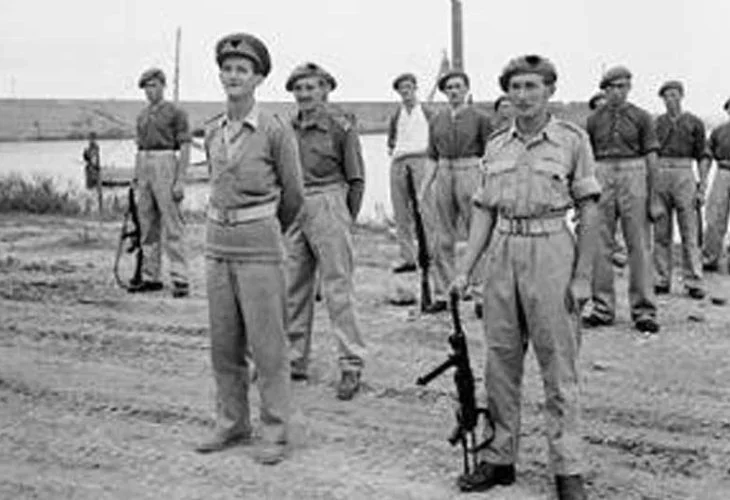
In 1947, Alexander Rubovitz, a 16-and-a-half-year-old boy, left his home one afternoon and never returned. His parents searched tirelessly. They followed every lead, pursued every rumor, and exhausted every possible path in an effort to discover what had happened to their son. All their efforts failed. The one man who could have revealed the truth refused to speak and carried his secret to the grave.
Over the years, the family gathered documents, testimonies, and evidence that nearly complete the tragic chain of events leading to Alexander’s brutal murder. Only one question remains unanswered to this day: Where is the boy?
Rubovitz, a member of a religious family living on David Yellin Street in Jerusalem, joined the Lehi underground organzition while still very young.A Teenager in the Underground
“The adults were involved in the actual fighting,” recalls his childhood friend Ezra Yechin. “Boys aged fifteen and sixteen would paste posters, carry messages, and conduct surveillance of the British.”
The Abduction
Alexander was last seen on the 17th of Iyar, 1947. At 6:30 PM, he left home to paste Lehi flyers in the Rehavia Garden area. He did not notice the car parked nearby. When several men leapt out, it was already too late. After a brief struggle, he was forced into the vehicle, which sped away.
Alexander’s fate might have remained forever unknown if not for a remarkable chain of coincidences. Two children who witnessed the kidnapping reported that during the struggle, Alexander managed to knock off one of his attacker’s hats. The hat eventually ended up near a Lag BaOmer bonfire, where a yeshiva student named Kaminsky noticed it.
At the request of Rabbi Charlef, the respected rabbi of Shaarei Chesed, the hat was returned to the family. Inside the folds of the gray felt, a name was written in Latin letters: Farran.
Roy Farran was no ordinary soldier. He was one of the most decorated officers in the British Army, a celebrated war hero whose memoir sold hundreds of thousands of copies. Even his admirers admitted he was volatile and reckless, but they praised his fierce loyalty to Britain.
In 1946, Farran was sent to Mandatory Palestine to help combat what the British called “Jewish terrorism.” The British authorities went to extraordinary lengths to conceal the truth. A notebook believed to contain Farran’s confession was destroyed on orders from above. When Farran was brought to trial, a special panel of judges was flown in from Britain, ensuring the proceedings ended in acquittal.
Evidence That Surfaced Decades Later
“Only after decades of painstaking research did we manage to assemble the full picture,” says Alexander’s nephew, Tzvi Rubovitz. Among the discoveries was a British military logbook from a checkpoint on the road to Jericho. On the night of May 6, a police vehicle passed the checkpoint at 9:20 PM, driven by someone recorded as “Farand.” When the same car passed again shortly before midnight, Alexander was no longer inside.
The Lehi did not forget. A book of Shakespeare was mailed to Farran’s home in Britain, containing fifty grams of dynamite. Tragically, Farran himself was not home. The package was opened by his brother Rex, who was gravely injured and later died.
“It was a bitter failure,” admitted Lehi veteran Yaakov Cherut. “We sought the murderer, not his brother.”
A Secret Carried to the Grave
Farran later emigrated to Canada, where he became a journalist and was eventually elected district attorney in Alberta. Repeated appeals from the Rubovitz family, pleading for him to reveal where Alexander’s body was buried, were met with cold refusal. Farran maintained silence until his death.
Today, a street bearing Alexander Rubovitz’s name overlooks the Judean Desert. Somewhere in that vast wilderness lies the truth of his final resting place.
The boy who left home at sixteen and a half has never returned, and the question still lingers, unanswered: Where is Alexander Rubovitz?

