

Israel News
Gaza Technocratic Chief Announces Rafah Reopening as Israel Says Decision Still Pending
Ali Shaath says Gaza–Egypt crossing will open next week as Israel says no final decision has been made and the issue will go to the cabinet
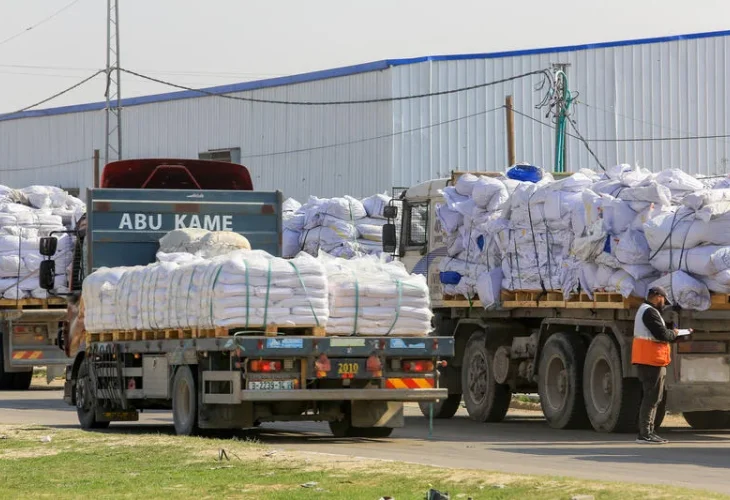 Gaza (Flash90)
The head of Gaza’s newly formed technocratic administration said the Rafah border crossing between Gaza and Egypt is expected to reopen next week for two-way travel, though Israeli officials say the move remains under review and tied to unresolved issues.
Dr. Ali Shaath, who leads the National Committee for the Administration of Gaza, announced the planned reopening during a ceremony on Thursday marking the launch of the U.S.-backed Board of Peace initiative on the sidelines of the World Economic Forum in Davos. “I am pleased to announce the Rafah crossing will open next week in both directions for Palestinians in Gaza,” Shaath said. He described the crossing as “a lifeline and symbol of opportunity,” adding that the step signals Gaza “is no longer closed to the future.”
Rafah is Gaza’s only border crossing not directly controlled by Israel and has long been viewed as critical for the movement of civilians, humanitarian aid, and personnel involved in postwar governance arrangements. Its status has been a central point of contention in discussions over Gaza’s future following the war.
Israeli officials responded quickly, reiterating that Jerusalem has not agreed to reopen the crossing. An Israeli official said Israel’s position remains that Rafah will not open until the return of Master Sgt. Ran Gvili, the last remaining Israeli hostage whose body has not been returned since the war began.
However, subsequent briefings suggested greater ambiguity. A political source indicated that Israel is not committing publicly to a single precondition and that the matter will be discussed by the cabinet early next week. According to the source, a “special effort” is underway to recover Gvili’s remains by fully utilizing available intelligence, and the cabinet is expected to address both the recovery effort and the Rafah crossing in the same discussion.
Further momentum later appeared to come from Nickolay E. Mladenov, the Board of Peace’s Gaza envoy. In a public statement, Mladenov said, “I am pleased that an agreement has been reached regarding the preparation for re-opening of the Rafah crossing.” He added that parallel efforts are underway “with Israel and the National Committee for the Administration of Gaza to expedite the search for the remaining Israeli hostage,” and thanked the United States, Israel, Egypt, and Shaath for their roles. Mladenov said logistics for implementing the agreement are currently being coordinated.
The developments come as Donald Trump formally inaugurated the Board of Peace, which U.S. officials describe as a diplomatic framework intended to advance postwar arrangements. He stressed that Hamas must release the final hostage before any progress could be made, saying, “Hamas must release the last hostage. Only then can we move forward, with Gaza demilitarized.”
Inside Israel, the prospect of reopening Rafah has drawn concern from the Gvili family. Tali Gvili, the mother of Ran Gvili, said, “We were not informed of any intention to open the Rafah crossing, and I very much hope that it does not happen.”
For now, the competing statements point to uncertainty surrounding Rafah’s future. While Palestinian and international figures speak of preparations and coordination, Israeli officials emphasize that no final decision has been made and that the issue will be settled only after cabinet deliberations in the coming days.

