

Relationships
The Great Illusion We All Believe: Finding Joy in the Negative
Why are we sometimes drawn to behaviors that harm us and our relationships? This article explores the inner illusion that creates false pleasure in negativity and shows how recognizing this deception can lead to healthier choices and deeper connection.
- Hannah Dayan
- | Updated
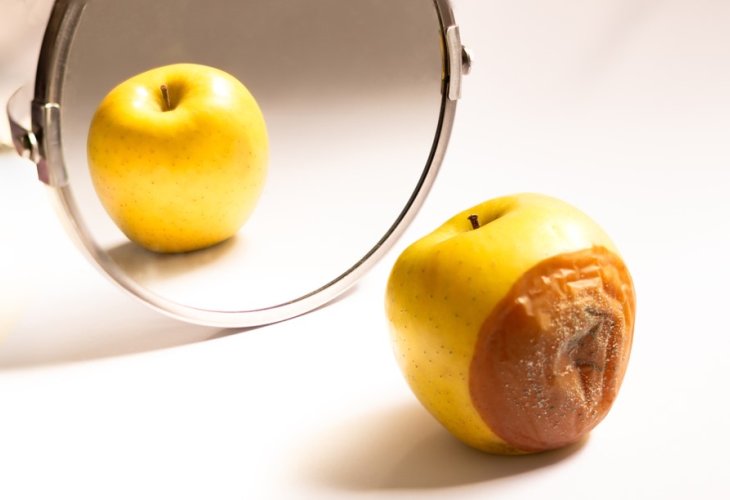 (Photo: shutterstock)
“I’m boiling over. I can’t take it anymore. She’s always angry. I feel like I can’t live with her. We need to start thinking about how to end this nicely…” Shimon said in frustration.
“Nicely? In my opinion, just get out of the house today! Are you trying to threaten me? Who do you think you are? Maybe I’m angry, but you’re bad to the core!” Simona screamed back.
“I can’t deal with her anymore!” he shouted.
“I regret the day I met you! If anything, I can’t deal with you!” she continued.
“Listen carefully. You both say you are ‘unable to’ for one reason,” I began.
“Which reason?” they asked together.
“Fear of losing yourselves,” I replied.
“I’m not afraid of anything. Only of Hashem,” Shimon said defensively.
The Illusion of Pleasure in Negativity
I continued. “The common awareness that accompanies us in struggle is based on the belief that we choose negative behavior because it gives us pleasure. According to this thinking, all that’s required is self-control: to force ourselves away from what feels good but is wrong. In other words, we assume there is real pleasure in negativity.
“But this perception is false. There is no true pleasure in negativity. The pleasure exists only because our perception has become distorted.”
“But why would I choose to enjoy bad things?” Shimon asked.
“Here lies the soul’s greatest deception. Even when a person does wrong, they often still feel some connection to Hashem. The Tanya calls this a ‘spirit of folly,’ and Rabbi Nachman refers to it as confused states of mind. The imagination convinces us that what we want is real.”
Desire Versus Truth
Simona objected. “But even when I avoid chocolate because it’s unhealthy, I still genuinely enjoy the taste. Should I tell myself chocolate isn’t delicious? That’s not honest.”
“The choice for goodness,” I explained, “is choosing truth over impulse. It means submitting to Hashem’s guidance, even when desire pulls in another direction. The challenge is that we often feel that if we give up a desire, we are giving up ourselves. Losing ourselves feels unbearable.”
“This is the deepest deception. The inner voice says: if you choose good, you lose your identity. But if you choose the bad, that’s the ‘real you.’ This lie feels convincing, logical, and emotionally true.
“But real connection to Hashem means connection to the source of life itself. It means being connected to your true self. To feel truly alive, we must uncover this deception.”
“How do we do that?” Shimon asked.
Step 1: Identifying the Distorted Perception
Whenever you feel that you must follow a desire or you will lose yourself, understand that fear is guiding you.
Fear is the root of destructive choices.
When you are afraid of losing your sense of existence, you choose the negative. When you choose the negative, you are not truly choosing. You are surrendering to fear. When you choose the good, you reveal a godly point within you that is not enslaved to fear.
To identify the distortion, you must recognize the fear beneath the behavior. Again and again, the fear of losing yourself drives the choice.
“Shimon, your marriage and even your desire to leave it came from the same place. At first, your soul leaned toward the pleasure that led you to marry her. Now it leans toward the pleasure that convinces you that you cannot live with her. In both cases, you feel forced, trapped, without real choice.”
Step 2: Restoring the Balance of Perception
Once you understand that fear is driving your choices, a new realization emerges: the pleasure you feel in negative choices is something you created. It is not inherent.
If you created pleasure there, you can choose to create pleasure elsewhere.
“Shimon, you feel unable to live with her because when she is angry, you feel small and erased. So you tell yourself, I don’t want this life. But deep down, you do want her. You want family, connection, and love. Just not in this painful form. When you recognize this, your perception begins to realign.”
Step 3: Recognizing the Inner Resistance
This step is crucial.
The moment you begin to recognize that you are choosing the negative and want to change, fear intensifies. The feeling of losing your existence becomes stronger.
Why? Because the fear itself is being exposed.
The soul does not accept insight alone. It wants to experience it. So when you begin to understand the truth, you may suddenly fall even harder. Not because you failed, but because the inner battle has become visible.
The inner voice says, “You fell again? That proves it was never your choice.”
But in truth, it is still the same cycle of fear.
Fear removes choice.
Connection restores choice.
“Simona, after you understood that your anger is a choice, suddenly you felt angrier than ever. That was not failure. That was awareness. You were seeing how deeply fear had been running all along.”
Step 4: Releasing Control Through Faith
So how do we stop choosing from fear?
Through faith.
Faith is the inner ability to loosen our grip on control. It is the willingness to exist even when we feel empty, uncertain, or vulnerable. It is humility before Hashem.
Sometimes healing begins when a person says quietly, “Whatever will be, will be.”
As long as we cling tightly to ego, control, and self-protection, we remain trapped in fear.
“Simona, in the moment of anger, ask yourself: Do I want to exist through anger, or through Hashem?”
“Shimon, it’s not that you cannot live with her. It’s that you fear the feeling of emptiness. But if you lean into gratitude, into trust that Hashem sustains you, you can choose connection even when it’s difficult.”
To shift perception means choosing connection despite discomfort. When you invest thought, intention, and care into a relationship, pleasure naturally grows.
Pleasure is not something that exists independently. It is created by perception.
If you decide this is your wife and you choose her, you will discover depth and sweetness. If you decide otherwise, you will not.
Blessings and success.
This column is inspired by the teachings of Rabbi Eliyahu Levy.

