

Parashat Beshalach
The Power of Prayer at the Red Sea: Crying Out to God When There Is No Other Way
True prayer means living every moment with the awareness that everything depends on God
- Rabbi Moshe Shainfeld
- | Updated
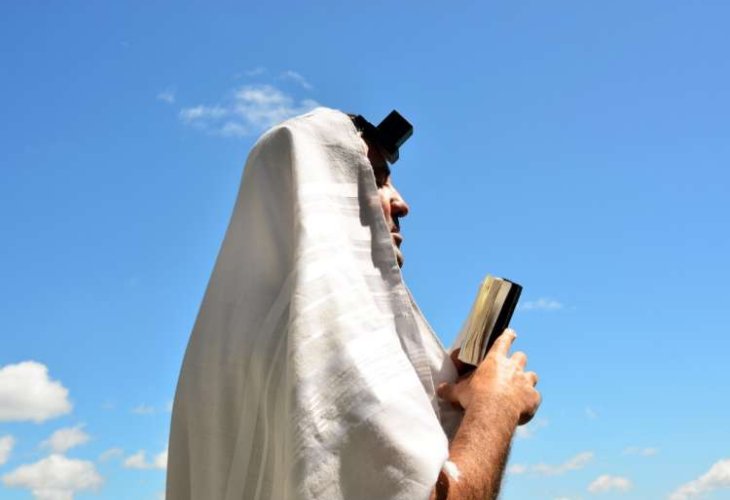 (Photo: shutterstock)
One of the central commandments in Judaism is the mitzvah of prayer. Prayer is a subject without end, and we have addressed it from several angles in the past. Parashat Beshalach illuminates another powerful dimension of it.
The Children of Israel leave Egypt and suddenly find themselves trapped in a terrifying predicament. The Sages in the Midrash (Shir HaShirim Rabbah 2:14) describe their situation with a parable: A dove is fleeing for its life from a hawk that is chasing it. Desperate for refuge, it finds a crevice in a rock. Relieved, the dove enters the crevice — only to discover a snake hiding there. The dove is now in a dreadful bind: if it flees outward, the hawk awaits; if it goes inward, the snake awaits. Its salvation comes from an unexpected place — the dove cries out and flaps its wings until the owner of the dovecote hears and rescues it. To the hawk and the snake’s surprise, the dove was domesticated; it had an owner.
This was the reality of the Children of Israel. Before them stood the sea; behind them, the Egyptians with a powerful army. What were they to do? Where could they turn?
“They Cried Out to God”
“And they were very afraid, and the Children of Israel cried out to Hashem” (Shemot 14:10). The power of Israel lies in its mouth (Bamidbar Rabbah 20:4). The Children of Israel are believers, descendants of believers, and precisely because no natural salvation was in sight, they cried out to God from the depths of their hearts. Their cry was effective, and Moshe said to them: “Do not fear! Stand firm and see the salvation of Hashem” (14:13).
Let us reflect on the meaning of this cry — what it is and what power it holds.
Rashi, citing the Mechilta (Beshalach 2), explains the verse “And the Children of Israel cried out to Hashem” as follows: “They seized the craft of their ancestors.” Regarding Avraham it says, “Avraham arose early in the morning to the place where he had stood before Hashem” (Bereishit 19:27); regarding Yitzchak, “Yitzchak went out to converse in the field toward evening” (Bereishit 24:63); and regarding Yaakov, “He encountered the place” (Bereishit 28:11). The primary craft of the Patriarchs was prayer — direct communion with the Creator. When the Children of Israel were in distress, they seized the craft of their ancestors and prayed to God.
The Question of Rabbi Yerucham of Mir
Rabbi Yerucham of Mir, in his Da’at Torah on this parashah, raises a sharp question. On the surface, there seems to be no comparison between the Children of Israel crying out at the sea in a life-threatening crisis and the prayers of the Patriarchs, especially those specific prayers mentioned in the verses.
The Children of Israel cried out in mortal danger and extreme distress. By contrast, Avraham’s prayer was a “regular” Shacharit prayer, offered in a familiar place where he had prayed before. Yitzchak’s prayer was Minchah, said toward evening — not a prayer of crisis. Yaakov’s prayer, too, was not uttered out of immediate danger; on the contrary, he did not even plan to pray there initially, as Rashi notes: “He said, ‘Is it possible that I passed the place where my ancestors prayed and did not pray?’ He resolved to return.”
What then is the resemblance between the desperate cry of Israel at the sea and the calm, routine prayers of the Patriarchs — so much so that the Sages say Israel “seized the craft of their ancestors”?
Every Prayer as a Cry
For the Patriarchs — Avraham, Yitzchak and Yaakov, every prayer, even a standard, daily, seemingly simple prayer, was uttered from a place of deep existential urgency, no less intense than what the Children of Israel felt at the edge of the sea.
At the sea, Israel felt that by natural means they had no chance of survival. Their cry burst forth from a clear and visceral awareness that they had no refuge other than God.
For the Patriarchs, there was no distinction between a “simple” prayer and a prayer cried out in distress. Every prayer they prayed — even when, outwardly, life seemed calm and secure, expressed total trust in God. For them, every prayer was as if uttered under pressure, born of the tangible awareness that every detail of life, even the smallest, rests entirely in the hands of the Creator.
We, their descendants, may have become somewhat dulled over time. Many of us have layers of security — insurance policies and safety nets in various areas of life, from which we tend to exclude God. We often remember to turn to Him only when, Heaven forbid, a crisis strikes or when we need extraordinary help. In daily life, even when we pray, the words do not always emerge from the depths of the heart.
For example, when we say, “Heal us, Hashem, and we shall be healed,” while our health is good, we do not recite the blessing with the same intensity as when a family member is ill.
This is what the Sages meant when they said that the Children of Israel seized the craft of their ancestors. In that moment of crisis, Israel reached the level of the Patriarchs. The craft of the Patriarchs was the awareness and lived experience that at every moment of life we hang between life and death, that there is no “nature” independent of God — everything depends on His will at every moment and in every realm. For the Patriarchs, the fact that the ground beneath their feet was solid was no less miraculous than the fact that the waters of the Red Sea stood like walls — “and the waters were a wall for them on their right and on their left.”
Redemption and Prayer
In the order of prayer, we juxtapose the remembrance of the Exodus and the splitting of the Red Sea with the Amidah. We must internalize that just as it was clear to the Children of Israel then that they had no savior other than God, so too must that be our approach every single day and in every prayer.
King David writes in Tehillim: “From the straits I called to God; God answered me with expansiveness” (Tehillim 118:5). When a person calls out to God from a sense of “constriction,” even while standing in a place of expansiveness, God answers and fulfills the desires of his heart.
Elsewhere David writes: “Some trust in chariots and some in horses, but we invoke the Name of Hashem our God” (Tehillim 20:8). We do not place our reliance on horses or chariots, but solely on the Creator.
When a person prays out of inner pressure and the recognition that there is none besides Him, his prayer bears fruit. And for such a prayer, even the sea will split.

