

For the Woman
Searching for Real Values: A Powerful Journey to Judaism
How Moran Koors went from rejecting Judaism to discovering truth, healing, and a home built on faith
- Tamar Schneider
- | Updated
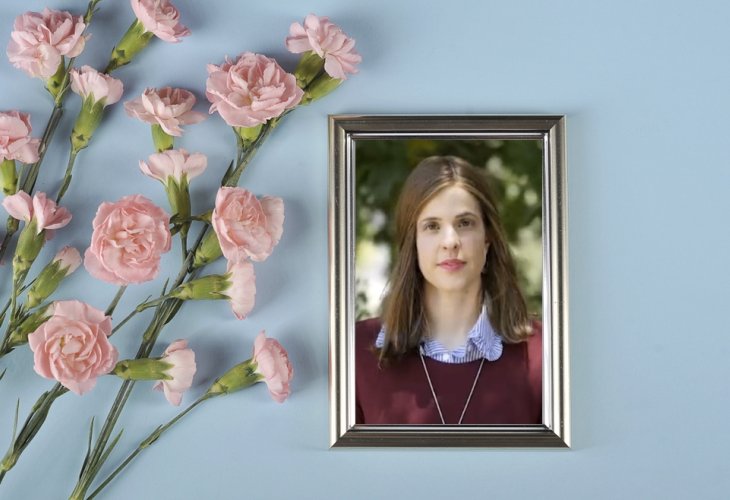 Moran Kors
When Moran Koors was a teenager, she promised herself three things: she would never get married, never bring children into the world, and certainly never become religious.
Back then she was active in Meretz’s youth movement, socialized with Arabs out of a sense of enlightenment, and attended every “Let the Animals Live” protest with determination. She also volunteered with the “Mahut” workshops, worked with at risk youth, and helped in a hospital pediatric ward. All of this happened while she herself was going through deep inner upheaval and reaching places that were anything but simple.
And yet, with the passing of years, the teenage girl who once despised “the religious” became Chabad, and a mother. Her journey back to Judaism began thanks to an unexpected teacher: a seven year old boy with an amputated leg, who showed her in the most concrete way what faith in God looks like.
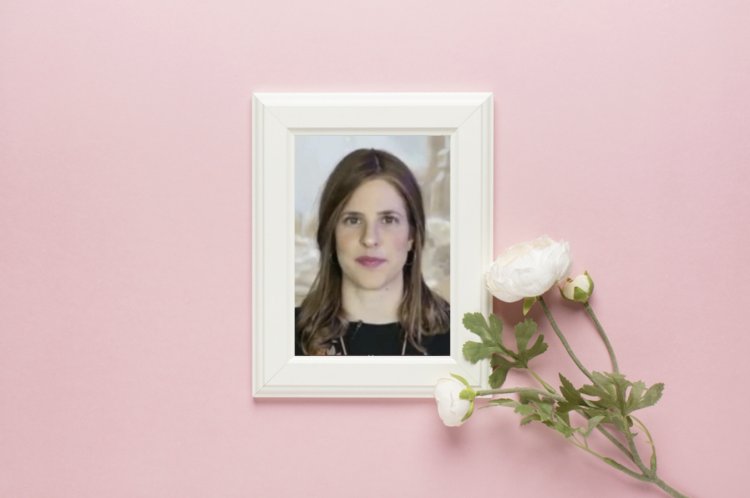
Everyone Comes Back
“I grew up in Kiryat Ono, the youngest of four,” Moran begins. “When I was seven, my parents divorced. Over the years, my three older siblings all became religious, each in their own way.”
It started with her sister during the army. Questions about life began to surface, and at the same time a young man she was close to began growing closer to Judaism. He experienced several striking events he could not ignore.
One happened while he was on guard duty near Jenin. In the middle of the night he heard movement in the bushes across from him. Seconds later, a long burst of bullets was fired in his direction. The bullets left marks all over the wall behind him, but he walked away unharmed. A religious friend told him he had been given his life as a gift and needed to thank God. As a sign of gratitude, the friend encouraged him to start putting on tefillin and explained the meaning of the mitzvah. That was the beginning. He eventually accepted a full life of Torah and mitzvot.
He told Moran’s sister she could either join him in the process or they would part ways. She chose to join. Today, they are happily married and parents of eight children.
Moran’s eldest sister was influenced as well. “She was already a mother of two,” Moran explains. “She saw what a Shabbat table looks like and decided she wanted that kind of home too. In a world without mitzvot there are constant distractions, but she discovered something beautiful in the ability to focus purely on family togetherness.”
She signed up for an Arachim seminar, but her husband objected. She told him that while she attended the lectures, he could go to the pool, but when he arrived at the pool, there was no water. With nothing else to do, he ended up sitting in the seminar too, and he connected. Today, they are parents of five.
Moran’s brother found his path through science. He studied at the Weizmann Institute and encountered a quote attributed to Albert Einstein, that a world as sophisticated as ours could not have created itself and must have a Creator. Through that insight, and through observing nature, he made his way to a yeshiva. Today he is religious and the father of five.
A Slippery Slope
While her siblings were returning, Moran’s own teen years were full of turbulence.
“I was in an art program at one of the most respected schools in central Israel,” she says. “I danced salsa and performed on major stages. At the same time, I started hanging out with a crowd that was not healthy. The teens around me came from wealthy homes in Tel Aviv and Herzliya, but they constantly pushed boundaries.”
She describes the early internet as another escape route. “I met people who were never who they claimed to be. We were all running from pain, from a hunger for love and attention, and we tried to silence that pain by escaping into destructive places.”
Alongside it all, she volunteered in many frameworks, but even there, reality was complicated. Each place taught her a life lesson.
At thirteen she joined Elem, an organization that helps teens in distress. Her role was to approach teens on the street and invite them for a free meal at a Tel Aviv café. They would talk about life, and then a social worker would join the conversation. At that point Moran would quietly step away and the teens would continue with the social worker, eventually reaching treatment. “If an adult had invited them in, they would have felt threatened,” she explains. “That’s why my role mattered.”
Through Elem she heard the hardest stories. She watched how people tell themselves cigarettes are fine but drugs are not, but then the line moves, and moves again. Over time, people fall into addiction, loss of control, emotional collapse, and sometimes danger to life.
She remembers a girl begging to sleep at her home. A social worker stopped her firmly, warning that one night would create dependency and likely lead to theft, because the girl no longer had control over her behavior. “It was heartbreaking to refuse,” Moran says. “But I understood why.”
All of these experiences gave Moran a clear feeling that something about the direction she was heading was wrong. It led her to a bleak conclusion: she would never marry and never have children, because she could not bear the idea of bringing children into a world of such pain.
Only years later, after returning to Judaism, did she understand what she had been sensing. “If a person becomes a slave to desire, they keep falling. But a servant of God, connected to meaning, rises and grows.”
Even then, she did not know what she was searching for. She only knew where she did not want to be.
Volunteering That Broke Something Inside
Moran also volunteered with Greenpeace. “From age eleven I was vegan,” she says. “At fifteen I joined the organization. They had a ship with exhibits that taught about protecting the planet. I guided groups and spoke about the ozone layer and avoiding disposable products.”
At night, after visitors left, the atmosphere changed. People stayed over on the ship and partied. Boundaries disappeared. Married people were unfaithful. “I felt disgust,” Moran says. “How could people protect the environment but betray values that are far more basic, like dignity and faithfulness? They looked so ethical outside, but inside everything was rotten. And I asked myself again: where are the real values?”
Another volunteer experience was with an animal rescue organization. She recalls a protest against a factory that tested on animals to produce baby formula. Protesters entered a large cage to identify with the animals and began a hunger strike. The protest succeeded and the animal testing stopped. But later she heard that a formula was released that harmed babies.
“I was horrified by the possibility that innocent, human lives were harmed,” she says. “I saw how mercy for animals can, in some cases, lead to cruelty toward human beings. Again I met people who wanted to do good but were doing it in the wrong place and in an irresponsible way. I wanted something truer.”
She also guided in the Scouts. One day their leader spoke about the Holocaust and explained how it advanced gradually, starting with restrictions on Jews. Then he claimed that this was exactly what Israel was doing to Arabs. It was the era of talk about a “New Middle East,” and Moran carried that ideology to her own campers.
“If there is something that pains me,” she says, “it is that I passed those values on. The more I immersed myself in that worldview, the more I hated the Haredim and saw them as the source of all problems. Later I learned the truth in the saying: whoever shows compassion to the cruel ends up being cruel to the compassionate.”
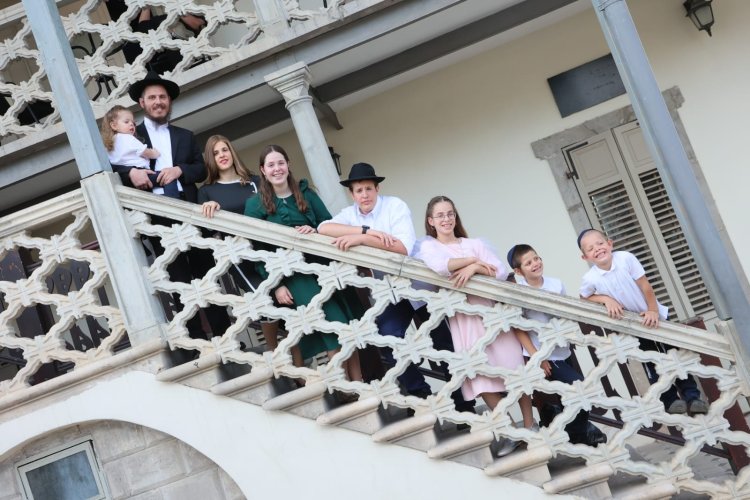
A Thirst for Truth
Despite the confusion, Moran says there was a deep thirst inside her for something real.
“I credit that to my siblings,” she says. “They never stopped praying for me. My sister saw a girl walking into unhealthy places, yet she continued praying for me by the Shabbat candles. My brother always told me he knew I would come back, because he saw my soul searching.”
Only later did she understand how much those prayers protected her. A verse from Psalms has stayed with her for years: “Even when I walk through the valley of the shadow of death, I will fear no evil.” “I was protected,” she says, “even when I myself did not have the wisdom to protect myself.”
At sixteen she attended a Mahut workshop, a program that teaches to release anger, forgive, and learn self love. She was struck by the participants: wealthy, older adults who seemed to have everything, yet carried enormous pain.
She remembers being paired with a sixty year old woman who chose Moran to play the role of her mother. The woman began screaming at “her mother” with intense accusations. Moran was stunned by the depth of pain in her heart. Leaving that evening, she asked herself if she too would become a person filled with anger and emptiness, still starving for love at sixty.
Today, Moran views those workshops differently. “They spoke a lot about loving yourself,” she says, “but they forgot the relationship with God. Loving yourself matters, but you can still remain in a life built around comfort, doing what feels easy instead of what is truly right. Torah trains you to live by what is right, not by what is convenient.”
A Seven Year Old Who Brought Her Back
The turning point came through a child. At seventeen, Moran volunteered in the pediatric rehabilitation ward at Tel HaShomer Hospital, often staying overnight with children hospitalized for long periods. It was during the Second Intifada, and children injured in terror attacks were regularly admitted.
One of them was Asael Shabo, then seven years old. A terrorist entered his family’s home and murdered his mother and three brothers in front of him. Asael survived because his sister fell on top of him, and because of one moment when he held his breath as the terrorist came to check whether he was dead. Asael lost his leg from the gunfire and was hospitalized for a long time.
During the nights Moran stayed by his side, she was overwhelmed by the faith this child carried. She asked him how he could accept what happened. He told her there is a God in the world, and everything He does is for the good. Asael suffered, he was in pain, but inside him was a quiet, genuine acceptance.
On another day, Moran accompanied Asael’s father to the burned home for a CNN shoot. She watched him cry over a family photo album, one of the only items recovered from the fire. He walked among traces of the attacker and stains that were still visible.
Moran asked him how he could still wear a kippah after all he had endured. How could he not be angry at God.
His answer left her speechless. “I am not angry at God,” he said. “I thank Him for giving me my wife and children. They were the gift of my life. The One who gave is the One who has now taken.”
“I could not understand what kind of people are made of,” Moran says. “He was truly in a place of gratitude.”
She began noticing the same pattern repeatedly in the hospital. Among secular patients there was often more anger and collapse. Among religious patients there was more faith, more ability to gather themselves from the pain and continue.
“At first I thought it was personality,” she says, “but they told me that faith in God gives strength.”
What shocked her was the contrast: in the self growth workshops she met wealthy people who lacked inner resilience, while here, in the rawest pain, she met people radiating strength from within.
A Righteous Man in a Dream
The shift that began in the hospital accelerated after advice she received from a participant in the Mahut workshop.
“She told me, ‘You have a high soul. Your place is not here. You should go to Ascent.’”
A week later Moran traveled to Safed, without coordinating, without even knowing exactly where she was going. When she stepped off the bus, she saw a group of modestly dressed girls walking in a certain direction and decided to follow them. They led her straight to Ascent.
Inside she saw many Haredi Jews and felt fear, but she was already there. She also learned that only one bed remained available. She stayed for Shabbat.
That Friday night she had an unusual dream. In the dream she saw a righteous man. At the time she had a relative with serious health issues, and the righteous man told her that her relative’s healing would come in the merit of Moran drawing closer to God.
She woke in shock. And then she saw his face again, in a picture on the wall. It was the Lubavitcher Rebbe. The idea that her spiritual movement could affect her relative’s healing shook her deeply and stirred something in her soul.
That Shabbat there was a seminar, and Moran entered her first Torah class ever. “I did not understand a word,” she says, “but I felt truth in the rabbi’s words. For the first time I sensed that truth is not found in noise and excitement, but in a quiet, thin voice.”
When she returned home, she told her sister about the dream. Her sister suggested she take on a commitment for the merit of their relative’s healing. Moran decided to begin keeping Shabbat.
At first, it was difficult. A friend called on Friday night and invited her to a party. Moran said she could not because she was keeping Shabbat. The friend replied, “If you’re keeping Shabbat, you shouldn’t be speaking on the phone either.” The next Shabbat felt empty and boring, because Moran understood what she could not do, but did not yet know what she could fill the time with instead.
By her third Shabbat, her sister in law connected her with a host family. It was the first time in her life she saw a mother and father sitting with their children around a Shabbat table, together, warm, and present.
“I burst into tears,” she says. “Since I was a little girl, I hadn’t lived in a united family reality. That loving togetherness melted my heart.”
From there, Moran continued to study in a seminary. She read entire books and engaged in intense inner work. When friends from her past saw her, they told her even her face looked different, softer.
At the time she was serving in the Israeli Air Force in a respected research role, but eventually she felt she could no longer remain there. In what she calls a miracle, she was able to end her service. A year later she was on her way to 770, the Rebbe’s study hall in New York.
When she landed, a relative picked her up, a well known psychologist who wanted to speak with her first. She told Moran that before her parents divorced, she had gone to the Rebbe and asked him to prevent it. The Rebbe had given her a dollar and told her it would be okay.
“But your parents divorced anyway,” the relative said. “So you should understand there is no truth in those dollars.”
She offered Moran a life in Manhattan, promising to fund an apartment, a car, and academic studies. She did not want Moran to become religious so young. Moran refused. The moment she stepped into the Rebbe’s study hall, she felt she had come home.
“I felt God had lifted me from the lowest places,” she says, and a verse rose in her mind: “He raises the needy from the dust.” In that moment she knew she did not want Manhattan, money, or comfort. She wanted closeness to God.
How could the Rebbe’s promise that “it will be okay” fit reality? “Righteous people see far,” Moran says. “After fifteen years, my parents returned to each other. But that is only part of it. The real gain was that through the upheaval, all of us returned to Judaism and did deep emotional work to rebuild ourselves. That would not have happened otherwise. So the Rebbe’s words were incredibly precise.”
“Moran, You Received a Gift”
After she returned to Israel, Moran entered the world of shidduchim. Her parents worried and disliked the idea that she would meet someone through shidduch and marry quickly. One day her father complained to a client about his daughter’s new path. The client complained back about his own son who had become religious. In the end they joked that if their children had “gone crazy,” perhaps they should match them. In time, that joke became reality, and Moran met the man who became her husband.
Today Moran is a mother and works in many areas. She teaches in a high school, gives classes, works as an emotional and marital therapist, guides brides, and facilitates groups for women and girls on awareness and femininity. She also writes personal columns and serves as a field reporter for Hidabroot.
In addition, she runs a group called “Point of Reflection,” where she shares stories of divine providence, strengthening articles, her own writing, and interviews from a Hidabroot program.
Asked how she built such a meaningful life after the storms of her youth, Moran answers that the difficult encounters God arranged for her shaped her path. Because she had seen so much pain, and had been in low places herself, she invested after marriage in serious inner work, studying emotional and couples therapy.
“When you work on the soul, you change,” she says. “You even learn to be grateful for the gifts you collected along the way.”
She has learned that without gratitude she quickly falls into despair and complaint. When pain arises, she asks herself what positive element it may bring and how it might be pushing her toward growth. That is how she reached a place where she can honestly say she is glad she went through those places, because today they allow her to help others.
“When a client comes to me, nothing she tells me shocks me,” she explains. “I believe in her ability to change, because if I could change, anyone can.”
Does the past still surface sometimes?
“Yes,” she says, “but I know that even with my falls, God loves me. In my therapy work I always guide people toward feeling God’s love and closeness. That is the foundation. From there everything else is built.”
She also maintains a daily study schedule that brings Torah clarity into her mind. With the world’s negative influences constantly pressing in, she feels a daily need to anchor herself in learning in order to keep refining herself.
Moran has also written a book called “Debi, You Received a Gift,” about a young woman who leaves Judaism and returns, wrestling with faith questions along the way. Moran wrote it after treating many teenage girls and noticing a pattern: they blamed the whole world for their situation. She wanted to guide them toward responsibility, because responsibility is what enables growth. Debi’s story mirrors that inner journey.
She also created therapeutic card decks, something she long wanted, tools drawn from a place of holiness. The decks were born during a period when she broke a toe and was confined to bed for two weeks. When she could finally get up, the cards were ready for publication. “I saw clearly how descent can be for the sake of ascent,” she says.
Her first deck, “Reflection and Conversation,” offers powerful source quotes along with deep questions and eleven activity options. The second, “Direction and Strength,” helps people complete prompts such as, “One of the most meaningful things I want to take from my parents’ home into my life is…” The decks foster connection between couples, parents and children, friends, and workshop participants.
In closing, Moran says what matters most to her is that people understand how much inner strength they truly have, and that change is possible for everyone.
“I arrived at seminary in Elul many years ago,” she says, “and today, thank God, I am in a completely different place. Still, the work is great, because the ladder is planted on earth and its top reaches the heavens. Spiritual growth is endless and fascinating. God is with us, loving us, guiding us constantly. We do have a life’s work, but when we do it, it becomes a gift of life.”

