

Israel News
Israel Advances Rafah Opening as Search Continues for Ran Gvili
Security cabinet approves limited crossing under Trump plan while IDF conducts sensitive operation to recover last hostage’s remains in Gaza
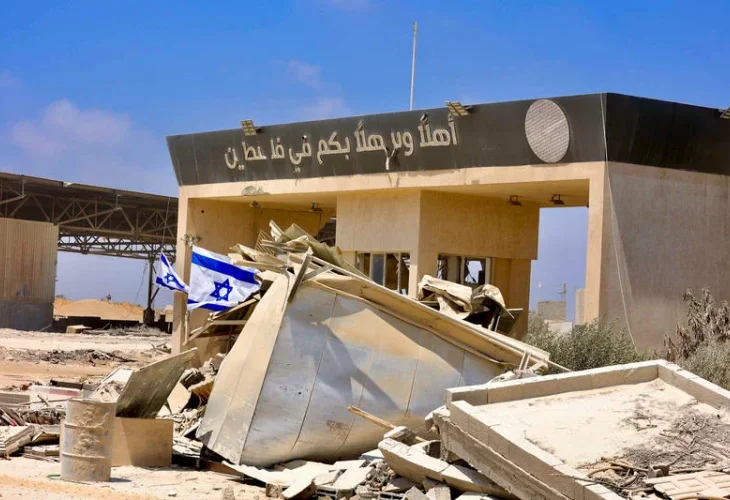 Rafah crossing (Oren Cohen/Flash90)
Israel’s security cabinet decided Sunday night to advance a limited opening of the Rafah Crossing, allowing the passage of people only and subject to full Israeli supervision, even as the body of the last Israeli hostage held in Gaza has not yet been returned.
The decision moves forward as an IDF operation is ongoing to locate and recover the remains of Ran Gvili, who was killed and whose body is still held by Hamas terrorists in Gaza. Gvili is the final Israeli hostage whose fate remains unresolved after more than two years of fighting.
According to the Prime Minister’s Office, the move is being taken under President Donald Trump’s “20-Point Plan”, which Israel agreed to implement in coordination with Washington. While the plan was initially presented as being contingent on the return of all hostages, the statement clarified that the condition was defined as a “100% effort” by Hamas to locate and return the bodies of those killed, rather than a guaranteed result.
“In the framework of President Trump’s 20-point plan, Israel agreed to a limited opening of the Rafah Crossing for the passage of people only, with a full Israeli oversight mechanism,” the Prime Minister’s Office said. It added that the opening “was conditioned on the return of all living hostages and on a 100% effort by Hamas to locate and return the bodies of all fallen hostages.” The statement further noted that “with the completion of the operation and in accordance with understandings with the United States, Israel will open the Rafah Crossing.”
At the same time, the IDF has been conducting a sensitive operation, known as “Brave Heart,” aimed at recovering Gvili’s remains. The operation began over the weekend and is focused on a cemetery in northern Gaza, in the Shejaiya–Daraj Tufah area near the yellow line, an area under Israeli control.
Military sources said the search involves engineering units, security forces, the Military Rabbinate, and forensic dentists specializing in identification through dental records. Teams are using mobile X-ray equipment to compare findings with existing records, with DNA testing to follow if necessary. The IDF estimates the operation could last from several hours to several days.
Hamas claimed earlier Sunday that it had provided mediators with information regarding Gvili’s location. Israeli officials rejected that characterization, saying the intelligence originated with Israel and was sharpened through interrogations and covert operations before being passed to mediators and later confirmed by Hamas. An IDF source said the military had not identified any particular urgency or commitment by Hamas to facilitate the recovery.
Diplomatic pressure has intensified alongside the military effort. U.S. special envoy Steve Witkoff met Saturday with Prime Minister Benjamin Netanyahu, along with Jared Kushner and other senior American officials. Witkoff described the talks as “constructive and positive,” saying both sides agreed on next steps and stressed the importance of continued cooperation as Phase Two of the Trump plan is prepared.
Inside Israel, the decision has sparked sharp public and moral debate. Gvili’s family has urged leaders to freeze all political and diplomatic steps until he is brought home for burial, arguing that the state’s obligation to its fallen soldiers must come first.
For now, Israeli officials say they will wait to see whether the ongoing operation yields results. If and when the military effort is deemed exhausted, the Rafah Crossing is expected to open under the limited framework already approved, highlighting the unresolved tension between diplomatic commitments and the final chapter of Israel’s long hostage ordeal.

