

Relationships
Fighting with Your Spouse? It Might be a Good Thing
Fighting in marriage isn’t always a bad sign. Learn how to recognize healthy versus destructive conflict and how to turn disagreements into opportunities for communication and closeness.
- Avraham Sheharbani
- | Updated
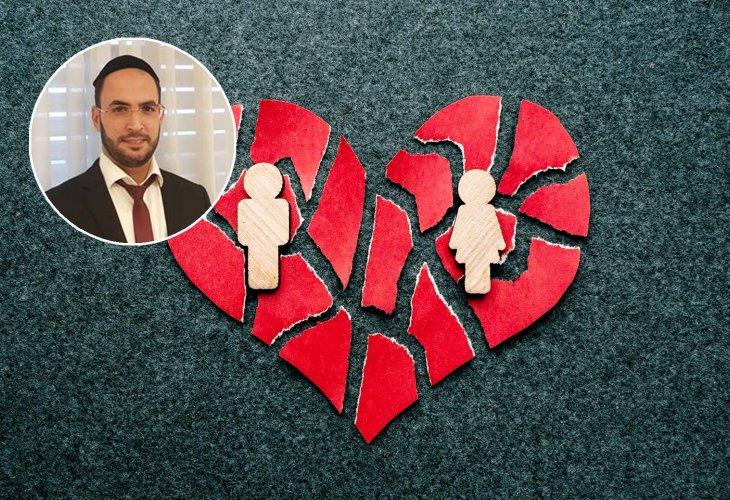 (Photo: shutterstock)
Disagreements and conflicts are a natural part of every relationship. Two people come together from different backgrounds, carrying different personalities, values, expectations, and emotional needs. It is therefore entirely natural that tension and disagreement will arise at times.
In fact, conflict itself is not necessarily a bad sign. Often, it reflects that we still care deeply, that the relationship matters, that we want to be understood and taken seriously. At the same time, disagreements can stir powerful emotions: hurt, anger, disappointment, withdrawal, and distance. People also experience conflict very differently. Some recover quickly and are able to move on, while others remain emotionally shaken long after the argument has ended.
What Conflicts Are Really About
When couples seek counseling, conflict is usually one of the first topics they raise. Many say, “We argue about nonsense,” or “It’s always about small things.” Yet it quickly becomes clear that the argument itself is rarely the real issue.
Frequent conflict often points to deeper layers: unresolved resentment, unmet emotional needs, power struggles, disappointment from unfulfilled expectations, or a sense that one partner feels alone while the other is still emotionally tied to their family of origin. In this sense, the argument is not the problem but a symptom. It signals that something beneath the surface needs attention.
When Conflict Becomes Dangerous
A relationship begins to weaken when conflicts take on certain patterns. When communication breaks down. When the discussion spreads far beyond the original topic. When one or both partners feel humiliated. When the same issues repeat endlessly without resolution. When every disagreement ends in emotional distance. When each conflict feels like another battle in an ongoing war rather than an isolated moment.
At that point, arguments no longer serve growth. They become corrosive.
Conflict as an Opportunity
Many people fear conflict because it threatens emotional safety. Arguments disrupt routine and stability. Some people avoid disagreement entirely out of fear of losing connection. Yet paradoxically, it is precisely conflict that offers one of the greatest opportunities for growth.
Handled with maturity, a disagreement can become a moment of deepening intimacy. It can build trust, emotional safety, and mutual understanding. The difference lies not in whether conflict exists, but in how it is handled.
During an argument, we are emotionally vulnerable. This makes thoughtful responses more difficult, but it also makes honest communication more powerful. Couples who learn to slow down, breathe, listen, and later reflect together on what happened are able to turn conflict into a constructive force. They learn to ask: What was triggered in me? What hurt you? What do we need to change next time?
This does not eliminate conflict entirely, but it transforms its role in the relationship.
The Gap Between Expectations
Many disagreements arise from gaps in expectations. Each partner arrives with internal standards shaped by upbringing, environment, and personality. One partner may feel secure only when the home is constantly tidy, while the other feels no urgency around cleanliness. One may need frequent verbal reassurance, while the other expresses care through actions. These differences are not flaws. They are expressions of different inner worlds.
The challenge is that during conflict, it is often difficult to identify the true point of divergence. We react emotionally rather than reflectively. Much of the real work therefore happens not in the heat of the argument, but during calm moments.
Building a shared life requires ongoing communication about needs, values, sensitivities, and expectations. This process also demands self-awareness. Many of the forces shaping our reactions lie beneath consciousness. The more we understand ourselves and are able to articulate that inner world to our partner, the more misunderstandings decrease and the more cooperation grows.
Growth Through Understanding
A strong relationship is not one without conflict, but one in which conflict leads to greater understanding rather than deeper distance. When partners learn to interpret disagreements not as threats but as messages, the emotional climate changes. Conflict becomes less frightening, communication becomes more open, and the bond becomes stronger.
Avraham Shaharavni is a marriage counselor and psychotherapist.

