

World News
Kanye West Publishes Full Page Wall Street Journal Apology for Antisemitism
“Ye” attributes swastika imagery and antisemitic rhetoric to bipolar disorder, as Jewish skepticism follows years of repeated offenses
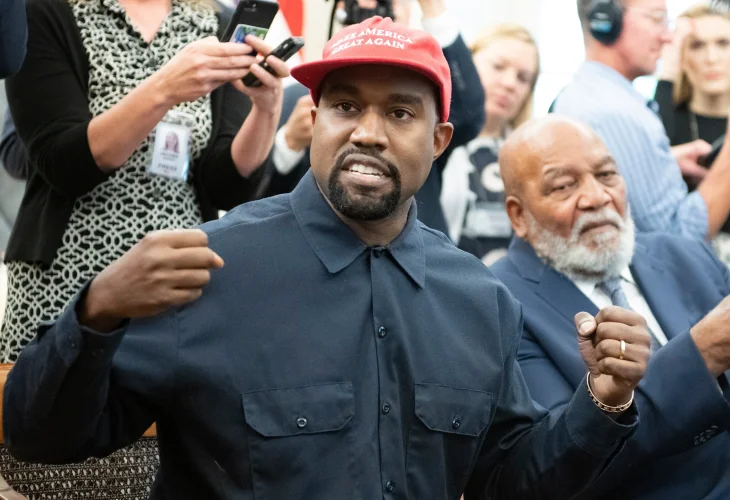 Kanye West (Shutterstock)
On Monday, Kanye West took out a full-page advertisement in the Wall Street Journal apologizing for years of antisemitic behavior, declaring, “I am not a Nazi or an antisemite. I love Jewish people.”
The letter, titled “To Those I’ve Hurt,” addresses a series of actions that deeply alarmed Jewish communities worldwide, including Holocaust denial, praise for Adolf Hitler, and the sale of T-shirts bearing swastikas. Ye framed the apology as an effort at accountability while asking for patience as he seeks treatment and change.
In the letter, Ye directly acknowledged the swastika imagery that became central to his recent controversies. “In that fractured state, I gravitated toward the most destructive symbol I could find, the swastika, and even sold T-shirts bearing it,” he wrote. “I regret and am deeply mortified by my actions in that state, and am committed to accountability, treatment, and meaningful change. It does not excuse what I did though.”
The apology follows renewed outrage earlier this year, when Ye released a song titled “Heil Hitler,” which sampled a speech by Hitler and praised the Nazi leader. The song was banned in Germany under laws against hate speech and extremism but spread widely online. Last week, far-right figures including Nick Fuentes and Andrew Tate were filmed making Nazi salutes as the song played at a Miami Beach nightclub.
Ye also referenced his sale of swastika shirts through his fashion website, which was later taken down by Shopify for violating its terms of service.
Throughout the letter, Ye attributed his conduct to bipolar type-1 disorder and what he described as an undiagnosed frontal-lobe injury from a 2002 car crash. “The deeper injury, the one inside my skull, went unnoticed,” he wrote, saying the injury was not properly diagnosed until 2023. According to Ye, that medical oversight “caused serious damage to my mental health and led to my bipolar type-1 diagnosis.”
He described manic episodes marked by denial and distorted judgment. “When you’re manic, you don’t think you’re sick. You think everyone else is overreacting,” he wrote. “You feel like you’re seeing the world more clearly than ever, when in reality you’re losing your grip entirely.”
Addressing the gravity of his condition, Ye cited studies he attributed to the World Health Organization and Cambridge University, writing that bipolar disorder shortens life expectancy and carries mortality rates comparable to severe heart disease, diabetes, HIV, and cancer. “The scariest thing about this disorder is how persuasive it is when it tells you: You don’t need help,” he wrote.
The letter marks Ye’s latest attempt to reverse course after years of escalating antisemitic rhetoric. He previously issued an apology to the Jewish community in 2023, but later resumed and intensified his behavior, including public declarations embracing Nazism and renewed Holocaust denial. As a result, Jewish organizations and observers have expressed deep skepticism toward repeated apologies that have not been followed by sustained change.
In the letter’s closing, Ye acknowledged the harm he caused and the global impact of his words. “My words as a leader in my community have global impact and influence. In my mania, I lost complete sight of that,” he wrote. He concluded: “I’m not asking for sympathy, or a free pass, though I aspire to earn your forgiveness. I write today simply to ask for your patience and understanding as I find my way home.”

