

Jewish Law
Shaming in the Digital Age and What We Can Do to Stop It
The hidden psychological toll of shaming on children and adults — and the crucial role families, educators, and communities play in prevention and healing
- Efrat Talia Cohen
- | Updated
 (Photo: shutterstock)
Eitam Tamir was only ten years old when he jumped to his death from his home balcony after experiencing severe shaming by classmates. Ariel Ronis, a former Shin Bet officer who managed a branch of Israel’s Interior Ministry in Tel Aviv, took his own life after a social media post accused him of racism. A thirteen year old boy from Ra’anana died by suicide after being ostracized by his classmates. And the list continues.
Each story is a tragedy in itself, but they all share one defining feature. All were victims of shaming.
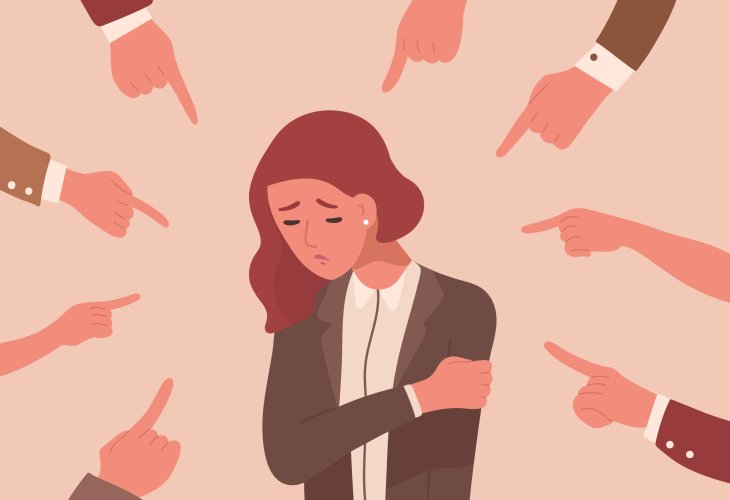
This is one of the most destructive social phenomena we know, and it is gaining momentum. It is not new, but the ease with which it now occurs is deeply troubling, and it is already claiming many victims. Children and adults alike have been profoundly harmed by shaming, defamation, public humiliation, or online attacks, whether from strangers or from people they know. Many are still trying to rebuild their lives years later.
We encounter these acts almost daily. At times, we may even participate in them ourselves, under the guise of exposing injustice or condemning a wrongdoing that we assume took place, without checking the facts. We rarely pause to consider the real consequences of such actions. And those consequences can be fatal.
Not Only a Problem Among Children
Shaming is often associated primarily with children, especially in schools and online spaces. But it may come as a surprise that it is by no means limited to them. It affects adults as well, crossing sectors, social classes, communities, and professional environments.
In truth, the phenomenon did not begin recently. But with the rise of social media, the speed at which messages and accusations spread, and the ability to broadcast opinions instantly and widely, often without thinking and with almost no oversight or accountability, social shaming has become easier and more aggressive than ever.
Shaming as Psychological Violence
Shira Miller is a clinical social worker who encounters shaming cases in her practice. “This is a form of invasive violence that enters a person’s private space,” she explains, “and in many cases it causes unimaginable psychological harm.”
At first glance, it appears that children are the primary victims. But according to Miller, adults are just as exposed and just as affected. “These are the stories we tend to hear about more because of online exposure, but adults suffer from shaming no less than children. When someone is shamed, the injury is deep, regardless of age.”
She adds that shaming is particularly common during divorce proceedings, where public notices, rumors, and now social media posts can destroy a person’s reputation with a single click. “Information spreads in seconds. A single photo taken from a certain angle, presented in a particular way, can be enough for the entire community to judge and condemn.”
If you think shaming exists only in secular society, think again. “In ultra Orthodox communities there is less access to social media, which is a common platform for shaming,” Miller explains, “but the harm simply takes different forms. Shaming is spread verbally, within yeshivot, seminaries, matchmaking systems, social events, and weddings. In closed communities where everyone knows everyone, it spreads quickly and causes immense damage.”
Why the Damage Is So Severe
Some might dismiss shaming as an insult taken too far, a conflict that escalated, or an online comment made thoughtlessly. But the psychological impact of shaming is often severe and long lasting.
“The consequences can resemble real trauma,” Miller explains. “Social phobia can develop, fear of leaving the house, paranoia, the sense that everyone is watching and talking about you. Sometimes that fear is real, sometimes not, but the result is withdrawal and isolation.”
“A person can feel as though the ground has collapsed beneath them. Everything familiar and safe suddenly disappears. They wake up one morning to a reality they recognize, and suddenly it changes completely. In children and adolescents, this can lead to suicidal thoughts. Their perspective is narrow; the here and now feels absolute. A child experiencing shaming cannot imagine that tomorrow the newspaper wrapping the fish at the market will contain yesterday’s cruel headline. The distress becomes unbearable, and from there, self harm is tragically common.”
The Loss of Trust
Beyond everything else, shaming destroys one of the most basic foundations of human life: trust.
“Not only does the victim lose trust in their environment,” Miller says, “they lose the ability to distinguish who is an enemy and who is a friend. Often the person who initiates the shaming is someone close, who the victim believed was a friend. This creates profound confusion about who can be trusted, about whether the world is a safe place, and about oneself.”
“Because the victim is one against many, they may eventually begin to doubt themselves and believe what is being said. Recovering from this requires strong family support, a clear sense of identity, and self confidence.”
“There are extreme cases where public warning is necessary,” Miller acknowledges, “such as protecting people from serious offenders or fraudsters. But this must be based on verified facts and done in consultation with appropriate authorities. These cases are rare and exceptional.”
Who Is Most at Risk?
“There are risk factors,” she explains. “Children who are already exposed to bullying or violence at school are more vulnerable. Those from weaker family or social backgrounds, or who struggle academically, are at higher risk. This is never their fault. They simply have fewer protective factors.”
Miller also notes a troubling pattern. Victims of shaming are more likely to be targeted again in the future. “It’s a kind of repetition pattern. Even though you would expect someone who was hurt once to be more cautious, statistics show the opposite. Once a person has been shamed, it becomes easier to shame them again, especially if they absorbed the attack quietly.”
Is There Hope for Recovery?
There is always something that can be done.
“The most important recommendation is emotional therapy,” Miller emphasizes. “Processing the experience can prevent repeated victimization and help the person rebuild.”
The role of the immediate environment is critical. “Support from family and close friends is essential. Standing by the victim, not believing the rumors, and not blaming them is crucial. Parents should never say things like ‘If you were different, they wouldn’t bully you.’ Create a safe space. Let the child know that home is a place where they can talk freely and will be protected.”
“If improvement is needed, work on it together. But stand by them even if they made a mistake.”
Practical steps matter too. If the shaming occurred online, request removal. In schools, involve administrators and educators. Do not try to handle it alone. The educational framework can be a powerful source of support.
Warning Signs Parents Should Watch For
“Parents who know their children well can often sense when something is wrong,” Miller explains. “Withdrawal, refusal to go to school, academic decline, unexplained aggression, or sudden complaints from teachers can all be signs of distress.”
Because much of the harm occurs online, digital awareness is essential. “Privacy is important, but in times of distress, parents may need to monitor online activity, even together with the child, explaining that it is about protection, not intrusion.”
Children often suffer in silence. Awareness, supervision, and open communication are critical.
A Moment Before You Act
The next time you feel the urge to expose someone online, to share an accusation, to encourage others to join in, or to dismiss your child as overly sensitive, pause for a moment.
Take a breath, and try to understand the real story beneath the surface. It may be very different from what you think.

