

Jewish Law
The Eighth Day Circumcision: Medical Evidence Behind a Biblical Command
How blood-clotting research reveals a remarkable link between Jewish law and human biology
- Rabbi Zamir Cohen
- | Updated
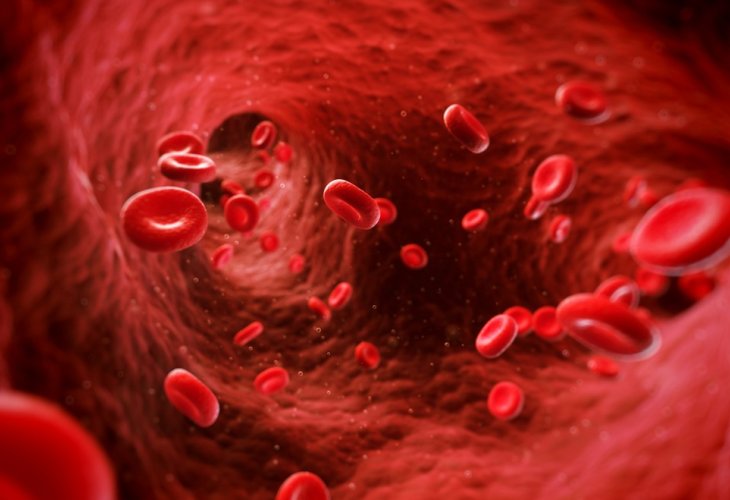 A newborn, a promise, and the science behind tradition.
The Torah states: “…and on the eighth day the flesh of his foreskin shall be circumcised” (Vayikra 12:2–3).
The Torah does not command circumcision immediately in the days following birth. Nor does it instruct that circumcision be performed from the eighth day onward at any time. Rather, it states explicitly: “on the eighth day” — specifically the eighth day.
Of course, we do not presume to fully comprehend, with our limited human intellect, the profound reasons behind the Torah’s commandments. Nevertheless, it is fitting to reflect upon a remarkable modern scientific discovery related to the eighth day.
Blood Clotting and the Newborn
We cite the words of Dr. Ella Avrahamov from her article “Clotting and Bleeding Disorders in the Newborn” (Assia, Vol. 3, p. 384): “The blood-clotting mechanism depends on a group of proteins produced in the liver, known as ‘clotting factors.’ These factors are designated by Roman numerals I–XIII, and they activate one another in a chain reaction (with the help of enzymes) until a stable clot called fibrin is formed.
In the first days after birth, the liver is not yet mature enough for this activity, and it is clear that it cannot withstand the additional burden of surgical intervention — something that could lead to the infant’s death due to massive bleeding, which the newborn is unable to overcome.
Physiologically, by the age of eight days, the liver begins to recover and mature, its functions improve, and by eight days there is already a sufficient level of clotting factors to prevent bleeding.”
A Peak Precisely on the Eighth Day
Even more striking is a study published in New York in 1953, which found that before the eighth day there is a significant deficiency in clotting substances, while after the eighth day these substances stabilize at a sufficient level that remains constant throughout a person’s lifetime (100%).
However, as the eighth day approaches, clotting factors increase rapidly — and on the eighth day itself they reach a level of 110%.
On the eighth day, and only on the eighth day, the concentration of clotting factors reaches its highest point ever, exceeding even the level that accompanies a person throughout the rest of his life. (This research is cited in Y. Meroz, HaShem: Hoveh, p. 61.)
We can clearly discern here the hand of God, the Master and Creator of the universe and Giver of the Torah, who precisely linked the moment when clotting factors in the blood reach a sufficient and optimal level with the commandment of circumcision.
An Additional Medical Observation
It is worth noting that although the skin generally serves as a protective barrier throughout the body, shielding it from bacterial invasion, on the foreskin the opposite is true, where skin actually encourages the massive proliferation of harmful bacteria, spores, and fungi capable of causing disease.
Throughout the body the skin is firmly attached to the layers beneath it. The foreskin, however, is not attached in this way; instead, a cavity exists between the foreskin and the glans. The narrow opening at the tip allows contaminants to enter, inevitably turning the space into an ideal breeding ground for dangerous bacteria.
When the foreskin is removed, this threat is eliminated. (For this reason, every male infant born into the British royal family undergoes circumcision.)
Spiritual Commandment, Physical Benefit
It should be clear to any thoughtful reader that this is not the reason for circumcision, whose true purpose is spiritual and exalted. Rather, in every spiritual commandment, the Creator embedded a corresponding physical benefit.
Incidentally, among all living creatures, the foreskin exists only in human beings.

