

Pregnancy and Birth
Can a Baby’s Sex Change in Early Pregnancy? What the Talmud and Modern Science Reveal
Ancient rabbinic teachings on the first 40 days of pregnancy offer a surprising convergence between Torah wisdom and contemporary science
- Rabbi Zamir Cohen
- | Updated
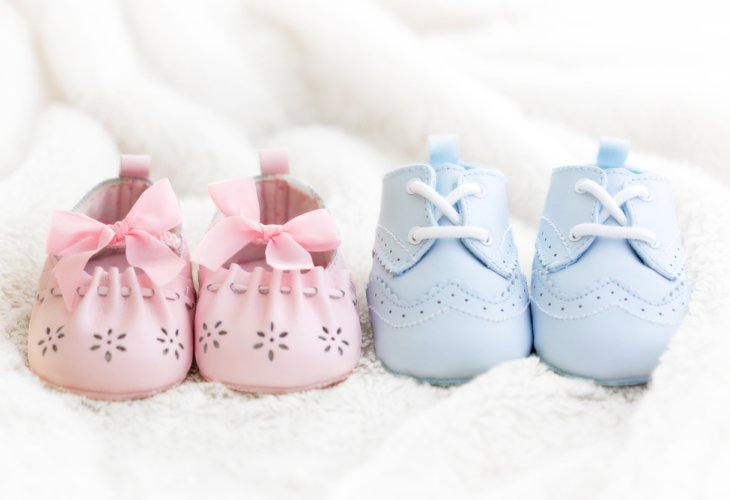 (Photo: Shutterstock)
The Talmud teaches that, up to the fortieth day of pregnancy, the embryo’s sex is still considered changeable through natural processes (not necessarily through a miracle). Therefore, someone who desires a child of a particular sex may pray about it until day 40. In the Sages’ words: “From the third day until the fortieth day, one should ask for mercy that it be male” (Berachot 60a).
By contrast, once forty days have passed, praying for a change in the baby’s sex is described as a “vain prayer” because at that stage such a change would require a miracle (Mishnah Berachot 9:3; Berachot 54a).
Why This Seemed Scientifically Impossible
As embryology and genetics advanced, many found this surprising. In particular, modern genetics established that sex is connected to chromosomes present from fertilization — especially after the well-known early genetic work identifying sex determination mechanisms in humans and other animals (Nettie M. Stevens, Studies in spermatogenesis…, Carnegie Institution of Washington, 1905).
The question becomes sharp: If chromosomes are present from the start, what could “change” later on?
Modern Biology: A Decision Window in Early Development
Later research in developmental biology and endocrinology showed that early embryonic development includes critical stages in which the body’s sexual differentiation follows one pathway or another — depending on gene activation and biochemical signaling (e.g., H. Wartenberg, “Development of the early human ovary…,” Anatomy and Embryology 165(2), 1982; Anna Biason-Lauber, “Control of Sex Development,” Best Practice & Research Clinical Endocrinology & Metabolism 24(2), 2010).
In simplified terms: even if an embryo is chromosomally XY, developing as male requires the activation of key mechanisms. A classic example is the SRY gene on the Y chromosome, associated with testis determination (Berta et al., Nature 348, 1990). If the relevant signals fail or are disrupted, development can proceed along a female-typical pathway despite XY in certain disorders of sex development (discussed in modern medical literature on sex differentiation; see also McCarrey & Abbott, “Mechanisms of genetic sex determination…,” Advances in Genetics 20, 1979).
Why “Until Day 40” Matters
Using increasingly precise observational tools and staged models of embryonic development, researchers mapped early differentiation processes in ways that made it plausible to speak about an early “window” in which key developmental outcomes become fixed. In the Hebrew text you provided, this is framed as a window beginning around day 22 and closing around day 40 — after which sex is no longer naturally changeable.
This is presented as strikingly consistent with the Talmud’s boundary of forty days regarding prayer and “irreversibility” in ordinary nature (Berachot 60a; Berachot 54a).
Leah and Dinah: The Classical Torah Example
The Mishnah rules that praying to change something already determined is a “vain prayer,” and gives the example of praying for a male child once pregnancy is already underway (Mishnah Berachot 9:3; Berachot 54a).
The Talmud challenges this by pointing to the Torah’s description of Leah: “Leah conceived again and bore a sixth son to Yaakov… and afterward she bore a daughter and called her name Dinah” (Bereishit 30:19–21). The rabbinic tradition explains this as a case where the fetus was originally male and became female due to Leah’s inner plea and reasoning.
The Talmud resolves the apparent contradiction by stating that Leah’s case occurred within forty days, when change is still possible; after forty days, prayer for a sex change is considered “vain” (Berachot 60a).
The same passage includes a broader baraita describing different prayer focuses at different pregnancy stages — e.g., praying for viability and healthy development at later milestones (Berachot 60a).
Chromosomes: The Basic Scientific Framework
Modern biology describes human cells as containing 23 pairs of chromosomes (46 total), with one pair (the 23rd) typically associated with sex: XX for female and XY for male. The mother contributes an X chromosome; the father contributes either X or Y, so the father’s contribution determines XX vs. XY in typical cases.
The Hebrew source then connects this well-known framework to modern findings about gene activation and differentiation, emphasizing that having XY is not the same as guaranteeing male development unless the necessary pathways successfully activate (as discussed in the scientific sources cited above: Wartenberg 1982; McCarrey & Abbott 1979; Biason-Lauber 2010; Berta et al. 1990).
Torah Categories and Biological Stages
In the framework presented in your text, the key claim is:
The Sages taught that up to day 40, praying about the baby’s sex is meaningful (Berachot 60a).
After day 40, such prayer is “vain” in the sense that it would require a miracle (Mishnah Berachot 9:3; Berachot 54a).
Modern developmental biology describes early differentiation as a staged process involving genetic signaling, which can make the idea of a decisive early window intelligible (Wartenberg 1982; McCarrey & Abbott 1979; Biason-Lauber 2010; Berta et al. 1990; Stevens 1905).

