

Wonders of Creation
What Is a Desert? Understanding the Harsh Environment of the Wilderness
How deserts form, why they lack water, and what the wilderness teaches us about nature and creation.
- Debbie Reichman
- | Updated
 (Photo credit: Shutterstock)
The Children of Israel wandered in the desert for forty years after leaving Egypt, until they finally reached the Land of Israel. What exactly, is a desert?
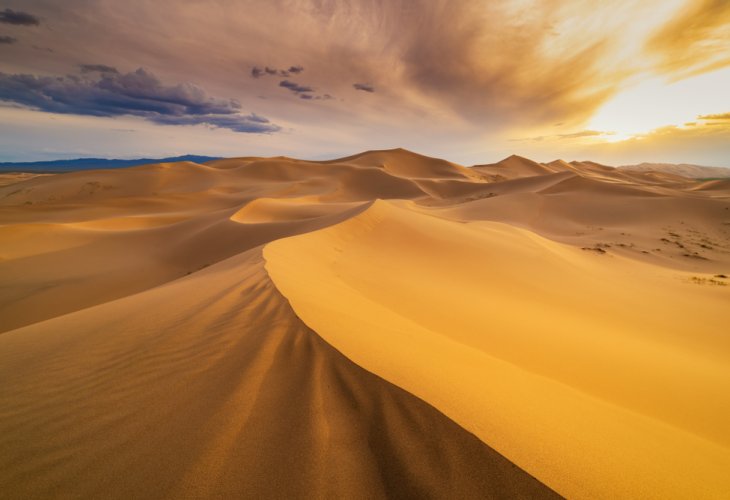
A desert is an arid region with very little rainfall and, in general, very little water. Most deserts are hot, such as the Sahara Desert, the Namib Desert, or the Sinai Desert, but there are also cold deserts, like the Gobi Desert.
Naturally, living conditions in a desert are extremely harsh. As a result, very few species of plants and animals live there. Those that do inhabit deserts are creatures that were endowed by God with unique survival abilities specifically suited to desert life.
Most of the world’s deserts are concentrated in tropical regions around the equator, forming two belts — one north of the equator and one south of it. Together, these deserts create a global band stretching across the central latitudes near the equator. This region is the hottest on Earth, because the sun is almost always directly overhead, striking the ground at a near-perpendicular angle.
There are several reasons for the scarcity of water in deserts. First, deserts are usually located far from the sea, deep within continents or behind high mountain ranges, which block rain clouds coming from the ocean. Second, even when rain clouds do reach hot deserts, the heat is often so intense that raindrops evaporate before they ever reach the ground.
In hot deserts, temperatures are extremely high during the day, but at night it becomes surprisingly cold. The difference between daytime and nighttime temperatures is especially extreme, due to the lack of water. Water plays a crucial role in moderating climate. In areas where water is present, heat is absorbed by water during the day and released into the air at night, warming it. In regions near the sea, for example, the ocean absorbs heat during the day, lowering land temperatures, and at night releases that heat back into the air, raising temperatures.
In the desert, by contrast, there is no water to balance these extremes — no rain, no seas, and no large bodies of water. As a result, days are scorching hot, while nights become very cold.
It turns out that the water created by God has more than one role in the world.

