

Relationships
Taking Too Much Responsibility: When Guilt Damages the Relationship
Believing that everything is your fault may feel like growth, but it can silently harm both you and your partner. A revealing therapeutic encounter uncovers how releasing control can restore balance and emotional clarity.
- Pinchas Hirsch
- | Updated
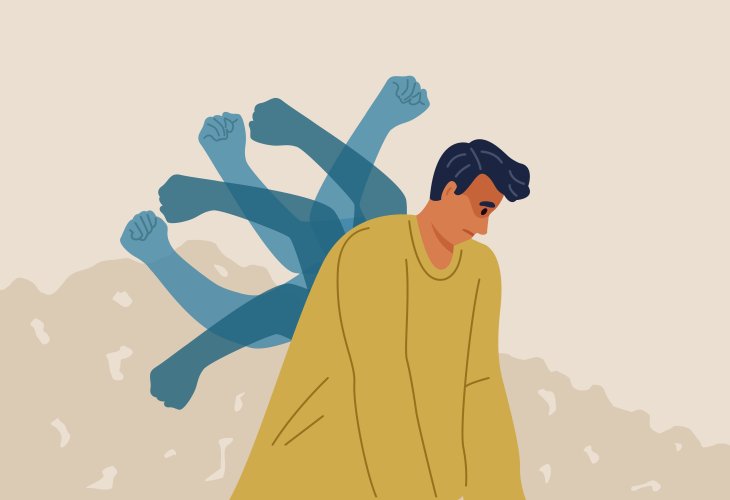 (Photo: shutterstock)
There is a natural tendency in humanity in general, and in Judaism in particular, toward self-blame.
The concept of self-blame is not healthy reflection or constructive learning from mistakes. Rather, it is a sinking into painful emotions, a drowning in guilt, a quiet emotional paralysis that only deepens sadness and hopelessness.
Judaism fundamentally opposes this inner state. A look at our sources reveals countless words of encouragement, strength, and guidance toward growth. Yet the line between the obligation of repentance and destructive self-blame can easily blur. Many people find themselves trapped in a familiar cycle of guilt, shame, and even a strange attachment to self-pity, until the thought quietly settles in: maybe there is no hope.
When Success on the Outside Masks Pain Within
Hanna is a successful woman by every outward measure. She raises five children with dedication while working shifts at a prestigious tech company. She is intelligent, warm, and capable.
But in the therapy room, a different Hanna appears. Exhausted, broken, and overwhelmed by guilt.
She and her husband Oded are no longer together. They have been separated for several months and are moving through the painful process toward divorce. Yet Hanna is not focused on the separation itself. Her entire emotional world is consumed by one question: what did I do wrong?
She revisits every sentence she said, every reaction she had, every thought she allowed herself. She is convinced she caused Oded to leave.
“I know it’s useless,” she says quietly. “You cannot go back in time. I am just torturing myself for nothing.”
“Then why are you doing it?” the therapist asks gently.
“I don’t know,” she answers, irritated. “That’s why I’m here. You’re supposed to help me stop.”
The Hidden Comfort Inside Guilt
The therapist asks a difficult question. “What do you believe hurt Oded most in the relationship?”
“That I was not truly there for him. That I blamed him for everything. That I did not take responsibility.” She speaks calmly, without tears. The pain has already dried them. “He said he cannot be with me anymore.”
“And now you are blaming yourself for blaming him,” the therapist observes. “Is it possible that you are still trying to hold all the responsibility alone?”
Hanna hesitates. She does not want to admit it, but she senses the truth.
“What if part of the pain,” the therapist continues, “is the possibility that some of this was not in your control? That Oded has responsibility for his choices, his emotions, his distance. That not everything depends on you?”
“I cannot bear that thought,” she admits.
And that is the heart of the matter.
Self-blame can feel safer than reality. Because if everything is my fault, then everything is also within my control. If only I were better, wiser, softer, more careful, then nothing would have broken.
That belief provides a strange form of hope. A painful hope, but still hope.
Letting Go of Control Creates Space for Healing
Accepting that another person has their own inner world, their own choices, their own limitations is far more frightening. It requires surrender. It requires releasing control. It requires acknowledging that love does not always survive, even when effort exists.
Self-blame does not only punish the self. It also quietly denies the autonomy of others. It says: everything that happens in your life is my responsibility. It turns a partner into a dependent figure rather than an independent soul.
When Hanna begins to release excessive self-blame, something unexpected occurs. She no longer relates to Oded as someone she must manage, fix, or carry. She begins to see him as a separate person, with his own emotional boundaries.
And paradoxically, that shift opens space.
Space for respect. Space for choice. Space for connection.
They are still together.
Not because guilt saved the relationship. But because letting go of control finally allowed something real to exist.
Pinchas Hirsch is a couples counselor.

