

Health and Mind
Bikur Cholim: The Jewish Mitzvah of Visiting the Sick
Why visiting the sick is considered lifesaving in Judaism, its halachic foundations, spiritual impact, and how bikur cholim brings healing, compassion, and divine reward
- Behalacha Ube'agadah
- | Updated
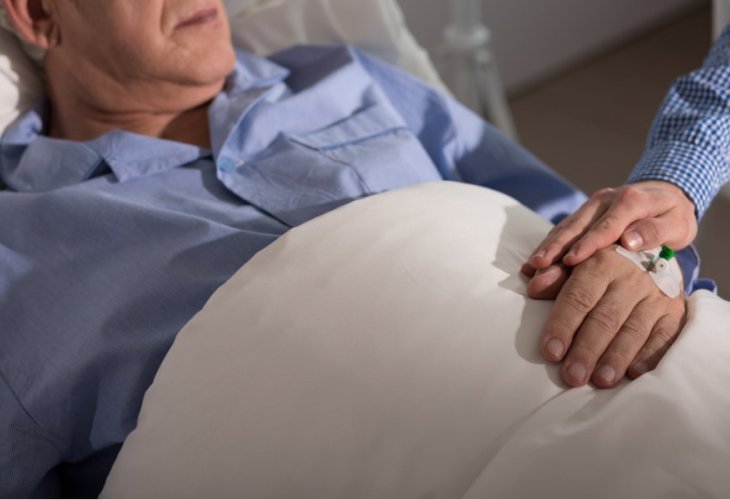 (Photo: Shutterstock)
Our Sages asked (Sotah 14a) about the verse: “After the Lord your God you shall walk.” How can a person “walk after” God — when it also says, “For the Lord your God is a consuming fire”?
Rather, they explain: Walk after God’s attributes. Just as God visited the sick, as it says, “The Lord appeared to him in the plains of Mamre” (God visited Avraham after his circumcision at age 99), so too you should visit the sick. Just as God comforted mourners, as it says, “After Avraham’s death, God blessed Yitzchak his son,” so too you should comfort mourners. And just as God buried the dead, as it says, “And He buried him in the valley,” so too you should bury the dead.
Is Visiting the Sick a Torah or Rabbinic Commandment?
Many halachic authorities hold that visiting the sick (bikur cholim) is a Torah mitzvah (including the Ba’al Halachot Gedolot, Ramban, Rashbatz, Ritva, Riaz, Sefer Yere’im, and others). Even those who say it is rabbinic agree that it falls under the broader Torah principle of “Love your fellow as yourself.”
The Rambam writes (Hilchot Avel 14:1) that it is a rabbinic positive commandment to visit the sick, accompany guests, bring in the bride, rejoice with the bride and groom, and support them in their needs — acts of kindness “with one’s body,” with no fixed measure. And although these are rabbinic, they are included in “Love your fellow as yourself” — do for your fellow what you would want others to do for you.
The Reward for Visiting the Sick
The Sages teach (Nedarim 40a): Whoever visits the sick is saved from the judgment of Gehinnom, based on the verse, “Fortunate is one who acts wisely toward the weak/sick… on a day of evil the Lord will rescue him.” They also explain the verse’s blessings in this world: protection from the evil inclination, relief from suffering, being honored by others, and being granted friends who help.
They also list visiting the sick among the mitzvot whose “fruits” a person enjoys in this world while the principal remains for the World to Come (Shabbat 127a).
Bikur cholim has no fixed limit. There is no set number of visits, and it is praiseworthy to visit even many times a day, as long as it does not burden the patient (Nedarim 39b; Yoreh De’ah 335:2).
The Main Goals of Bikur Cholim
Caring for Practical Needs
The central purpose is to see what the patient needs and make sure someone takes care of it. This includes ensuring the patient’s space is clean and orderly, since cleanliness can calm the mind and help recovery, while an unpleasant environment can cause distress and a negative atmosphere.
If the patient needs a certain food that may help recovery, one should encourage the family to prepare it.
Emotional Strengthening
One should lift the patient’s spirits, encourage them with hopeful words, and speak in ways that bring joy, by sharing stories of righteous people and uplifting themes. If appropriate, one may share simple, pleasant Torah ideas to cheer them and distract them from illness.
Prayer Is Essential
A visit should lead a person to pray for mercy: that God send healing, grant wisdom to the doctors, and prevent mistakes. The Ramban writes that one who visits but does not pray for the patient has not fulfilled the mitzvah properly (as brought in Beit Yosef, YD 335).
“Whoever Doesn’t Visit the Sick — It’s Like Shedding Blood”
The Gemara tells (Nedarim 40a) of a student of Rabbi Akiva who became ill. Rabbi Akiva visited, cleaned and arranged the room, and the student recovered. The student said, “Rabbi, you have revived me!” Rabbi Akiva then taught: “Anyone who does not visit the sick is as though he sheds blood.”
The idea is that neglecting the kinds of help that can save someone, such as physical support, basic care, and advocacy, can be considered morally like spilling blood.
Helping the Patient Keep Mitzvot
Beyond physical needs (food, drink, medicine), one should care for spiritual needs too, such as assistance with tefillin, or obtaining items needed for mitzvot (like the Four Species, matzah, etc.).
The text emphasizes that payment should come from the patient’s funds when possible — since it is not ideal to fulfill mitzvah needs “for free,” citing teachings that stress paying properly for mitzvah-related services.
Visiting Someone in the Hospital
Even when the patient is in a hospital with expert doctors and devoted nurses, it remains a great mitzvah to visit, especially to strengthen and encourage the patient, and because visiting naturally awakens more heartfelt prayer.
The Sages also say (Nedarim 39b) that when someone visits a patient who is “like him” (explained as someone beloved/close), it can lighten the illness, and this applies even in a hospital setting.
It is especially important to visit when others are busy, such as before Shabbat, and before holidays, etc. The reward is described as far greater, based on the principle: “According to the effort is the reward.” Often, warm human presence during lonely, difficult hours can be more powerful than the medical care itself — especially on Shabbat and holidays when the patient knows others are home celebrating.
Ideally, two people visit together so they can better help and notice needs (“Two are better than one”). But if no partner is available, one should not skip the mitzvah. If the patient would feel uncomfortable with two visitors, each should come separately.
Even an important person should visit someone “beneath” him and not say, “It’s not my honor.” Sometimes, when medical staff see that respected people are involved, they take extra care and urgency.
Special Situations
Standing for an Elder or Torah Scholar
Normally one stands for an elderly person (70+) or a Torah scholar when they come within four amot (about 2 meters). However, an ill person lying in bed is not obligated to stand, so no one should put them in a situation where they might be told “sit,” which could sound painful. If the patient wants to stand out of honor for Torah, they may — while the scholar should say, “Don’t trouble yourself,” or “Rest,” rather than “Sit.”
If You Must Choose: Poor vs. Rich
If you can visit only one patient, visit the poor patient, because you may be able to help with vital needs. If both truly need assistance and one is a Torah scholar, honoring Torah can make the scholar take precedence.
Visiting a Non-Jew
One may visit a sick non-Jew for the sake of peace, and may pray for their recovery — especially if they request it, and certainly if there is gratitude owed. But if the person actively harms Jews, one should not pray for them.
A convert should visit and pray for his non-Jewish parents if they are ill, since they brought him into the world, and his conduct can sanctify God’s Name.
By Phone
If someone (especially a Torah scholar) cannot visit in person, especially when the patient is far away, calling by phone is also a mitzvah: it honors the patient, gives comfort, and one should also pray and learn Torah in their merit.
Contagious Illness
One should not visit someone with a contagious disease if it puts the visitor at risk. The Torah commands us to guard our lives. In such cases, call by phone, and increase prayer.
Enemies
If two people are estranged and one becomes ill, the other may visit, as it may lead to reconciliation and peace. If the fight was intense, it is better to send a message first asking permission.
Men and Women Visiting
A man may visit a sick woman — and a woman may visit a sick man, for needs and prayer. Still, modesty matters: if the woman is not dressed modestly in a way that makes an in-room visit inappropriate, the man should call instead and arrange help.
Visiting the Sick on Shabbat
It is permitted to visit on Shabbat, especially if one was busy during the week. Even if the visitor feels pain seeing the patient (which could reduce their own Shabbat enjoyment), it is permitted because it revives and cheers the patient.
A common Shabbat phrase added in prayer is: “Shabbat is not a time for crying out, and healing is close to come.”
Not Leaving the Sick Person Alone
The text warns not to leave a sick person (or a woman within a week of childbirth) alone at home because of spiritual dangers; having another person present — even a child old enough to understand (around five or six), is protective. If no one can stay, the patient should recite Shema.
Bikur Cholim vs. Nichum Aveilim
If a person can do only one of the two, either visiting the sick or comforting mourners, comforting mourners generally comes first, because it is kindness for the living and the dead, while visiting the sick is kindness for the living. However, if the sick person has no one caring for their needs, then bikur cholim takes priority.

