

Behind the News
After Final Recovery, IDF Reveals How It Tracked and Recovered Every October 7 Hostage
Disclosure follows the return of the last captive and marks the first full account of the intelligence effort, failures, and moral dilemmas behind Israel’s hostage mission
- Brian Racer
- | Updated
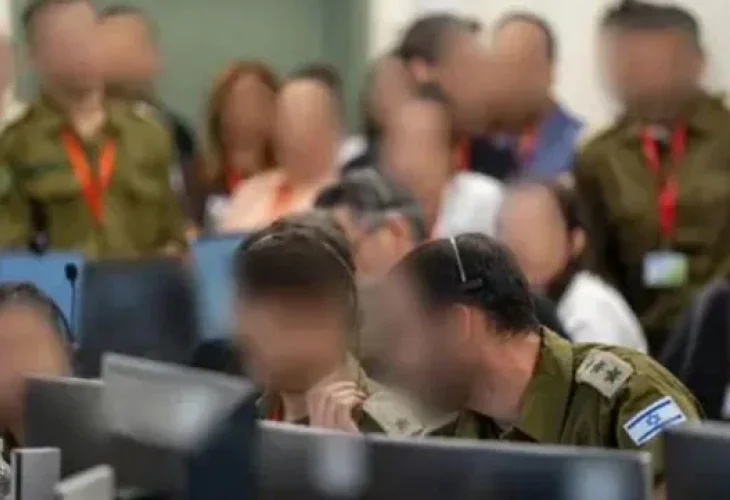 IDF Missing Persons and Intelligence Office (IDF Spokesperson)
The IDF announced Thursday the formal conclusion of its hostage mission, following the recovery of the final captive, Ran Gvili. With the mission complete, the IDF released its first comprehensive account of the special command established after October 7 to identify, track, and recover every hostage taken to Gaza.
According to the IDF, the disclosure was made only after the return of the last hostage, allowing the military to close the file on one of the most complex and sensitive efforts undertaken during the war. Officials described the announcement not as a victory statement, but as a final accounting of responsibility after a national failure.
In the immediate aftermath of Hamas’s October 7 attack, Israel faced what senior intelligence officials later described as a collapse of knowledge. More than 3,100 people were initially reported missing, with no clear distinction between those killed, abducted, or simply out of contact. In the first days after the attack, civilian volunteers and improvised war rooms often gathered information faster than the military, highlighting the absence of a prepared system for mass hostage events.
Within weeks, intelligence analysts narrowed the number of suspected hostages to between 200 and 300. Only by the end of 2024, the IDF confirmed with certainty that 251 people had been abducted to Gaza, including four individuals held in captivity before the war. Officials emphasized that by that point, there were no unknown fates remaining.
At the heart of the effort was a central moral dilemma that shaped the war from its earliest stages: whether to eliminate enemy terrorists who posed an immediate threat, or to preserve them as intelligence sources who might lead to hostages. Senior officers acknowledged there was no textbook solution. Decisions made under this tension influenced targeting policies, ground maneuvers, and the use of air power throughout the campaign.
To manage this challenge, the IDF established an unprecedented Hostages and Missing Command within Military Intelligence. Led by Nitzan Alon, the command eventually included approximately 2,100 personnel, the majority of them reservists, drawn from more than 50 units including Unit 8200, the Research Division, the Shin Bet, the Mossad, Israel Police, and Southern Command. The IDF acknowledged that no such framework existed before the war.
The command operated along four main lines: continuous mapping of every hostage and missing person, dedicated intelligence research on captors and locations, direct liaison with families through assigned senior officers, and intelligence support for negotiations conducted by mediators.
The IDF also acknowledged serious failures. Hostages were killed in captivity, three were fatally shot by IDF forces in a friendly-fire incident, and operational mistakes were made during fighting in Rafah. Officials said each incident was investigated and led to changes in procedures during the war.
Between October 2023 and January 2026, 168 hostages were returned alive and 87 fallen captives were recovered. Some were released in deals, others in special operations carried out under active combat.
The recovery of Ran Gvili in January 2026 marked the mission’s end. His case, officials said, was among the most complex, requiring a prolonged intelligence effort after even Hamas and Islamic Jihad lacked clear information about his burial site.
In closing its account, the IDF framed the mission as an act of obligation rather than achievement. Israel failed on October 7, officials said, but refused to accept uncertainty.

