

World News
Trump Pushes Iran Talks Despite Expanding U.S. Military Presence
After senior Israeli security talks in Washington, Trump keeps a strike option open as U.S.–Iran negotiations move forward through regional mediators
- Brian Racer
- | Updated
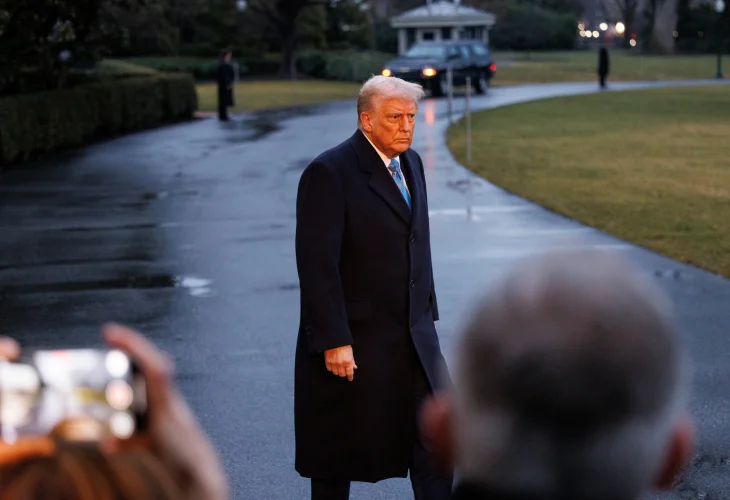 Donald Trump (Shutterstock)
President Donald Trump responded Sunday to a warning from Iran’s supreme leader by stressing American military power while holding open the possibility of a diplomatic deal. Speaking at Mar-a-Lago, Trump dismissed the rhetoric from Tehran, hours after Iran’s Supreme Leader Ali Khamenei warned that any U.S. strike would trigger a regional war. He said the United States has “the biggest, most powerful ships in the world” positioned nearby and added that he hopes a deal can still be reached. If diplomacy fails, Trump said, “we’ll find out whether or not he was right,” underscoring a dual-track approach that pairs negotiations with a visible military buildup.
The moment reflects a narrow and intensifying window. The Trump administration has ordered a significant reinforcement of U.S. forces in the Gulf while signaling it is prepared to negotiate an agreement aimed at preventing Iran from obtaining nuclear weapons. Israeli officials say Trump has not removed the option of a strike, but at this stage prefers to test whether tough negotiations can produce results.
Those assessments follow a low-profile visit to Washington by IDF Chief of Staff Eyal Zamir, who met with U.S. military leaders over the weekend, including Chairman of the Joint Chiefs of Staff Dan Caine. U.S. and Israeli officials said the talks focused on coordinating defensive and offensive plans in the event of a confrontation with Iran.
Israeli officials familiar with the discussions say Israel used the meetings to outline the risks of delaying action. They warned that continued diplomatic stalling could allow Iran to advance toward a nuclear capability and expand its ballistic missile arsenal. Israel also raised concerns about the regional consequences of Iran’s missile program, according to the officials.
At the same time, diplomatic activity has accelerated. According to Axios, the United States has told Iran through multiple channels that it is ready to meet and negotiate a deal. Turkey, Egypt and Qatar are working to organize a possible meeting later this week in Ankara between White House envoy Steve Witkoff and senior Iranian officials. One regional official involved in the mediation said the effort “is moving,” while a second U.S. official confirmed that a meeting could take place this week.
Iranian messaging, however, remains divided. Khamenei made no reference to negotiations in his public remarks, accusing the United States of seeking to dominate Iran and seize its resources. In contrast, Iranian Foreign Minister Abbas Araghchi told CNN that “friendly countries” are working to build confidence between the sides and described those efforts as fruitful. Following a visit to Tehran by Qatari Prime Minister Mohammed bin Abdulrahman Al Thani, senior Iranian official Ali Larijani said that forming a framework for negotiations was progressing.
Against that backdrop, Prime Minister Benjamin Netanyahu convened a security discussion with the IDF chief of staff and the Mossad director, as Israel weighs the diplomatic opening against its warnings about Iran’s nuclear and missile ambitions. For now, Trump is keeping both paths open, betting that pressure and talks together can force a decision before events overtake diplomacy.

