

Israel News
Khamenei Issues Strongest Warning Yet: Any U.S. Attack Will Trigger Regional War
Speaking Sunday, Iran’s supreme leader dismisses U.S. military pressure even as Washington signals talks with Tehran are underway
- Brian Racer
- | Updated
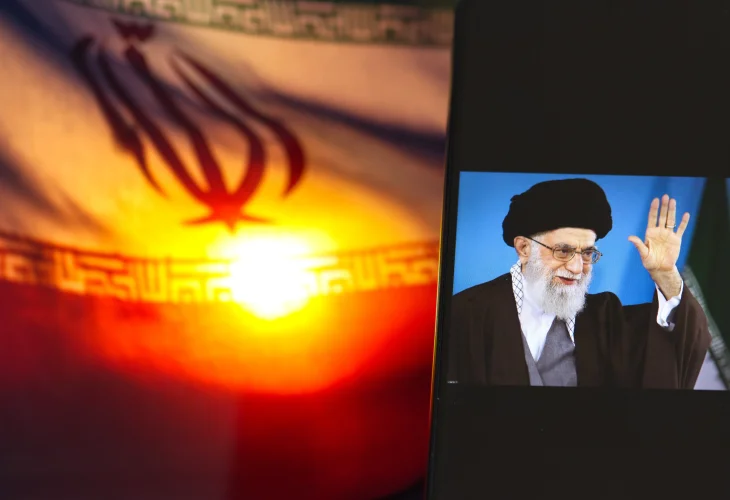 Ali Khamenei (Shutterstock)
Iran’s Supreme Leader Ayatollah Ali Khamenei warned on Sunday that any U.S. attack on Iran would ignite a regional war, issuing his most explicit threat to Washington to date as tensions escalate across the Middle East. “The Americans must know that if they start a war, this time it will be a regional war,” Khamenei said, according to Iranian media.
The warning from the 86-year-old leader marked a sharp escalation in Iran’s posture. It came as the United States boosts its military presence in the region while signaling that diplomatic contacts with Tehran are continuing, and making clear that Khamenei, not Iran’s diplomats or elected officials, is setting the country’s red lines.
Expanding on his warning, Khamenei insisted Iran does not seek to initiate a conflict but would respond forcefully if attacked. “We are not the initiators and we do not want to attack any country, but the Iranian people will strike a strong blow against anyone who attacks and harms them,” he said.
Khamenei also dismissed U.S. military deployments as attempts at intimidation, portraying them as familiar tactics that have failed in the past. “Sometimes they talk about war, about planes and ships. This is nothing new,” he said, urging Iranians not to be swayed by what he described as psychological pressure.
The statements were accompanied by a rare public appearance by the supreme leader yesterday, widely seen as a signal of control and confidence due to fears of an imminent U.S. strike. Iranian media published images showing Khamenei attending prayers at the tomb of Islamic Republic founder Ruhollah Khomeini, his first public appearance since unrest erupted in the country weeks earlier, aimed at countering speculation that he had been moved to a secure underground bunker as tensions with Washington intensified.
From Washington, however, President Donald Trump acknowledged that contacts with Tehran were taking place, while maintaining military pressure. Speaking on Saturday, Trump said Iran was engaged in talks with the United States, though he offered no assurances of a breakthrough. “They are talking to us. Seriously talking to us,” he said.
Iranian officials have sent mixed messages beneath Khamenei’s hard line. Ali Larijani, a senior figure close to the leadership, said progress was being made toward a diplomatic framework. “Contrary to the hype of the contrived media war, structural arrangements for negotiations are progressing,” Larijani said. Despite those comments, Khamenei has repeatedly rejected negotiations held under the threat of force, making clear that he alone sets Iran’s policy.
Iran’s military leadership echoed the supreme leader’s warning, explicitly referencing Israel as a potential target if the confrontation widens. Army chief Amir Hatami said that any U.S. action would have broad consequences. “If the enemy makes a mistake, without a doubt it will endanger its own security, the security of the region, and the security of the Zionist regime,” he said.

