

Wonders of Creation
Why Bees Matter: The Hidden Role of Honeybees in Our Food and Ecosystem
From Rosh Hashanah honey to global agriculture, how honeybees sustain life and why protecting them is essential
- Shiri Priant
- | Updated
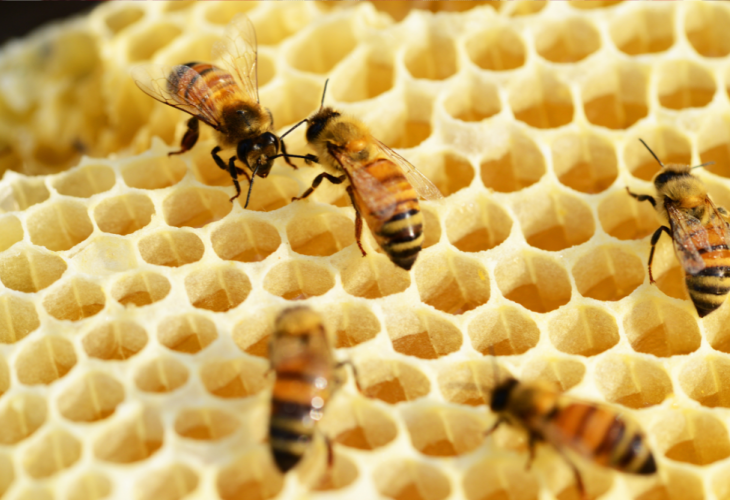
On Rosh Hashanah, many of us buy jars of honey to dip the apple into this sweet delicacy. Yet the hardworking bee that produces the honey does not always receive the appreciation it deserves. Beyond honey production, the bee is the most significant insect for human development, because its primary role is pollinating agricultural and wild plants.
Ofir Reich, CEO of the Honey Council, points out four facts about bees that you may not know.
Without Bees, There Is No Food
Without bees, most plant based foods would not exist. While modern humans can develop artificial intelligence, medicines, and vaccines, no one has yet succeeded in efficiently replicating the natural mechanics of plant pollination, one of the most essential processes in nature.
Reich explains: “Every flower needs pollination in order to produce fertilization, from which fruit and seeds will grow. To perform this task, we rely on honeybees. The pollination carried out by bees affects the entire ecosystem and every living creature.”
“In recent years, bee colonies around the world have been declining for many reasons, some of which are still unknown. Since bees are the primary pollinators in nature, scientists and bee experts worldwide are deeply concerned about the shrinking bee population. Most people do not realize that bees are ‘super pollinators,’ capable of pollinating plants that grow in high or remote areas where other insects do not dare to reach.”
Bees Have a Very Different Anatomy From Humans
A closer look at a bee reveals how different it is from vertebrates, including humans. Bees have a completely different type of circulatory system. Like other insects, they have an external skeleton, but internally they do not have blood vessels. Instead, a fluid fills the bee’s body freely and surrounds all its organs.
This fluid does not carry oxygen, which is why it is not red like human blood. All the organs, including the heart, are suspended within this freely flowing fluid, almost like objects floating inside a balloon.
Bees Are Friendly Insects
Encountering a honeybee in nature can be frightening for some people. Bees produce a sharp, noticeable buzzing sound when flying, which can make them seem threatening. In reality, bees are gentle insects, and there is usually no reason to fear being stung.
Only female honeybees have a stinger, and they will sting only if they feel threatened. Generally, bees are delicate, diligent creatures, busy with their many tasks of collecting nectar and pollinating, producing wax, cleaning the hive, guarding it, and caring for the queen. Many experienced beekeepers do not wear gloves when handling hives, and some even gently stroke the bees with their bare hands.
Everyone Can Help Protect Bees
A typical worker honeybee lives only a few weeks. The queen is the only bee in the colony that can survive a year or more, while the rest are constantly replaced. The presence of bees around you is a positive sign and something to be happy about.
We all have a responsibility to help protect honeybees. This includes planting nectar producing trees and shrubs, growing flowers in blue, purple, and yellow shades that tend to attract bees, working with beekeepers to prevent unnecessary tree cutting especially eucalyptus trees whose flowers provide nectar for most of the year, avoiding certain pesticides known to harm bees, and promoting these efforts within our local communities and authorities.

