

Magazine
From Loss to Light: How Kesem Ora Turned Pregnancy Loss into Growth and Strength
How one woman transformed profound pain into purpose, emotional healing, and renewed life
- Moriah Luz
- | Updated
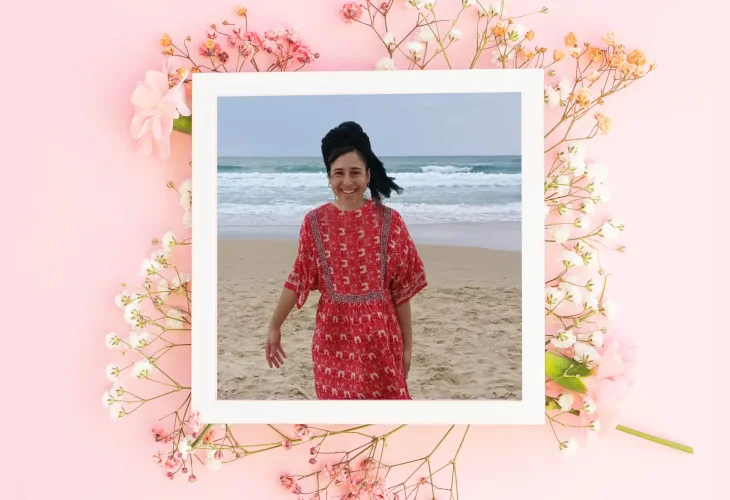
One miscarriage, two stillbirths, and two children as sweet as honey: this is the obstetric summary of Kesem Ora (33), a gentle, warm woman who chose to channel the pain in her life toward growth and goodness. Before we begin speaking, she has one request: “I want the article to touch on the journey and the insights that grew from it, not only the events themselves. It’s important to me to convey a message of life and growth.”
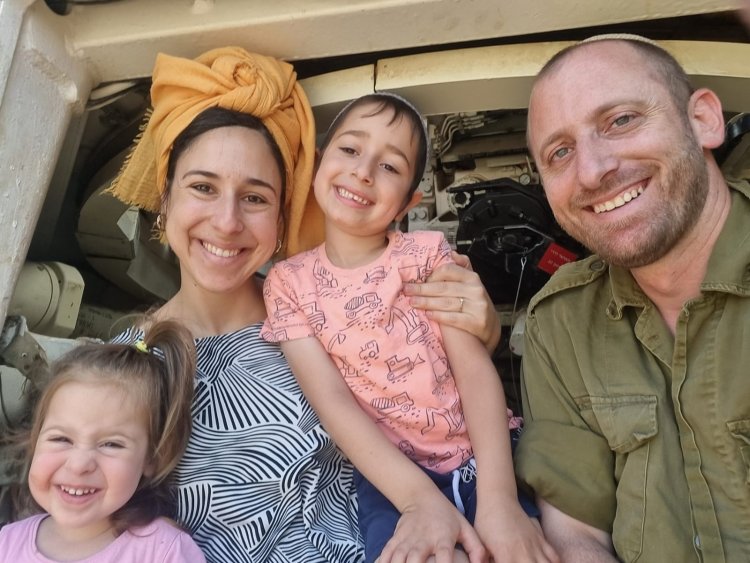
She is married and a mother of two (soon to be three, God willing), born into a non-religious family and later returning to Judaism. Two years after her marriage, Kesem Ora gave birth to her first son, Benayah. Life at that point was fairly ordinary, with nothing hinting at what would unfold a year later.
“Uncertainty Is the Hardest Part”
When Benayah was about one year old, Kesem Ora became pregnant again but miscarried after two months. “Two months later, I was pregnant again. In the fourth month, we went for a routine early anatomy scan. I went into the appointment not even fully sure why we were going, thinking it might not even be necessary,” she recalls.
The doctor examined the fetus, and Kesem Ora was relieved as one organ after another appeared normal. “I was happy. Suddenly, the doctor stopped the exam, left the room, and returned with another physician. It turned out she had detected enlarged brain ventricles.” The doctor explained that this finding is usually seen later in pregnancy, not so early, and could indicate a severe defect. They were referred for extensive follow-up testing. “I felt like I’d been slapped. I also didn’t understand where her certainty came from.”
Did you believe she might be right and that there was a serious defect?
“Not at all,” she admits. She explains that during her first pregnancy, doctors had also predicted serious problems based on one measurement and recommended risky tests. “It was our first pregnancy, and the predictions really frightened us.” Benayah was born completely healthy, and Kesem Ora learned firsthand that statistics are just that — statistics. “I studied biochemical engineering at the Technion. I understand biology, science, and statistics, and statistics don’t guarantee outcomes.”
Despite her refusal to believe the fetus was ill, she underwent a long series of increasingly troubling tests. “The in-between period was the hardest — we were in deep uncertainty, facing frightening possibilities. I searched for ways to cope, and I felt that I had a path I needed to walk. What helped me most was connecting to the fetus, especially as the pregnancy progressed and I felt her movements more often.”
“I Have a Father in Heaven, and I’m Allowed to Hurt”
After two months, they received a definitive diagnosis: the fetus had a fatal syndrome — “something extremely rare, occurring once in several million cases.” Rabbis and medical experts they consulted unanimously supported terminating the pregnancy. “When we got the final answer, we understood the phrase ‘there is no joy like the resolution of doubt.’ There was no joy, but at least there was certainty.” She entered the delivery room knowing she would leave empty-handed.
What was the birth like for you?
“In general, I see childbirth as a miracle, and that miracle happened here too. There was mourning for the dream that died, but it had already begun earlier. The long diagnostic process forced us to prepare emotionally. I mourned the daughter who was meant to be, the sister my son would have had, and all the dreams every pregnant woman carries.
“The birth itself was powerful. There was something deeply spiritual, hard to put into words. During labor, I spoke to the baby and to God.” At her request, there were very few staff members in the room. “For me, silence and focus were essential. I allowed myself to be fully inside the pain, like a small child who allows herself to cry only when she has parents to lean on. I felt that I had a Father in Heaven, and that I was allowed to hurt.”
A day later, Kesem Ora returned home. The first days were extremely difficult, with a stronger hormonal crash than after a regular birth. “These days are sensitive even when you have a baby, but without one, everything intensifies.” She explains that physiologically, oxytocin — the hormone released through contact with a baby and crucial for emotional well-being, was absent.
What was the greatest challenge during that time?
“Allowing myself to grieve, without filtering it through other people’s opinions.” She explains that the pain was so intense that others couldn’t grasp its depth. “Even now, I find it hard to truly understand someone going through it.”
Which responses helped, and which didn’t?
Helpful responses were mostly practical, such as people bringing food with kind notes, friends staying with her in the hospital, helping care for her older child. She especially appreciated friends who came in the first days after she returned home, helped a bit with household tasks, and mostly “just sat with me.” “I needed people to be like a sponge, to be present, attentive, allowing me to talk or not talk, depending on how I felt.”
There were also less helpful responses. A week after the stillbirth, her sister-in-law got married, and Kesem Ora attended the celebration, later realizing it might not have been the right choice. “I heard comments from older people about suppressing emotions, about how things were worse during the Holocaust, and similar approaches. People simply don’t know what to say or how to contain such pain,” she says gently. “It’s hard for them to see someone cry, so they try to shut it down.”
“Living at Full Intensity”
Despite the unimaginable pain, Kesem Ora emphasizes that life continued, and that her trajectory was upward. “Even before the birth, I was afraid of what was coming, but alongside the fear I asked myself: ‘What does God want to give me here?’ I felt there was abundance He wanted me to receive, and that I was viewing things through a very narrow lens.”
You were in the depths of hardship — what allowed you to think that way?
“I was always a positive person, but it used to be more external. Strengthening spiritually deepened that belief, and that seeing good is part of serving God. The stillbirth forced me to reconnect to positivity from an authentic place. I realized that real optimism isn’t superficial. There must be room for pain and difficult emotions. The intensity of joy depends on the ‘volume’ of the entire emotional spectrum I allow myself to feel. God didn’t create emotions for me to suppress them with phrases like ‘you’re not allowed to be sad,’ living life on low volume.”
She chose to live life at full intensity. “I was reminded that nothing here is guaranteed and everything can change. That pushed me to do more of what my soul was calling for.” She left her master’s degree at the Technion — much to the surprise of those around her, and made a radical career change.
“Because of what I went through, I discovered how common miscarriages are, and how few tools women have to cope. After the stillbirth, I joined hospital support groups and online communities. On one hand, I was grateful there was a place to talk. On the other, I saw a lot of victimhood approaches, describing stillbirth as a ‘wound that will never heal.’ To me, those messages make things harder. If someone stays in therapy for ten years still feeling like a victim, they’re stuck in a destructive loop.”
From her personal experience, she chose to support other women and plant hope. “I wanted to say: ‘Don’t believe anyone who tells you your life is over and you’ll always be broken.’ Even people who haven’t experienced stillbirth can understand that pain doesn’t have to define your entire future, but having lived it, there’s a better chance someone will listen,” she smiles.
She encouraged women to fully experience their pain without denying it, while also focusing on what nurtures them. “It’s a call for self-love. If something hurts or doesn’t work, it’s an invitation to ask how I can be kinder to myself. God wants to bring more good into my life. There’s no need for self-punishment or thinking this happened because I did something wrong.”
“Expanding Our Capacity”
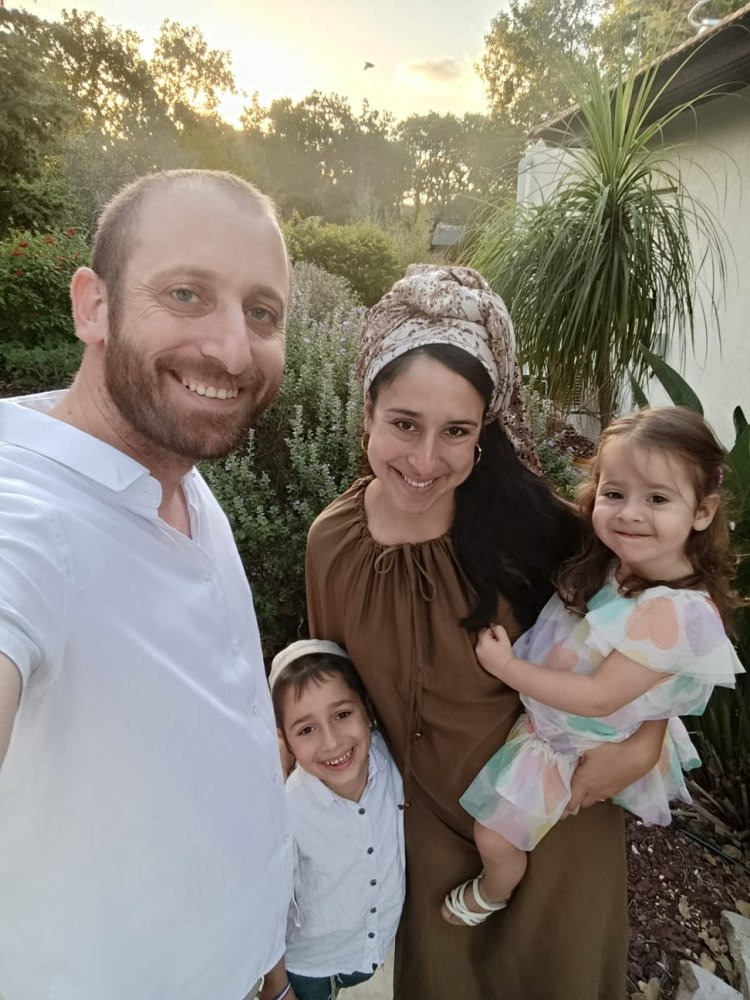
As part of these life changes, the family moved from Haifa to a moshav. By God’s grace, Kesem Ora became pregnant again. She describes the pregnancy as “not roses and sunshine, but relatively calm.” The stress wasn’t unfounded as the rare defect turned out to be genetic. Anxiety accompanied them until testing became possible. Her daughter, Kama, was born on time, healthy and whole, and is now two and a half years old.
During that pregnancy, Kesem Ora stepped back from her work supporting women after stillbirth. “Marketing required immersing myself in support groups, and it was emotionally overwhelming. I felt I needed to move forward with life.” Today she is self-employed, supporting families and couples financially, and providing administrative and sales services for another business.
About a year and a half ago, she experienced another stillbirth. “We discovered the fetus was ill, and I terminated the pregnancy at 14 weeks. The hospital procedure was quite traumatic,” she says briefly, adding that they are now expecting a healthy baby, God willing.
Toward the end of the interview, I ask about her unique name. “I added the name Ora during the second pregnancy, shortly before receiving the diagnosis. Adding a second name wasn’t common where I grew up, but I wanted a reminder of that baby. I told myself: if she lives, it will add light to my life; if not, it will remain as a reminder of her light and joy. Thank God, that’s exactly what happened.”
“What I went through didn’t make me sadder, it made me more alive,” she concludes. “Sad things happen and will continue to happen. I learned that pain we don’t allow space for ends up controlling us. But if we choose to walk through it, we expand our capacity for pain, but also for pleasure and joy. I learned to make more precise choices, to live less from fear and people-pleasing. We are a divine spark from above. We have incredible strength, and it’s worth choosing to use it.”

