

Magazine
Nissim Saroussi: The Legendary Voice Who Changed Mizrahi Music and Found Peace Beyond Fame
From meteoric success and cultural barriers to faith, gratitude, and a heartfelt return to Israel, the iconic singer reflects on music, belief, and a life shaped by authenticity
- Chaim Gefen
- | Updated
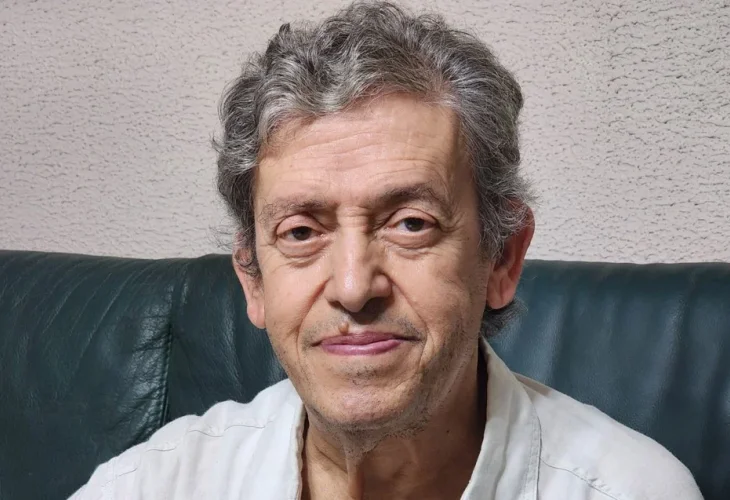 Nissim Sarusi Today
Half the country was moved to tears when the song I Can’t spun on turntables across Israel. With his deep, resonant voice, and an almost magical ability to weave ornament after ornament, Nissim Saroussi stirred the hearts of his listeners and became the youngest nightingale of Mizrahi music.
Very few singers can truly be called legends, but Saroussi is undoubtedly one of them. When he burst into Israeli public consciousness in the early 1970s, Mizrahi music was still confined to a small circle of performers, most of whom occupied a narrow musical space. Saroussi was the first to break that taboo. He appeared suddenly, like a meteor from nowhere, and changed the sound of the genre.
After his first major hit, I Can’t, came Illusions, a song that shattered listening records on Israel’s leading radio charts. Saroussi’s future seemed secure. Many predicted a brilliant, enduring career. But reality took an unexpected turn. At the height of his success, Saroussi left for France, settled there, and gradually faded from the Israeli music scene. In a special interview, nearly a year after his surprising return to Israel, he opens up about everything.
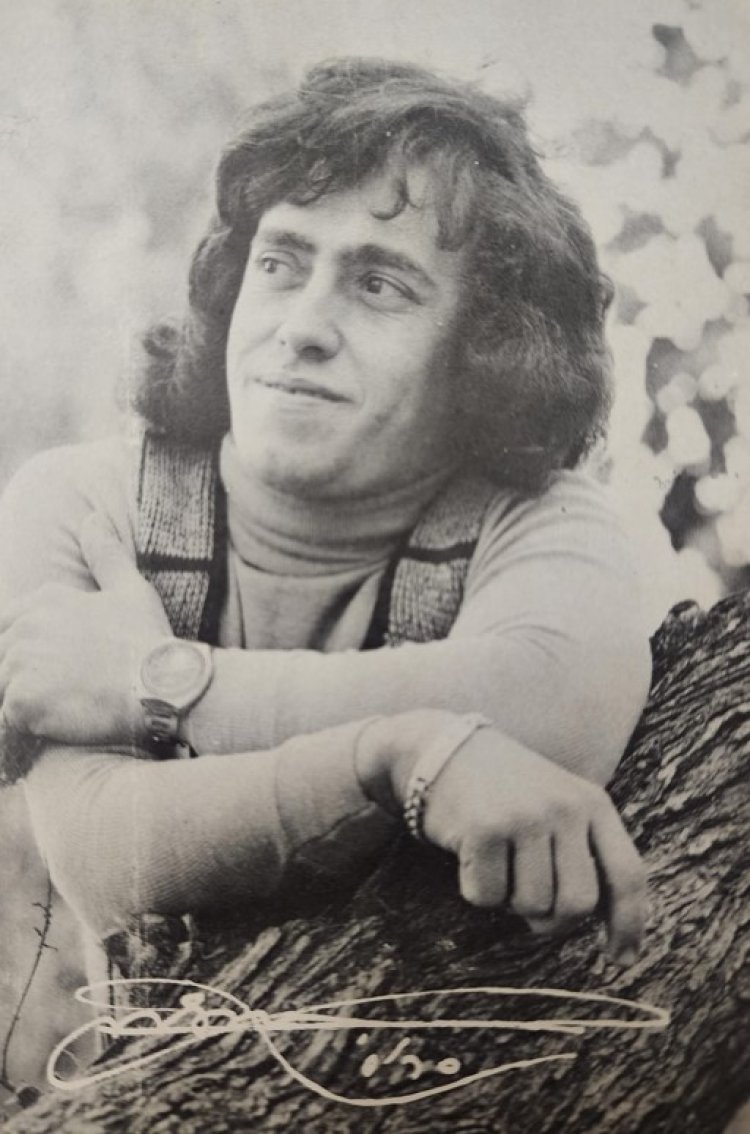 I can't anymore. Saroussi before his departure abroad
Let’s go back in time. Take us to the beginning.
“I miss those days so much,” he says. “Everything was new. I had to start from scratch, but thank God, from the very beginning everything worked perfectly. I had no doubts. I jumped straight in.”
Were you surprised by your success?
“Success is really about finding favor, and God granted me that favor. People don’t always know how to define success. For me it was simple. If you feel good, that means you are successful, and I felt good.”
Still, as one of the first Mizrahi singers to break through the barrier, that must have been surprising.
“I was Mizrahi in my background, but not only in my songs. I sang everything. On one hand, I performed in clubs with faster, more rhythmic music. On the other, I released Mizrahi hits to add color to my singing. My audience came from every background.”
Are you embarrassed to define yourself as a Mizrahi singer?
“Not at all. There is nothing to be ashamed of. That is who I am. I simply sang in all styles, and I am happy with all of it.”
Two years after his breakthrough, at the height of his career, Saroussi was invited to a television interview. During the conversation, the interviewer commented on his appearance and Mizrahi style of dress.
“It was deeply hurtful,” Saroussi recalls. “At that moment, I did not understand what was happening to me.”
He never imagined that the interview would become a breaking point that would eventually push him abroad. Today, he says he has made peace with it.
“I came to the conclusion that I do not regret what happened. In fact, I am glad it did.”
But at the time, did you stay silent?
“Not exactly,” he laughs. “I answered. I did not let myself be humiliated. Imagine someone sitting across from you trying to mock you, and you simply ignore the mockery and respond thoughtfully. That is what I did. I am not someone who looks down on people. I do not even understand that mindset.
“During the interview, I had no idea what kind of spectacle it would become. They tried to trap me. I answered and moved on. The real storm came afterward, when the interview was endlessly replayed. That is what turned it into a story about racism.”
“Today, I Take Care of Myself”
As a veteran singer from an earlier era, a time that felt simpler and more magical, Saroussi, now 77, admits that faith also felt simpler then.
“I know one thing,” he says sincerely. “When I reach Heaven after one hundred and twenty years, I will be able to say honestly to God that I did what You wanted me to do in this world. I did not do wrong.”
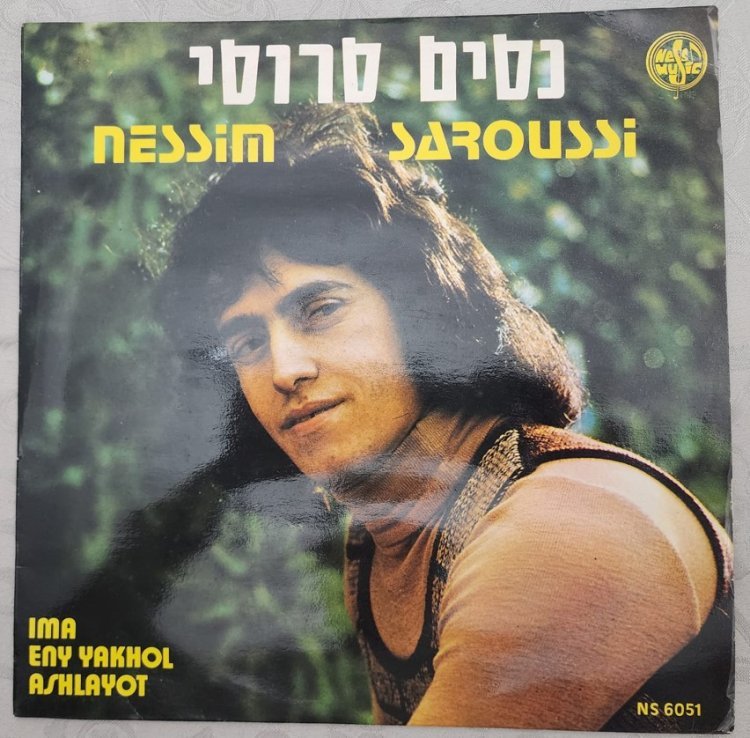 Nissim Saroussi at the beginning of his career (Photo: Aryeh Saroussi)
But during your career, you performed on Shabbat.
“Maybe only at the very beginning, when I was a club singer. Today, I am careful, and I will never perform on Shabbat again. Shabbat is a gift God gave us. We should cherish it, not give it up.”
What is your relationship with God today?
“I am a believer. I know there is a higher power, and we, the Jewish people, believe in Him. That is simple faith. Knowing there is Someone above, believing in Him, trusting Him.”
How do you connect to Him in daily life?
“My entire career is built on that connection. People sometimes ask if there was ever a moment of crisis when I cried out for help. I tell them no. I do not wait for crisis to look upward. I speak to Him all the time. I pray all the time.”
Was there ever a moment when you said, ‘Father, help me, I need You’?
“I have said that sentence countless times. Before every goal I wanted to achieve, I asked Him for help. Without Him, nothing would have happened.”
“All My Life, I Was Chasing Recognition”
“Even more than I pray, I give thanks,” Saroussi says emotionally. “Before every success, every milestone, every record, I found myself saying ‘Thank God.’ I am happy with everything. I complain about nothing.”
Even about the racism you experienced?
“Even for that, I say thank you,” he replies. “Looking back, what happened was a victory. Truth defeated racism and discrimination. When someone tries to diminish you, and you continue to succeed, that is your true victory.”
In recent months, after nearly fifty years living abroad and building an international career, Saroussi returned to settle in Israel.
“It feels good,” he says. “The Land of Israel is our home. It is always good to come home.”
What lies ahead?
“I continue to perform and do what I love. I also plan to release new songs, and I am sure it will happen. We are on the way.
“For almost my entire life, I was chasing recognition. I wanted to tell the world, ‘I am here,’ and I did a lot to prove it. Today, I am content. I am happy with where I am. When I come to performances and see the joy with which people receive me, there is no greater compliment.”
Does it surprise you that people still remember your songs?
“Not really. My music comes from a very personal place. There is nothing more personal than music. When you create it, you do so from the heart. I sing songs that came from my soul. I wrote them and composed them. There is nothing better than bringing your true self into your music.”
What would you like us to wish for you?
“That God gives me the strength to continue creating, and that He protects me from failing in my work. These are the hopes of every singer and creator. As long as God gives me strength, I will not stop singing.”

