

Magazine
Sagiv Amit: Faith, Logic, and Resilience After Loss
A powerful story of tragedy, belief, and inner strength, revealing how faith, intellect, and humor helped one man rebuild family, purpose, and peace after devastating loss
- Shira Dabush (Cohen)
- | Updated
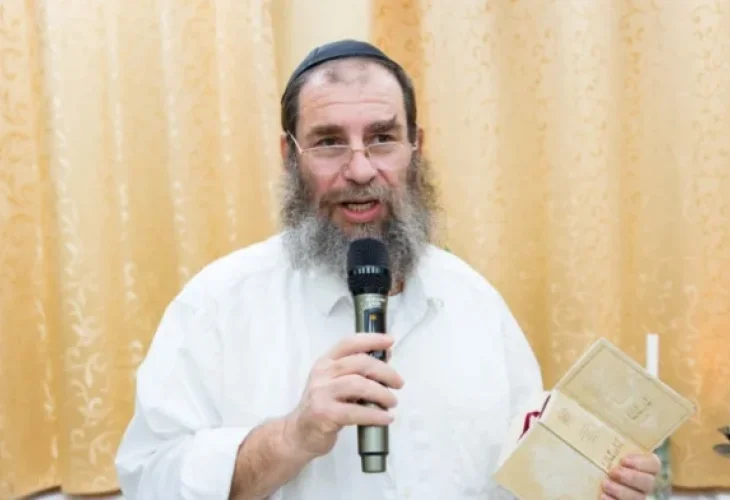 Shagiv Amit
When Sagiv Amit (64), a resident of Petah Tikva, speaks about the day he lost his first wife under tragic circumstances, he returns to a period of almost unimaginable coping.
“God knew exactly what my strengths were and gave it to me all at once, in a single blow,” he says with a smile that reveals his deeply optimistic nature. “She passed away on the 8th of Tishrei, and then Yom Kippur arrived, which cuts short the shiva. I had to deal immediately with life itself, with questions like how to find childcare, how to fill the absence of a mother. There was simply no time to sink into my own grief.”
At the time, Amit was working at Intel while simultaneously taking the demanding exams of the Shas Learning Project. Even if he had had time, Sagiv is far from the type to drown in sadness, and I admit that at first it was hard for me to fully grasp him.
“During the shiva, I was the one comforting everyone else,” he recalls. “God gave me a kind of gift, an extraordinary ability not to sink into sadness, even when it is present. I can feel it, but there is no reason to let it control me.”
Although you were educated from a young age to think logically, how does one live through such a tragedy without falling apart? Forgive me for saying so, but it sounds as though there is no room in your life, in your heart, for emotions other than joy. Isn’t that, in a way, a form of emotional detachment?
“I’m very glad you asked that question, and I’ll try to answer it as precisely as possible,” he replies candidly. “In life, I’ve had to deal with more than a few difficult things. I’ve been married three times, so I understand what you’re asking. But like a good Jew, I’ll answer your question with a question of my own, the one I always ask myself in moments of hardship: ‘What can I do from here?’
“Reality is a fact. What depends on me is my decision. Instead of asking ‘why,’ which is a question about the past that doesn’t move you forward and can only trap you, I ask ‘how,’ and what God wants from me right now. That is the only Jewish approach. If God did this to me, it’s not my role to ask ‘why.’ What helped me most to survive this ordeal without breaking was using the two strongest tools I have: faith and a sense of humor. Without a smile, it’s impossible to survive this kind of complexity.”
Despite the strength he displayed, during the short shiva for his wife, Amit did cry. A neighbor who saw him quickly told him to stay strong for the children, not to break down, not to cry.
“I told him, and I told the children as well, that it’s very good that I’m crying now, because later on I don’t know how much I’ll be able to cry. I’m a person of action, and I had to be the backbone for my eight children from my first marriage and my two children from my second. I maintain a close and loving relationship with all of them to this day, now that I’m married for the third time. My humor, my creative work in writing and studying the inner dimensions of Torah, and the conversations with friends, my study partner, and the Hasidic circles around me are what gave me the strength to cope with everything that happened.”
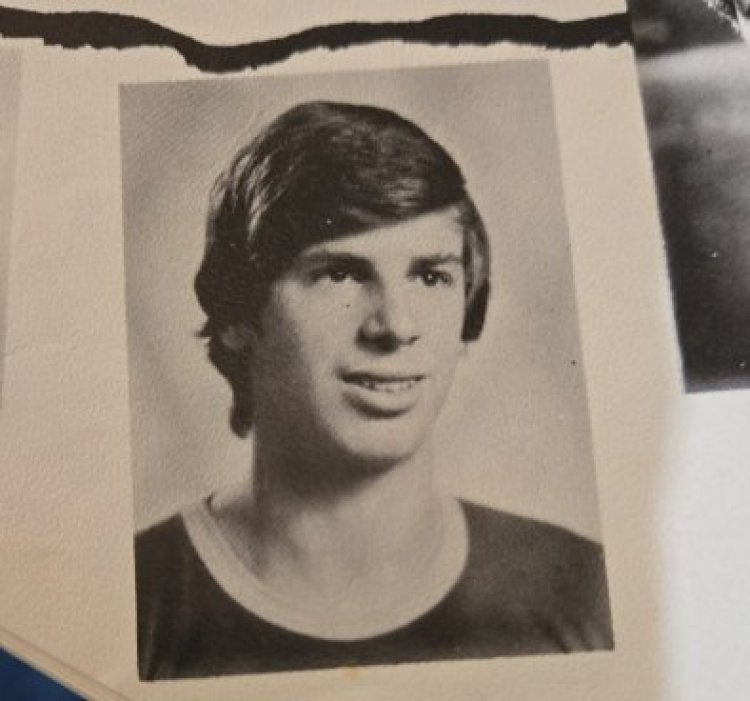 Sagiv Amit in his youth
When I ask how one explains such a devastating loss to young children whose mother, their entire world, was taken from them suddenly, Sagiv answers that he chose to tell them the truth.
“They needed a father who wasn’t confused by what had happened, who would tell them the truth directly and not hide it. That’s exactly what I did. I told them that their mother suffered from an illness you can’t see, an illness of the soul, and that because of it she could no longer carry the burden of life. I didn’t want them to hear it from their friends.”
Sagiv’s journey began in a secular Ashkenazi home. His father, who immigrated from Romania, was far removed from religion and never set foot in a synagogue, despite the fact that his own father, Sagiv’s grandfather, came from a deeply observant family.
 At his third wedding
His mother, who recognized the beauty in Judaism, grew stronger in her faith through him. As for his father, Sagiv recalls sadly how nothing he did as a newly observant Jew was accepted, and how even his success in Torah study and the fact that he authored 84 Torah books failed to impress him. “My parents strongly opposed my path,” he recalls. “When I decided at age 23 to become observant and wear a kippah, it was very hard to explain it to them. So hard, in fact, that my father took me to an event called ‘Parents Against Returning to Religion.’
“Even though I knew from a young age that this was what I wanted, that I wanted a home with Shabbat and mitzvah observance, I couldn’t do anything until I reached an age where I was independent and able to decide who I wanted to be.”
Which leads me to the next question: how does a child who grows up in a home with no connection to tradition know that he wants a religious home?
“Thanks to my grandfather,” he says. “He would come to us for Shabbat with my father. From him I heard all the stories and saw a living example of what prayer in the synagogue looks like. He prayed three times a day. As a child, I felt that this way of life spoke to me. But because there was no room for it in my home, it simmered on a low flame for years until it erupted at age 23.”
So what was the trigger that pushed you to seek a different life?
“When I matured, I realized I couldn’t continue living with the confusion that had formed inside me. When I asked myself what kind of family I wanted to build, the answer was clear, and I could no longer ignore it. I had to start taking steps in the direction I wanted, toward a religious family. While studying at the Technion, which I completed with honors, I married in Kfar Chabad to a religious woman who had studied there.”
When I ask how the engineer in him, trained to think in precise logical terms, coexists with the Hasid in him, a world of pure emotion, Sagiv says he sees no contradiction, only a single continuous line of “genius for its own sake.”
 With his third wife, Hodaya Menachem
“When I delved deeply into the classic texts, I discovered that the people who wrote them were extraordinarily intelligent, even by scientific standards. When I study the Rambam, the Lubavitcher Rebbe, or the Vilna Gaon, I don’t see just ‘religious books.’ I see scientific writings in every sense. The Rambam was at the forefront of the science of his time. The Vilna Gaon wrote about mathematics and geometry in his work Ayil Meshulash. The Rebbe studied engineering and physics at the Sorbonne. For me, Chassidut is not an escape from intellect. It is the pinnacle of intellect. It is so refined that I told myself it was impossible not to examine it deeply.”
After examining it thoroughly, Sagiv realized he could not abandon the tools he had acquired at the Technion. On the contrary, he used methodologies from inventive thinking to turn them into accessible art that even a third grader could understand.
This became his life’s work, his masterpiece. Sadly, until the day he died, his father saw no value in it. “I remember trying to convince him to see how far I’d come and to be proud of me. I would tell him, ‘Dad, my books are like a doctorate. I analyze data and situations there.’ I wanted him to show interest, but he saw it as a waste of time. That was also the attitude of my extended family.”
For many people, family becomes the most painful mirror in the process of returning to religion. Do you feel the price you paid to be religious was too high?
“I don’t feel that way. Even though there are still family members who don’t accept my world and didn’t even invite me to their children’s weddings, I don’t feel I’m missing anything. My world today is full, and thank God I’ve been blessed in my writings. Even though I’m a Chabad Hasid, I know of at least one Lithuanian yeshiva head who studies my books. It fills me with joy to see that people truly connect to the knowledge and humor I bring, as much as possible, in my books and in who I am.”
From his deeply personal and turbulent experience as a widower who married three times and raised ten children to lives of genuine faith, not faith in words alone, Saagiv never forgets to remind himself and others where the heart belongs and, more importantly, where the mind should be in moments of crisis.
“The wisdom is not to let reality manage you, but to manage your thoughts within reality. When you understand that the intellect is a tool given to us to create order within chaos, suddenly even the hardest issues in life, and even in studying the Talmud, become something you can work with.”
This approach led him to develop his unique method of study, in which pages of the Talmud look almost like engineering schematics. When I ask how one can overcome the difficulty of studying Talmud, he explains how he did so in his books on Tosafot.
“For example, when there is a contradiction in the Talmud, I show an illustration of two airplanes colliding. The simple analytical distinction says to the first plane, ‘You go up,’ and to the second, ‘You go down,’ and that’s it. There is no collision. Tosafot are full of such distinctions, but by the grace of Heaven I was given the ability to explain complex concepts using visual examples and key words that simplify everything into a form anyone can understand. That is the uniqueness I bring to my writing. If I can explain something in a way everyone understands, that’s art, and that’s what I try to do. My head may work in logistics and engineering during the day, but my heart? My heart lives entirely within the pages of Gemara and Chassidut.”
There is no doubt that this interview with Amit leaves me with the sense that the laws of the soul are stronger than any tragedy. Sagiv may be a man of numbers and formulas, but his story teaches us that beyond every equation lies the heart. And as long as that heart beats with faith and a smile, it is possible to rebuild any home and find inner peace even in the greatest storm.

