

Torah Personalities
Rachel Our Matriarch: The Mother Who Weeps for Her Children
The life, sacrifice, and eternal legacy of Rachel Imenu, from personal suffering to spiritual motherhood and redemption
- Oha (Eliasov) Hakimian
- | Updated
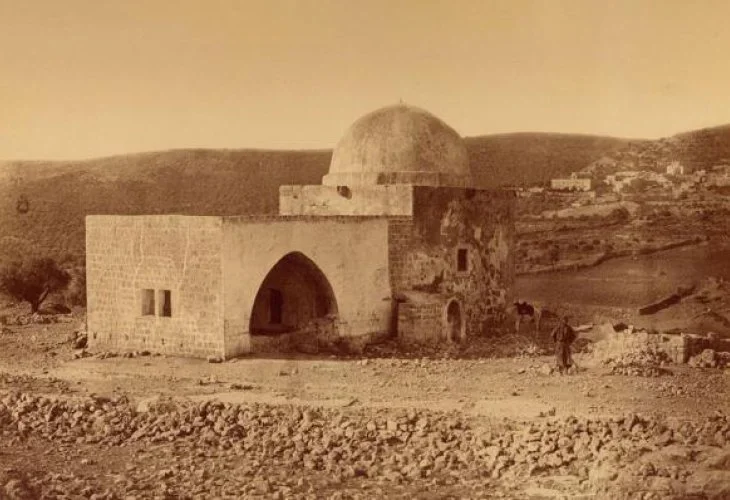
Rachel our Matriarch was born into a home far removed from Torah and mitzvot. More precisely, she grew up in a house steeped in idolatry. Life in her father’s home was not easy, and neither were the years that followed, as a wife and a mother. The many sufferings that filled her short life elevated her to the unique and cherished status of “Mother of the Nation” — the one who understands the heart of every Jew, who weeps for us, and who prays on our behalf.
Rachel was the daughter of Lavan the Aramean and the sister of Leah. Her father’s wickedness and deceit are hinted at in his title “the Aramean” (ha’Arami), a word that can be rearranged to spell “the deceiver” (ramai). At just fifteen years old, Rachel, then a shepherdess, encountered Yaakov at the well. In a moment of spiritual and physical strength, Yaakov lifted the stone that sealed the well, she watered her flock, and there their bond was first formed.
Yaakov had no dowry to offer Lavan, so he proposed to work for seven years in exchange for Rachel’s hand in marriage. Knowing Lavan’s deceptive nature, Rachel and Yaakov agreed upon identifying signs to recognize one another on the wedding night. As is well known, Lavan substituted Leah for Rachel. In this moment of betrayal, Rachel displayed extraordinary self-sacrifice: she willingly gave the signs to her sister so that Leah would not be humiliated before her husband. The sages teach that these “signs” were the mitzvot of challah, family purity, and lighting the Shabbat candle — whose initials form the word CHaNah.
“Give Me Children, or I Am as Good as Dead”
After another seven years of labor, Rachel and Yaakov were finally married. Yet Rachel’s suffering did not end. She soon discovered that she was barren. While her sister and the maidservants bore children, Rachel stood aside, mourning her fate. At the breaking point, she cried out to Yaakov in despair: “Give me children, or I am as good as dead.”
When Rachel was finally blessed with a son — a merit the sages attribute to her silence and restraint toward Leah — she named him Yosef. His name carried two meanings: it restored her dignity and expressed her hope for another child. “God has gathered in my disgrace,” she said, and she called his name Yosef, saying, “May God add for me another son.”
A Journey That Ended Too Soon
At a certain point, Yaakov and Rachel decided to flee their father’s home by night and begin anew, far from the pain of their past. Tragically, Rachel’s strength failed her during the long journey from Padan Aram through Gilead, Machanaim, Shechem, and toward Bethlehem. On the road to Efrat, Rachel died while giving birth to her second son.
With her final breath, she named him Ben Oni, “son of my sorrow,” but Yaakov, overwhelmed by grief, renamed him Binyamin. According to tradition, Rachel was thirty-six years old at the time of her death.
Yaakov’s love for Rachel did not fade after her passing. It lived on through her sons: first through Yosef, whom he loved more than all his children, and later through Binyamin, the youngest.
Rachel’s Eternal Cry for Her Children
Rachel is the only matriarch not buried in the Cave of Machpelah. Tradition teaches that Yaakov buried her along the roadside because he foresaw, through divine inspiration, that the Jewish people would one day pass that very place on their way into exile. He hoped that Rachel would feel their suffering and intercede for them in Heaven.
Rachel’s character traits were passed down to her descendants. The modesty she demonstrated by giving the signs to Leah later appeared in King Saul, her descendant. Her ability to remain silent was inherited by Binyamin, who knew of Yosef’s sale and did not reveal it, and by Queen Esther, who concealed her Jewish identity.
The prophet Yirmiyahu gives voice to Rachel’s eternal compassion: “A voice is heard in Ramah, lamentation and bitter weeping. Rachel weeps for her children; she refuses to be comforted for her children, for they are gone. Thus says God: Restrain your voice from weeping and your eyes from tears, for there is reward for your deeds, says God, and they shall return from the land of the enemy. There is hope for your future, says God, and your children shall return to their borders.”
Rachel our Matriarch remains the mother who never stops crying for her children — and the one whose tears bring redemption.

