

Torah Personalities
Rabbi Shimon bar Yochai: The Life and Legacy of the Author of the Zohar
From Roman persecution and years in the cave to revealing the deepest secrets of the Torah
- Dudu Cohen
- | Updated
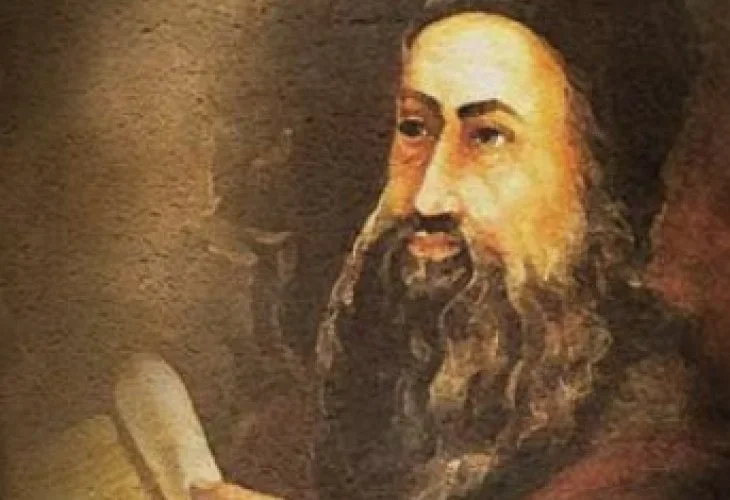
The divine Tanna, Rabbi Shimon bar Yochai, was born about fifty years after the destruction of the Second Temple. His father, Yochai, was from the tribe of Yehuda, one of the great men of his generation, wealthy, respected, and close to the royal court. His wife, Sarah, descended from the line of the princes and from Hillel the Elder.
For many years Sarah was childless. When much time had passed and she had still not conceived, Yochai decided to divorce her. Upon learning of this, Sarah intensified her fasting, charity, and heartfelt prayer before God, begging that the divorce be prevented. God heard her prayers.
The Dream on Rosh Hashanah
On the night of Rosh Hashanah, Yochai dreamed that he was standing in a vast forest filled with countless trees, some bearing fruit and others dry. He was leaning on one of the barren trees. Suddenly, a man of awe-inspiring appearance appeared, carrying a large jug of water on his shoulder. He watered some of the barren trees and left others untouched.
When the man reached the tree on which Yochai leaned, he took out a small flask of water and poured it upon the tree. Miraculously, the little water overflowed, spreading around the tree, which immediately bore fruit and grew large.
Yochai rejoiced and exclaimed, “He settles the barren woman in her home as a joyful mother of children. Hallelujah.”
He told Sarah his dream and explained its meaning: the forest represented the world, the trees were women, some fertile and some barren. On Rosh Hashanah, some are remembered for childbirth while others are not. Sarah was the tree watered with blessing. One question remained: why were other trees watered from the jug, while hers was watered from a flask?
Rabbi Akiva’s Interpretation
Sarah asked permission to consult Rabbi Akiva. After the holiday, they went to him, and Yochai recounted the dream. Rabbi Akiva confirmed the interpretation and explained that the flask symbolized Sarah’s tears. Through her prayers and tears, she transformed from barren to fertile.
Rabbi Akiva blessed her and said that within the year she would give birth to a son who would illuminate Israel through his wisdom and deeds.
Indeed, Sarah conceived and gave birth on Shavuot, the day the Torah was given. The home filled with spiritual radiance, and all who saw the child sensed his future greatness. He was named Shimon, for God had heard his mother’s prayers and tears.
From infancy, his parents guarded him from impurity and raised him in holiness. When he began to speak, they accustomed him to utter only words of sanctity. At age five, he was brought to the academy of Rabban Gamliel in Jerusalem, where he soon became a flowing spring of Torah wisdom.
Persecution and the Cave
In those days, the Roman Empire under Emperor Hadrian harshly persecuted the Jews, issuing decrees aimed at eradicating Jewish faith. This period was known as a generation of religious persecution. Ten great sages were executed, including teachers of Rabbi Shimon.
Rabbi Shimon himself was sentenced to death for teaching Torah and criticizing Roman rule. He fled with his son, Rabbi Elazar, first hiding in a study hall, where his wife brought them bread and water daily. Fearing she might be tortured and reveal their location, they fled to a cave near the village of Peki’in.
God performed a miracle: a spring of water emerged near the cave, and a carob tree grew there. For twelve years they lived in the cave, burying themselves in sand while studying Torah to preserve their clothes, wearing them only during prayer. Eliyahu the Prophet visited them twice daily and studied with them.
During this time, Rabbi Shimon attained exalted spiritual levels, and the deepest secrets of the Torah were revealed to him.
Leaving the Cave and Returning
After twelve years, the Roman emperor died and the death decree was annulled. Eliyahu announced this at the cave’s entrance, and Rabbi Shimon and his son emerged. Seeing people engaged in farming, Rabbi Shimon exclaimed in anguish that they had abandoned eternal life for temporal pursuits. Wherever they looked, destruction followed.
A heavenly voice rebuked them and commanded them to return to the cave. They remained another year. When they emerged again, Rabbi Shimon healed what his son damaged, saying, “My son, you and I suffice for the world.”
On Friday evening they encountered an elderly man carrying two bundles of myrtle branches for Shabbat, one for “Remember” and one for “Observe.” Seeing this devotion, Rabbi Shimon rejoiced at Israel’s love for mitzvot, and his spirit found peace.
His Torah and His Students
Rabbi Shimon is the author of the holy Zohar, composed with his disciples after thirteen years in the cave, with heavenly approval. He also authored Raaya Mehemna, Sifra deTzniuta, and contributed to the Tikunei Zohar, revealing seventy interpretations of the verse “In the beginning God created.”
Originally, these teachings were transmitted orally. Rabbi Shimon later instructed his disciple Rabbi Abba to commit them to writing so the inner Torah would not be forgotten.
Rabbi Shimon was among the five surviving students of Rabbi Akiva after the death of his 24,000 disciples. He later established a great academy in the Galilee and chose a select group known as the “Chevraya” to study the inner dimension of Torah. Their bond of love and unity was the foundation of their spiritual ascent.
Rabbi Shimon learned Torah from Rabbi Yehoshua, Rabbi Yehuda ben Bava, and primarily from Rabbi Akiva, who called him “my son.” Though deeply humble, Rabbi Shimon’s greatness was recognized by all. Even when disagreeing with his peers, he first explained their views with respect before presenting his own.
Through his life, teachings, and sacrifice, Rabbi Shimon bar Yochai became the eternal light of Torah’s inner dimension, illuminating Israel until this very day.

