

Torah Personalities
Thousands of Only Sons: Stories of Faith and Wisdom from the Lubavitcher Rebbe
True accounts of protection, leadership, and personal responsibility inspired by the Lubavitcher Rebbe, from the Six Day War to everyday Jewish life
- Rabbi Shneur Ashkenazi
- | Updated
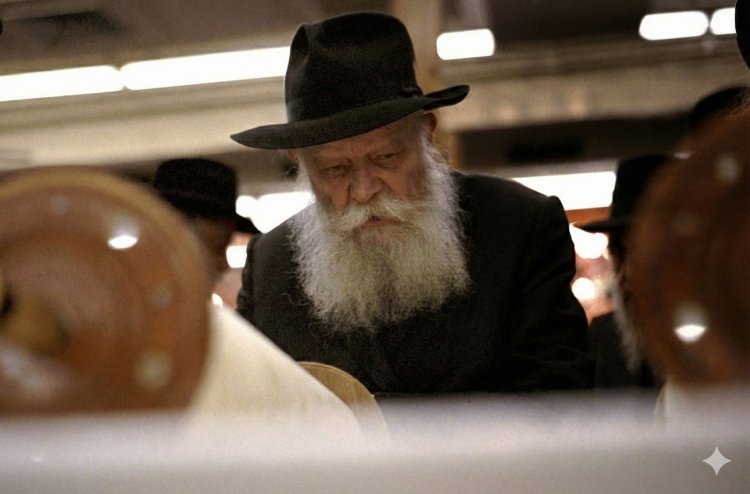
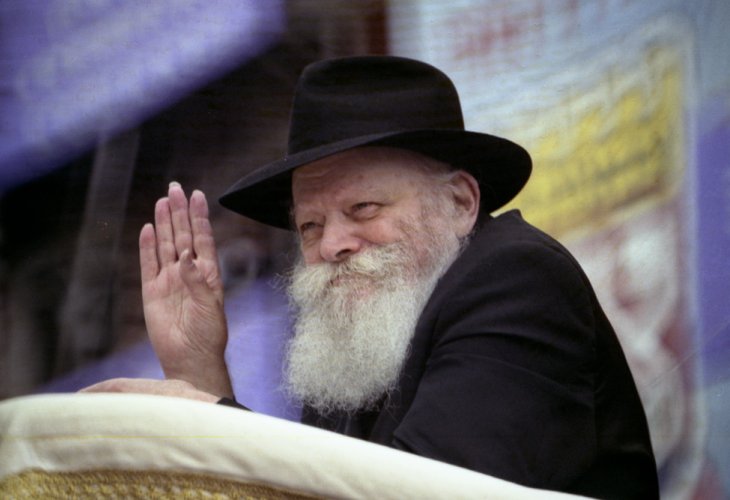 The Lubavitcher Rebbe (Photo: Israel Ze'ev Goldschmidt)
During the Six Day War, Arthur Goldberg served as the United States ambassador to the United Nations. His personal aide was a brilliant young Jewish man in his twenties named Joe ben Eliezer.
A few days before the war broke out, Joe received a phone call from his cousin in New York, who asked to speak with him urgently. Her only son, Avraham, was studying in a yeshiva in Israel and refused to return home. His parents had sent him a plane ticket at their own expense and pleaded with him to come back until the situation in Israel calmed down, but he adamantly refused, claiming that “the Lubavitcher Rebbe said not to leave the land.”
“Joe,” she said, “you have connections in high places. Tell me the truth. How serious is the situation in Israel?”
Joe did not want to frighten the worried parents, but he could not avoid telling the truth. “We are expecting great danger for the State of Israel. The assessment is that the Arabs will win the war and millions of Jews will be in mortal danger. Get your son out of there until the fighting is over.”
His cousin burst into tears and begged Joe to convince the Rebbe to allow her son to return home immediately.
Given Joe’s senior position at the UN, he was granted a meeting in the Rebbe’s office within a few days. He opened with an apology for using his public standing for a personal matter and went straight to the point. “My cousin is imploring that the Rebbe instruct her son to return home immediately.”
The Rebbe replied that the Land of Israel is a place under God’s direct providence, as it says in the verse, “Behold, the Guardian of Israel neither slumbers nor sleeps,” and therefore it is the safest place for Jews.
“That may be true,” Joe said, “but Avraham is my cousins’ only child. He is their entire world, and they cannot risk him.”
The Rebbe’s face grew serious and he said, “I have thousands of only sons in the Land of Israel. And if I tell them to stay there, it is only because I am certain that no harm will befall them. Tell your cousin and her husband that they can be completely at ease. The Guardian of Israel will watch over the Jews living in the land.”
The confidence the Rebbe projected proved, within days, to be astonishingly precise. In six days, a tiny and young country defeated the armies of three major states. The residents of the Holy Land witnessed divine protection with their own eyes.
The Secret of the Shabbat Table
A family in Brooklyn went through a severe upheaval. Their eldest son, an eighteen year old boy, had a serious falling out with his parents and left home, slamming the door behind him. He decided to rent an apartment with friends in Manhattan and cut off contact with the family. The mother felt that she was losing her son.
She recounts: It was a slap in the face for me. I would toss and turn in bed at night, tormented by thoughts. Where is he now? What does he eat? Where does he spend his time? How does he support himself and pay the rent?
The tension and anxiety were unbearable. I could not endure it anymore, so I went to a private meeting with the Rebbe to ask for his advice on how to bring my son back home.
The Rebbe listened patiently and gave a brief answer. “Invest effort in the family meal on Friday night. Make it the center of life in the home.”
It was a surprising answer, since the boy had long since changed his address, but that is what I did. On Sunday morning I called the three children who were still at home and asked each one what food they loved most. The first asked for a special salad, the second loved schnitzel, and the third wanted ice cream.
 (Photo: Israel Zeev Goldschmid)
On Friday night my husband and the children returned from synagogue to a surprise. The table was set festively. Each child’s requested dish was waiting for them, and beside it a note that read, “I love you. Shabbat shalom.”
This special gesture changed the entire atmosphere. The meal unfolded calmly and peacefully. There was open family conversation, and we truly felt wonderful together. The following week the cooperation deepened. My husband gave up half an hour of work during the week in order to come home earlier, open a book, and prepare a few Torah thoughts to share at the family meal. The children were at the center. All our attention was devoted to them, and they felt on top of the world.
A few weeks passed. One day our son who had left home called and asked to speak with his siblings. He inquired about what was new at home, and one of them told him with shining eyes about the experience they were having. “You have no idea how good it is for us together, how much Mom and Dad love us.”
That conversation accomplished what we had not managed to do before. Apparently, life of loneliness in Manhattan was not exactly the height of happiness for our son. He announced that he would come home for the coming Shabbat, “just to see.” He came home and sat quietly, and in the middle of the meal he left and returned to Manhattan. But he came again the following Shabbat, and the one after that, until he finally returned home.
Two Days in the Rebbe’s Presence
Ari Smith is a writer who presents the stories of people who merited special encounters with the Rebbe.
He himself experienced something up close that amazed him and taught him about the Rebbe’s passion and love for Torah study. He shares: I spent the festival of Shavuot in 1991 with the Rebbe. It was a stretch of three days devoted to spiritual elevation, study, and prayer with the Rebbe: Shabbat and the two days of the festival.
 (Photo: Israel Zeev Goldschmid)
The Rebbe’s daily schedule was full and extremely intense. On Friday night the Rebbe studied throughout the entire night. The next day, on Shabbat afternoon, the Rebbe held a long farbrengen with the chasidim, during which he delivered deep Torah teachings, without resting. In the evening, the first night of Shavuot, the Rebbe again did not go to bed but studied Torah all night, in accordance with the Jewish custom of Tikkun Leil Shavuot.
The following night the Rebbe again did not close his eyes. At midnight he went out to greet the many chasidim celebrating, who had returned from rounds of joy in synagogues and on the streets of New York. The next afternoon the Rebbe again held a farbrengen and again delivered deep Torah talks until evening.
When the festival ended, one might have expected the Rebbe to allow himself some rest, but that was the moment when the event known as “Kos Shel Berachah” began. Thousands of people came to the Rebbe’s study hall and passed before him to receive a small amount of wine from his cup of Havdalah. The distribution lasted for many hours and ended only at two in the morning, all the while with the Rebbe standing on his feet and encouraging the singing of the crowd without pause. And all this should be noted, when the Rebbe had already celebrated his eighty ninth birthday.
Then came the moment that stunned me. At three in the morning, when the distribution ended and the Rebbe finally returned to his private room, something extraordinary happened. The curtain was slightly drawn, giving me a rare glimpse. With my own eyes I saw the Rebbe hurry to the bookcase, take out a Torah book, and begin to study it. He stood there, still dressed in his Shabbat clothes, girded with his prayer sash, and without a coffee break or a short rest, went straight to learning. He could not restrain the immense passion and love that burned within him for Torah study, like a child who throws his arms around his father and embraces him warmly.
“You Have a Special Rebbe”
Rabbi Zalman Lipsker, a Chabad emissary in Philadelphia, Pennsylvania for more than fifty years, tells of an incident that he never forgets, which occurred in the summer of 1961.
It was two in the morning. After an evening of intense study, I dozed briefly on a bench in the Rebbe’s synagogue in Brooklyn. Suddenly I felt a tap on my shoulder. I jumped up, and before me stood the Rebbe’s personal secretary, Rabbi Chaim Mordechai Hodakov.
“I have an urgent mission for you to carry out tonight,” the secretary said. “You must deliver a pair of tefillin to a specific address in the Long Beach area along the coast of Long Island. A Jew named Louis Shelder lives there, and you are to instruct him how to put on tefillin. Please make every effort to be at his door exactly at six in the morning, because before six he sleeps, and at six he leaves for work.”
 (Photo: Israel Zeev Goldschmid)
I got up from the bench, washed my face, and was ready to go. At exactly six o’clock I knocked on the door of the Shelder family. Louis was quite surprised to find me. I instructed him how to put on tefillin, and afterward a short conversation developed between us.
“Your Rebbe is something special,” Louis said to me. “Tonight I visited him in a private meeting, and during the conversation he asked whether I put on tefillin. I answered that I did not have tefillin and did not know how to put them on. We moved on to other topics, and again the Rebbe returned to the question. ‘And if I send someone to teach you, will you put on tefillin?’ I had no choice but to answer yes. Later in the conversation the Rebbe asked about my daily schedule, when I wake up in the morning and when I leave for work. And here, only a few hours later, you appear here, solely for me and for this single mitzvah. Your Rebbe is extraordinary.”
I left him the tefillin, and my mission was complete. I never met him again. But many years later I received a phone call from Israel. On the line was a woman I did not know. She asked whether I remembered the details of that incident and told me that she was the daughter of that same Louis Shelder. That morning, when her father put on tefillin, she had woken up early and seen everything. The sight left a deep impression on her and awakened profound thoughts about the purpose of life. Following her, the entire family underwent a process and began observing mitzvot. Today she and her family live in Israel.
Be a Player, Not a Spectator
A father and son stood excitedly at the entrance to the room of Menachem Mendel Schneerson. The boy was just days away from his bar mitzvah and had come to receive the Rebbe’s blessing for the meaningful day in his life.
The Rebbe welcomed them warmly, shook their hands, and blessed them from the heart. Then he turned to the boy and surprised him with an unexpected question. “Are you a baseball fan?” The boy nodded yes. Who in the United States does not love baseball?
“Which team do you support?” the Rebbe continued, and like a typical New York child, the answer came. “The Yankees.”
“Does your father take you to watch Yankees games?” the Rebbe asked. The boy replied, “Yes. Just last month we went together to watch a game at the team’s huge stadium, Yankee Stadium. But to be honest, the game was disappointing. The team played poorly, fell far behind the opponent, and my father and I left disappointed in the middle of the game.”
“Wait,” the Rebbe continued. “When you left the stadium, did the players also leave the game?”
“Of course not,” the boy answered impatiently. “We, the spectators, are not part of the game. We can leave whenever we want. The players are part of the game. They must fight until the last moment to change the course and win.”
This was the moment the Rebbe had been waiting for. He said with a smile, “You are now beginning life as a mature young man. Remember the message you yourself just expressed. In Judaism there are no spectators. Everyone is a player. Every person is given a personal and unique mission from God that only he or she can fulfill in the best possible way. At every moment you have the choice whether to be a spectator or to enter the field and be an active player and carry out your role to the best of your ability. Be a player.”
“Is There Already a Mikveh in New Zealand?”
He was a successful businessman in the textile industry. In his late forties he moved for a period of time to New Zealand in order to raise sheep for wool for his textile trade.
One day he traveled to visit his daughter who lived in New York. They drove together to her home, and when they entered the building elevator, he noticed another person standing there, a young man with a rabbinic appearance and serious eyes.
The rabbi extended his hand and asked, “Where are you from?” The man replied, “From New Zealand.”
The rabbi looked at him and asked, “And is there a mikveh in New Zealand?”
The businessman was slightly embarrassed and answered, “I am there only briefly, for business purposes.”
“God directs a person’s steps,” the rabbi replied. “When a Jew finds himself in a certain place, he must ensure that his presence there leaves a positive imprint.”
The elevator stopped. The rabbi nodded in farewell and exited. The New Zealand businessman asked his daughter who the rabbi was, and she told him that it was Rabbi Menachem Mendel Schneerson, who would later become the Lubavitcher Rebbe.
Forty years passed. The businessman had amassed great wealth and was free to live his life as he wished. He left New Zealand and settled in Israel. In 1989 he visited the United States and decided to seek the blessing of the Lubavitcher Rebbe.
On one Sunday he found himself waiting in the long line stretching along Eastern Parkway, near the world headquarters of Chabad. Thousands of people of all kinds, young and old, rabbis and long haired youth, public figures and ordinary folk, waited for the longed for moment when they would stand before the Rebbe and receive a dollar bill for charity.
Then his moment arrived. The businessman prepared to receive the bill, but the Rebbe did not hurry. He fixed him with a penetrating gaze and, as he extended the bill, asked, “So, is there already a mikveh in New Zealand?”
He does not remember the moments that followed. Upon hearing the Rebbe’s question, he was seized by intense dizziness, which subsided only after a few minutes. Forty years had passed, and the Rebbe was still troubled by the question. Is there a mikveh in New Zealand?
 (Photo: Israel Zeev Goldschmid)
The Heart of a Rebbe
Shmuel Langsam, a Chabad chasid living in New York, tells of an incident that occurred in 1979.
One day my two year old son began to complain of stomach pains. His cries grew worse from day to day, and he had difficulty moving in bed. Our family doctor, Dr Feldman, diagnosed that the child was suffering from a hernia and needed surgery. We sought additional expert opinions, and all were unanimous regarding the necessity of the operation. However, each doctor recommended a different surgeon.
I wrote a personal letter to the Rebbe, told the entire story, and added that we were debating which medical center to choose for the surgery. I asked for a blessing.
The next day I received a phone call from the Rebbe’s personal secretary. “You should go hear the opinion of Dr Feldman,” he told me. I hurried to the clinic and was stunned by what the doctor told me.
“I visited the Rebbe today for a personal matter,” the doctor said, “and suddenly he turned to me and asked, ‘Would you be willing to do me a personal favor?’”
“Of course,” I replied, and the Rebbe continued. “There is a toddler in the neighborhood, your patient, who needs to undergo hernia surgery. In my view, the best place to do this is the Shouldice Hospital in Toronto. They are the greatest experts in the field and also perform such surgery under local anesthesia only. But I wonder whether they are able to perform surgery under local anesthesia on a two year old toddler, who may be restless and fidgety. I ask you to do me a personal favor. Contact them and find out whether they perform hernia surgery on infants under local anesthesia.”
Then the Rebbe added something that left me stunned. “You should also check whether they have an available slot for surgery on the twelfth of the month of Sivan, since the Langsam family is traveling to a family event in Toronto the day before, and it would be a shame for them to have to pay the travel expenses from New York to Canada twice.”
I stared at the doctor in amazement. It never crossed my mind to ask the Rebbe to make these inquiries for me. I had simply shared what I was going through. And yet the Rebbe himself made the inquiries and even chose the date of the surgery in order to ease my financial burden.

