

Torah Personalities
Mother Rachel: The Matriarch of Sacrifice, Compassion, and Silent Strength
Her love for Jacob, her self-sacrifice for Leah, her tears for her children, and her eternal role as the advocate of Israel’s redemption
- Efrat Cohen
- | Updated
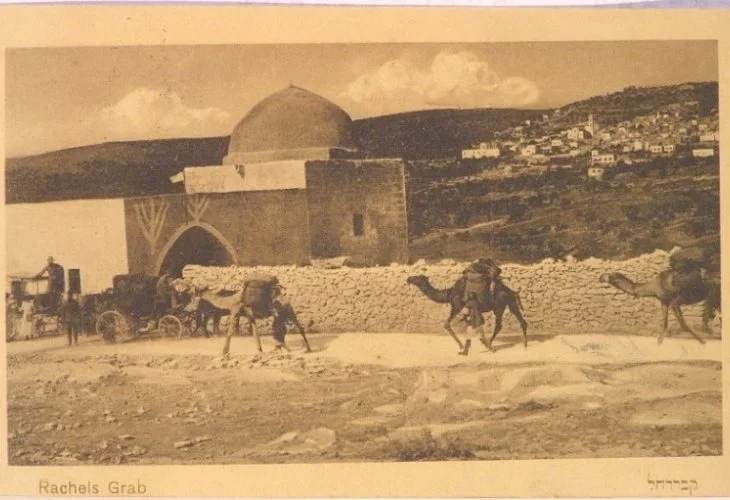
Our matriarch Rachel is one of the four holy matriarchs of the Jewish people. Her story appears in the Book of Bereishit, chapters 29–35. The life story and immeasurably noble character of Mother Rachel are woven with sacrifice, silence, concession, pain, and suffering. Let us set out together on a journey through the life of Rachel.
Her Childhood
Rachel was born in the year 2108 (according to tradition) in Paddan Aram, also called Haran, to her father Lavan, son of Betuel, son of Nachor, son of Terach. She was the younger sister, and according to some interpretations even the twin, of Leah. Rachel and Leah lost their mother at a young age, and since they had no brothers, their father Lavan sent Rachel, the younger of his daughters, to tend the sheep.
Yaakov
In Canaan lived the righteous Yitzchak, son of Avraham, who devoted his life to revealing God in the world. Yitzchak had two sons: Yaakov, a wholesome and righteous man who dwelled in tents, and Esav, a hunter and warrior who was meticulous in honoring his parents.
As Yitzchak neared the end of his life, he summoned his sons to bless them. The more significant blessing, the blessing of the firstborn, was meant for Esav. Yaakov, who desperately desired this blessing, disguised himself as Esav at his mother’s instruction and received the blessing in his place. When Esav later discovered this, he was so enraged that he sought to kill Yaakov, forcing Yaakov to flee. In his distress, Yaakov went to Aram, hoping to find refuge among his mother’s family.
Yaakov’s Love for Rachel
The Torah describes the first meeting between Yaakov and Rachel in great detail. Yaakov arrived in Aram exhausted, poor, and destitute. There he encountered shepherds in the field who were waiting for others to help roll away the large stone covering the mouth of the well. Yaakov asked them, “My brothers, where are you from?” and they replied, “We are from Charan” (Bereishit 29:4). He asked whether they knew Lavan, son of Nachor and how he was faring, and they answered that he was well, and that Rachel his daughter was approaching with the flock.
The Torah notes that Rachel was beautiful in form and appearance. When Yaakov saw her, he was immediately filled with renewed strength and effortlessly rolled the stone from the well’s mouth. He approached Rachel, kissed her, and burst into tears. The Midrash explains that Yaakov wept because he foresaw through divine inspiration that she would die young and would not be buried with him, and also because he arrived empty handed, unable to give her gifts as a future bride.
From that moment onward, Yaakov’s soul became bound to Rachel’s in a fierce love filled with sacrifice. He expressed to Lavan his desire to marry Rachel. Lacking a dowry, he offered to work for her father for seven years, and Lavan readily agreed. It was love at first sight, and the seven years he worked for her “seemed to him but a few days because of his love for her.”
At the end of the seven years, the long awaited wedding was finally set. Yaakov, mistrusting Lavan and fearing deception, arranged secret signs with Rachel so that they could identify one another on their wedding night.
“For I Took Pity on My Sister, That She Should Not Be Shamed”
But Lavan had other plans. He commanded Rachel not to attend her own wedding and decided instead to marry Leah to Yaakov. Rachel, crushed by sorrow, wept throughout the day that should have been the happiest of her life, torn between her love for the man she had waited for and her love for her sister. Unable to bear the thought of Leah’s humiliation, Rachel ultimately called Leah and gave her all the identifying signs.
Thus Leah and Yaakov were married. In the morning, Yaakov discovered the deception and angrily confronted Lavan: “What is this you have done to me? Was it not for Rachel that I served you? Why then have you deceived me?” Lavan explained that in their place the younger daughter was not married before the elder. If Yaakov still desired Rachel, he could work another seven years. Yaakov accepted and worked an additional seven years.
The Torah states that Yaakov loved Rachel more than Leah. God saw that Leah was unloved and opened her womb, while Rachel remained barren. Leah bore four sons to Yaakov: Reuven, Shimon, Levi, and Yehuda. Rachel, meanwhile, suffered deeply from her barrenness and cried out, “Give me children, or else I am dead.” She gave her maidservant Bilhah to Yaakov, hoping to build a family through her. Bilhah bore Dan and Naftali. Leah then gave her maidservant Zilpah, who bore Gad and Asher. Leah herself later bore Yissachar and Dinah.
Some commentators emphasize Rachel’s extraordinary self sacrifice, noting that Leah never knew that Rachel had relinquished Yaakov for her sake, so as not to shame her. This is reflected in the episode of the mandrakes, when Leah protested to Rachel, “Is it a small matter that you have taken my husband, that you would also take my son’s mandrakes?”
“And God Remembered Rachel”
After eleven years of waiting and suffering, God answered Rachel’s prayers. She gave birth to Yosef, declaring, “God has taken away my disgrace… May the Lord add to me another son.” She continued to pray and indeed conceived again.
As Yaakov and his family departed from Aram after disputes with Lavan, they reached the area of Bethlehem. There Rachel went into hard labor and died in childbirth at the age of thirty six. As her soul was departing, she named her son Ben Oni, but his father called him Binyamin. Rachel was buried on the road to Efrat, that is Bethlehem, and Yaakov set a monument over her grave.
Yaakov foresaw through divine inspiration that the exiles would pass by that place, and therefore buried her there so that she would continually plead for mercy on behalf of her children. The Zohar teaches that when Israel returns from exile, they will stand by Rachel’s grave and weep, just as she wept for them.
In Judaism, no suffering is without meaning. Rachel’s deeds were not forgotten before God. At the darkest moments, divine compassion was aroused through her merit, saving the Jewish people from destruction. A moving Midrash tells of the Jewish captives led away by Nevuchadnezzar, king of Babylon. The patriarchs pleaded before God, but their pleas were not accepted. Then Rachel arose from her grave and cried, saying: “Master of the universe, I, who was only flesh and blood, did not envy my sister. You, the living and eternal King, why were You jealous of idolatry and sent my children into exile?” Immediately God’s mercy was stirred, and He said, “For Rachel’s sake, I will return Israel to their place.”
Thus it is written: “A voice is heard in Ramah, lamentation and bitter weeping, Rachel weeping for her children… Thus says the Lord: Restrain your voice from weeping… for there is reward for your deeds… and the children shall return to their border.”
When Rabbi Chaim Shmuelevitz visited Rachel’s tomb, he cried out, “Mother Rachel, God tells you to restrain your voice from weeping. But I, Chaim the small one, say to you: Mother Rachel, weep. Do not stop weeping for us and arousing mercy until we merit redemption.”

