

Torah Personalities
Rabbi Chaim Vital: The Master Kabbalist Who Preserved the Teachings of the Ari
The life, writings, and inner path of the Ari’s foremost disciple and transmitter of Lurianic Kabbalah
- Yonatan HaLevi
- | Updated
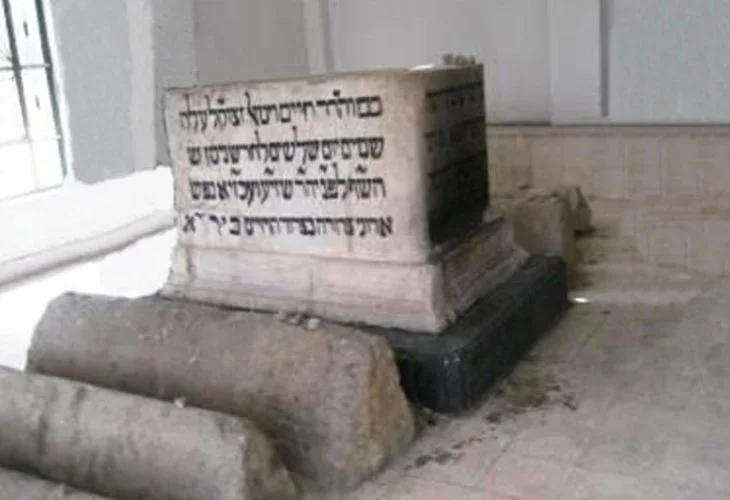
Rabbi Chaim Vital was one of the greatest Kabbalists of all time, the foremost disciple of the Ari (Rabbi Yitzchak Luria), and the primary transmitter of his teachings to the world.
Early Years
Rabbi Chaim Vital (son of Rabbi Yosef) was born in Safed, at a time when Torah life in the city was flourishing beyond measure. Dozens of outstanding Torah scholars and Kabbalists lived there.
At the age of fourteen, he entered the study hall of Rabbi Moshe Alshich, known as the Alshich HaKadosh. There he learned Torah with extraordinary diligence. Yet he did not suffice with the revealed dimension of Torah alone. His heart was drawn to the study of Kabbalah, the inner wisdom of the Torah.
After some time, Rabbi Chaim Vital joined the study hall of Rabbi Moshe Cordovero (the Ramak), from whom he learned Kabbalah.
During this period, Rabbi Chaim Vital studied with tremendous dedication, maintaining his place in both study halls simultaneously. With the Alshich HaKadosh he studied the revealed Torah, and with the Ramak he studied Kabbalah.
In order to keep up with both frameworks, he devoted himself tirelessly to his studies and slept very little.
The Ari as His Primary Teacher
After several years, Rabbi Chaim Vital accepted the Ari as his primary and exclusive teacher. He abandoned his involvement in commerce and devoted his entire day to the study of Kabbalah.
Since the holy Ari did not write down his teachings but taught them orally in lessons, it was Rabbi Chaim Vital who organized, edited, and committed all of his teacher’s revelations to writing.
The Ari’s Revelations in the Inner Torah
For two years, Rabbi Chaim Vital studied the inner Torah directly from the Ari. During this time, the Ari revealed to him extraordinary and wondrous secrets, the likes of which had never been heard.
On one occasion, Rabbi Chaim Vital approached his teacher and asked him to reveal a specific secret. The Ari told him that he could not, as doing so would cause his own passing. After further reflection, however, the Ari said that the very purpose of his presence in this world was to transmit these revelations to Rabbi Chaim Vital.
He therefore revealed the secret to him, at the cost of his own life. Shortly thereafter, the Ari passed away, and his soul ascended heavenward in a storm.
The Ari testified about Rabbi Chaim Vital that he alone truly understood his teachings in depth and grasped his intent fully.
After several years, Rabbi Chaim Vital was ordained to the rabbinate by his teacher, the Alshich HaKadosh.
After four years, he moved to Jerusalem, where the residents received him with great honor and reverence. He later returned to Damascus, Syria, where he served as rabbi until the day of his death.
His Burial Place
On the 30th of Nisan in the year 5380 (1620), his soul ascended heavenward. He was buried with honor in Damascus, Syria.
Some claim that his remains were later brought to the Land of Israel and that he is buried in Kiryat Malachi, but this claim has never been proven.
His Books
Among his many works are:
Sefer HaGilgulim
Sefer HaChizyonot
Etz Chaim
Sha’ar HaKavanot
Sha’ar Ma’amarei Rashbi
Sha’arei Kedusha
The book Etz Chaim is the foundational work of the writings of the Ari, authored by Rabbi Chaim Vital. It presents the Ari’s entire system of Kabbalah.
At the beginning of Etz Chaim, Rabbi Chaim Vital warns strongly against studying Kabbalah without proper preparation and enumerates the dangers and distortions that can befall an unworthy student: “A person should not say: I will go and engage in the wisdom of Kabbalah before I have engaged in Torah, Mishnah, and Talmud. For our Sages have already said: One should not enter the orchard unless his belly is filled with meat and wine. This is like a soul without a body, which has no reward, action, or accountability until it is bound within a body that is complete and properly rectified through the mitzvot of the Torah… These matters are not entrusted to human intellect, and reasoning in them is extremely dangerous, and one is considered, God forbid, among those who uproot the plantings.”
Teachings from Sha’arei Kedusha
The book Sha’arei Kedusha is exceedingly profound, and its purpose is to guide a person toward serving the Creator properly. Below are selected teachings from this holy work:
“The roots of all evil traits are four: pride, anger which is bound up with it, idle speech, desire for physical pleasures, and sadness.”
“Their opposites are four good traits: humility, which is ultimate lowliness and distance from all anger born of pride; silence, speaking only in Torah and mitzvot or when necessary for bodily needs or human dignity; revulsion toward bodily pleasures and even permitted excesses; and constant joy in one’s portion, knowing that all that Heaven does is for good, and to serve one’s Creator with complete joy.”
“When evil traits are firmly rooted in a person, he is prevented from fulfilling Torah and mitzvot, and even if he fulfills them, it will be with great difficulty and not for the sake of Heaven.”
“Utter humility to the extreme, never becoming angry, even with members of one’s household; never being exacting; being insulted but not insulting; and remaining joyful even in times of suffering.”
“Love all creatures, even non-Jews.”
“Do not envy anything, for our days on earth are like a passing shadow.”
“Despise and nullify all matters of this world, eat bread with salt, and do not desire any of the vanities of this world.”
“Flee with all your strength from authority, which buries those who possess it.”
“Each night before going to sleep, remember that this is a minor death reminding you of the true, great death. Review all the deeds you performed that day, confess any wrongs, accept upon yourself the yoke of Heaven through the bedtime Shema, and then entrust your soul to Him, as it is written: ‘Into Your hand I entrust my spirit.’”
“Be exceedingly careful to avoid all forms of anger, resentment, and pride, even toward members of your household.”
“If someone insults you, do not respond; be insulted but do not insult.”
“Overlook the faults of anyone who has wronged you, and do not feel pain even in your heart. This is good for you, for one who overlooks his traits is forgiven for all his sins.”
“Receive every person with joy, even one who hates you, for in doing so he will become your friend, and the merit will be yours.”
“Let all your words be gentle and spoken softly, and do not enter the realm of anger.”
“Remove sadness and worry from your heart, for they are a snare that drives away the spirit of holiness.”
“Stay far from idle speech, falsehood, flattery, mockery, and slander, for these are groups that will never receive the Divine Presence in the World to Come.”
“Cling to humility, which brings one to divine inspiration, and be like a threshold trampled by both great and small.”
“Seal your ears from hearing gossip and slander.”
“Be like one mute, opening your mouth only for Torah, mitzvot, necessary livelihood, and greeting others with a pleasant expression and gentle speech.”
“Do not boast of your good deeds to others, for you will lose your reward and incur punishment.”

