

Torah Personalities
The Maharal of Prague: His Legacy, the Golem, and His Enduring Impact on Jewish Thought
The life, battles, mystical teachings, and timeless Torah works of Rabbi Judah Loew ben Bezalel
- Yonatan HaLevi
- | Updated
The Maharal, Rabbi Judah Loew ben Bezalel (born around 1512, 5272; passed away in September 1609, 18 Elul 5369), commonly known by the acronym Maharal (“Our Great Teacher Rabbi Loew”), was a rabbi, halachic authority, kabbalist, and philosopher.
He was one of the most prominent Jewish figures of the early modern era. In the traditional rabbinic periodization, the Maharal belongs to the early generation of the Acharonim.
Blood Libels and Jewish Persecution
During the Maharal’s lifetime, many Jews suffered from horrific blood libels, false accusations claiming that Jews used the blood of Christian children to bake matzah. These slanderous allegations led to numerous brutal and violent pogroms against Jewish communities.
The Maharal fought like a lion on behalf of the Jews of Prague and engaged in many public debates with hundreds of Christian priests. In every one of these debates, the Maharal emerged victorious.
The Threat of the Sorcerer Thaddaeus
However, the Maharal feared one particular figure: a sorcerer-priest named Thaddaeus, a notorious Jew-hater. Concerned by this threat, the Maharal performed a she’elat chalom (a “question through a dream”), asking Heaven how to confront him.
The response he received from Heaven taught him mystical letter combinations, through which it would be possible to create a golem.
The Creation of the Golem
The Maharal involved his son-in-law, Rabbi Yitzchak HaKohen, and his student, Rabbi Yaakov Sasson HaLevi, in the creation. Together, they went out at night, four hours before dawn — a time associated with divine mercy, to the banks of the Vltava River.
There, they formed the shape of a man from clay and mud, and each of them, separately, circled the figure seven times while reciting sacred letter combinations.
The Golem Comes to Life
At the end of the ritual, the golem opened its eyes and looked at them. The Maharal commanded it to stand, and those present dressed it in clothes and shoes. The golem appeared human in every respect, except that it lacked the power of speech.
The Maharal instructed the golem to obey him in everything he commanded, even to walk through fire, jump into water, or leap from a high tower. It was not to fear any of these acts, for it would come to no harm.
According to tradition, the golem served its creator faithfully and struck terror into those who spread horrific blood libels against the Jews.
Every Friday evening, the Maharal would remove the spirit of life from the golem, lest it desecrate the Sabbath, and the golem would lie inert like a lump of matter until Shabbat ended.
The Golem’s End
On one Friday, however, the rabbi forgot to remove the spirit of life. The golem then desecrated the Sabbath and endangered the non-Jewish residents of the city.
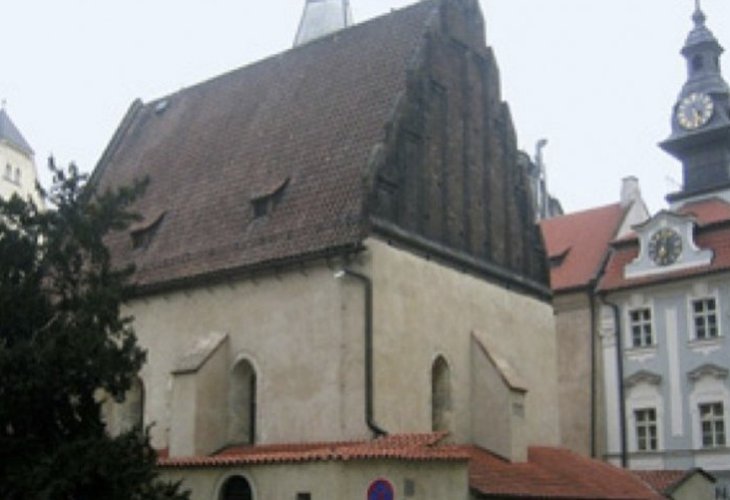
The rabbi chased after it and caught up with it outside the entrance to the ancient Altneuschul synagogue in Prague. There, he removed the spirit of life, and the golem shattered into pieces.
On the golem’s forehead were engraved the letters אמת (emet, “truth”). To end its life, the Maharal erased the letter א, turning the word into מת (met, “dead”). According to legend, the remains of the golem’s body are still lying in the synagogue’s attic to this very day.
The Maharal’s Torah and Ethical Works
The Maharal of Prague authored many foundational works on Torah and ethics, including:
Gur Aryeh – a commentary on the Torah
Gevurot Hashem – corresponding to Passover, dealing with the Exodus from Egypt and its miracles
Tiferet Yisrael – corresponding to the giving of the Torah, exploring its purpose and the revelation at Mount Sinai
Netzach Yisrael – corresponding to Tisha B’Av, addressing the exile of Israel and the future redemption
Netivot Olam – the Maharal’s ethical work, published in two volumes
Derech Chaim – a commentary on Pirkei Avot
The Maharal’s teachings continue to shape Jewish thought, ethics, and faith to this day.

