

Purim
Queen Esther’s Hidden Sacrifice: The Untold Complexity Behind the Purim Story
Why Esther married Achashverosh, didn’t choose martyrdom, and how Jewish law and Kabbalah reveal the deeper meaning of her courage and legacy
- Dudu Cohen
- | Updated
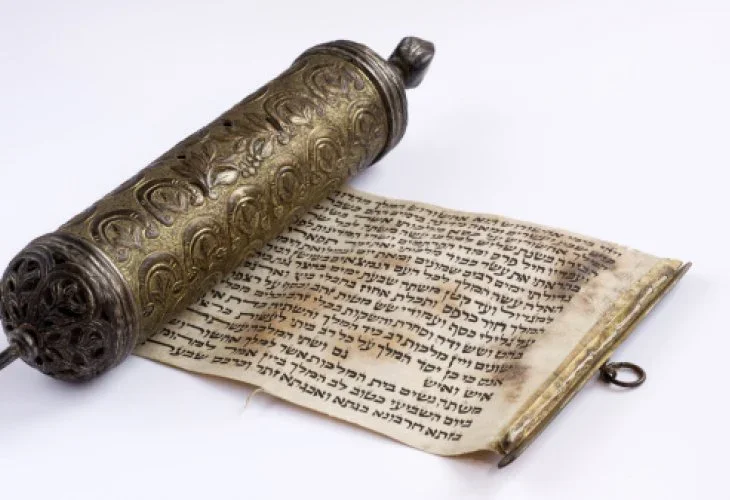
On Purim we read the Megillat Esther twice and once again recall the happy ending: Haman sought to destroy, kill, and annihilate all the Jews; Mordechai and Esther did everything in their power to overturn the evil decree; and in the end they triumphed, and “the Jews had light, joy, gladness, and honor.”
It sounds wonderful. Yet amid the costumes, gifts of food, and celebration, we tend to overlook the true heroine of the story: Queen Esther. She saved the Jewish people and merited having the Megillah named after her, but in the end, she remained married to a wicked, tyrannical, and foolish king. Not only that, he was not Jewish, contrary to halachic ideals, and their son, Darius, lived as a non-Jew. How did Esther marry Achashverosh at all? And how could this happen while she was, in parallel, the wife of Mordechai the Jew?
Rabbi Gad Lior delves into both the pshat (plain meaning) and the sod (inner, mystical dimension) to explain these questions.
Life Under an Absolute King
“We must understand that the meaning of kingship in the ancient world was nothing like what we know today,” Rabbi Lior explains. “The Gemara says that when Achashverosh desired a young woman, any family with a beautiful daughter would hide her. He appointed officials who knew the local population, and this was something no one could resist. It was an absolute decree. Even in the days of the Hasmoneans there was a decree that every bride had to be taken first by the governor. These were horrific realities.”
Why Didn’t Esther Choose Death for the Sanctification of God’s Name?
This question is raised explicitly by the Gemara.
“There are several answers,” says Rabbi Lior. “First, the Shulchan Aruch (Yoreh De’ah 157) rules that one must give up one’s life for the sanctification of God’s Name when forced into idolatry, murder, or forbidden sexual relations — even outside a time of persecution. On the surface, Esther was being forced into forbidden relations, and therefore should have been required to give her life.
“However, the Gemara in Sanhedrin explains that Esther karka olam hayta — she was completely passive. The Rema formulates this by saying that when a woman is coerced and remains passive, she is not obligated to give her life. In addition, Esther saw that her situation would bring enormous benefit to the Jewish people. The Shulchan Aruch states that if a person sees that through committing a single transgression great salvation will come to the public, it is permitted.”
This explains the issue on the level of pshat. But there is more.
The Mystical Dimension: Esther and Mordechai’s Spiritual Level
“On the level of sod,” Rabbi Lior continues, “the holy Ari revealed that Mordechai and Esther were on an exceptionally high spiritual level and even knew how to use the Divine Name — that is, practical Kabbalah. The Ari writes that through sacred Names, Esther would cause a spiritual double to take her form and be sent to Achashverosh. In other words, she had spiritual means to avoid the problematic aspects of her situation.”
Separation from Mordechai
Still, Esther was forced to separate from her true husband, Mordechai.
“The Gemara in Megillah states that Esther would be in the arms of Achashverosh, immerse herself, and then return to the arms of Mordechai. On the simple level, a woman who is coerced remains permitted to her husband. That is why, when Mordechai sent her to Achashverosh, Esther said, ‘When I am lost, I am lost’ — meaning, just as I was lost from my father’s house, now I will be lost to you.
“But on the inner level, based on the explanation that it was the spiritual being who was with Achashverosh and not Esther herself, the Ben Ish Chai writes that Achashverosh never touched her at all. The reason she immersed herself was due to the very proximity to him — because even being near him was repulsive to the righteous Mordechai.”
What About Their Son, Darius?
“According to the simple reading, Darius grew up as a non-Jew,” Rabbi Lior explains. “But according to the mystical explanation, he was not Esther’s son at all; he was the son of the spiritual double.”
Esther’s Fate After the Megillah
What ultimately happened to Esther after the events of the Megillah?
“Achashverosh died after a relatively short time, which made matters much simpler afterward. Beyond that, we don’t have much information about the period following the Megillah. But one thing is certain: Esther surely received her reward in the eternal world."

