

Magazine
The Order Was Clear: 'Don’t Treat the Wounded': Dr. Thamar Eilam Gindin on Iran’s Brutality
Beyond the headlines lies a reality of cruelty and resistance. Dr. Thamar Eilam Gindin reveals why the wall of fear is cracking and why the regime, not Israel, is seen as the real enemy.
- Michal Arieli
- | Updated
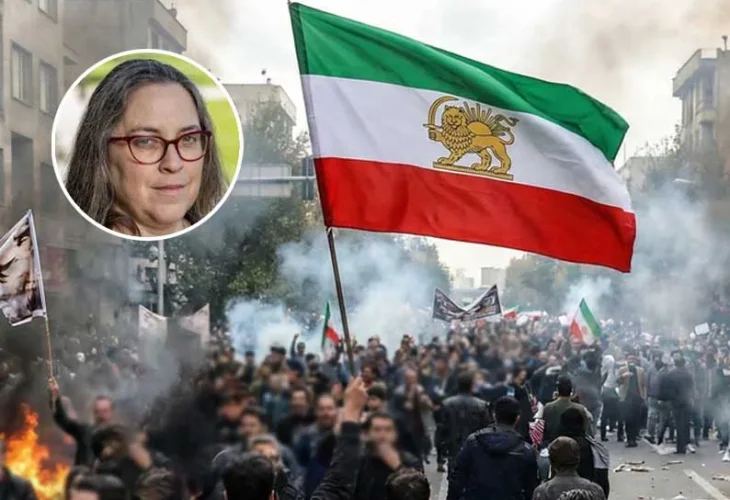 In circle: Dr. Thamar Eilam Gindin (Photo: Naama Stern, Nashim Magazine)
“When the protests in Iran broke out, I was at a crossroads,” says Dr. Thamar Eilam Gindin, one of Israel’s leading experts on Iran.
“In those days, I was glued to every video coming out of Tehran. I didn’t know whether we were witnessing the beginning of historic change or heading toward a major escalation. I sat with my life manager, the professional who accompanies me, and we tried to understand how to operate inside this uncertainty. I had a book on Iran about to be published and a long list of lecture invitations coming in. We mapped out three possible scenarios: war, a return to normal, or peace. Everything was on the table, and we had no idea where Iran was headed.”
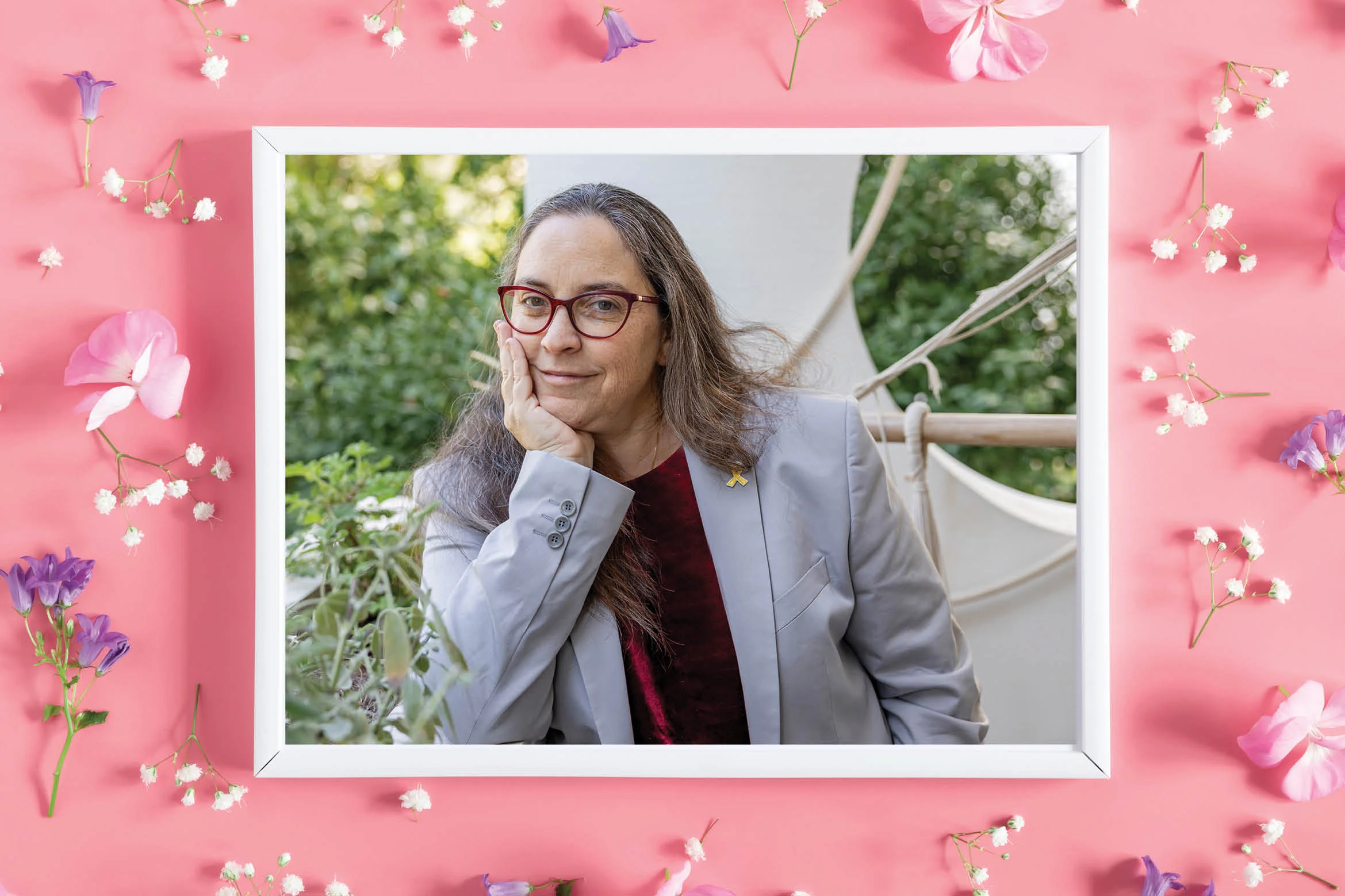 Dr. Thamar Eilam Gindin (Photo: Naama Stern, Nashim Magazine)
“Today,” she says, “the atmosphere has completely changed. Despite all the question marks, the direction feels clearer than ever. The wall of fear in Iran has cracked, and a revolution seems closer than at any point in recent history. But when it comes to the biggest question of all, when it will happen and what Iran will still have to endure before that moment, no one truly knows the answer.”
Between Hebrew and Persian
Thamar Eilam Gindin, 52, was born in Israel but felt drawn to Persian culture from a young age. That interest deepened while she studied linguistics at the Hebrew University, where she encountered many languages.
“I studied Chinese, French, and Arabic, among others, but I always felt a special connection to Persian. Today I can say openly that Iran is both my professional mission and my obsession,” she explains. “My goal is to use knowledge to create real connections between Israelis and Iranians. There are human beings on both sides, and what we share is greater than what divides us.”
As a linguist, she works constantly to keep her Persian sharp. She reads extensively in Persian, follows Iranian social media closely, and continues refining the language every day.
People often say Hebrew and Persian are similar. Is that accurate?
“The languages themselves are not similar,” she clarifies, “but Hebrew contains many words that either originated in Persian or passed through it. For example, the Hebrew word 'dat' comes from Old Persian 'data'. The word 'pitgam' entered Hebrew through the Book of Esther. There are also Persian roots behind slang words like 'pijama', 'ashkara', 'karahana', and 'chimidan.'”
And in the other direction?
“As far as I know, there is only one Hebrew word that entered Persian, and that is 'shamba', meaning Shabbat.”
A Shared Enemy
In her lectures, Eilam Gindin consistently emphasizes one central point: Iran is not Israel’s enemy.
“Iranians and Israelis share a common enemy, the Islamic Republic. More than it is an enemy of Israel, it is an enemy of Iran itself, and Iranians know this very well.”
She points out that after the Swords of Iron war began, while protests against Israel spread around the world, there was visible support for Israel from within Iran. In some places abroad, Iranian expatriates even joined pro-Israel demonstrations.
The hatred toward the Islamic regime, and toward Islam itself, she says, is now openly visible in the streets.
“On the night of January 8, when some of the boldest and most violent protests erupted, you could see that rage clearly. Protesters burned dozens of mosques in Tehran. There is a well known video of a large mosque in flames while demonstrators beat drums and chant ‘Iran, Iran.’”
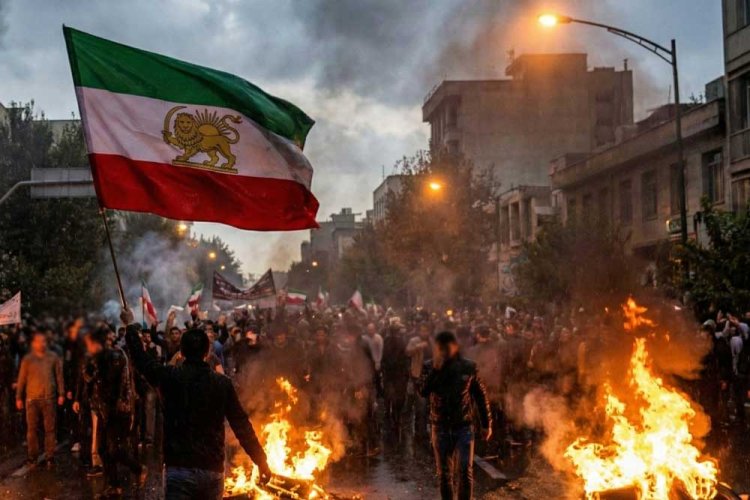 Protests in Iran
Online, the anger is just as intense. She recalls an activist soccer player who wrote “Long live Yazid,” deliberately praising the most hated figure in Shi’ite Islam to express how deeply he despised the regime.
“He wrote that he prefers Yazid to the Islamic Republic, because at least Yazid allowed families to retrieve the bodies of their loved ones, while the regime often refuses to return the bodies of killed protesters.”
Bodies, Burials, and Brutality
Many families, she explains, never received official confirmation about the fate of their relatives.
“Tens of thousands were never identified. Some bodies were buried in mass graves. In certain cases, families were told to pay enormous sums, equivalent to dozens of monthly salaries, to retrieve the body. Some managed to do so. Others stole bodies directly from protest sites to bury them privately, avoiding the authorities altogether.”
The wounded suffered terribly as well.
“There were posts showing untreated amputations. Doctors were ordered not to treat severely injured protesters and instead ensure they died. Physicians who treated protesters or released them before security forces arrived were arrested. It is horrifying to think that people were imprisoned simply for doing their duty as doctors.”
A Cultural Revolution Alongside the Protests
Eilam Gindin stresses that the revolution is not only physical, but cultural.
“Funerals have become demonstrations. They are entirely secular, without Islamic symbols. The dead are buried in the ground, and the eulogies are delivered in pure Persian, without Arabic elements. From a linguistic perspective, that is extremely difficult, but they are doing everything possible to distance themselves from Islam.”
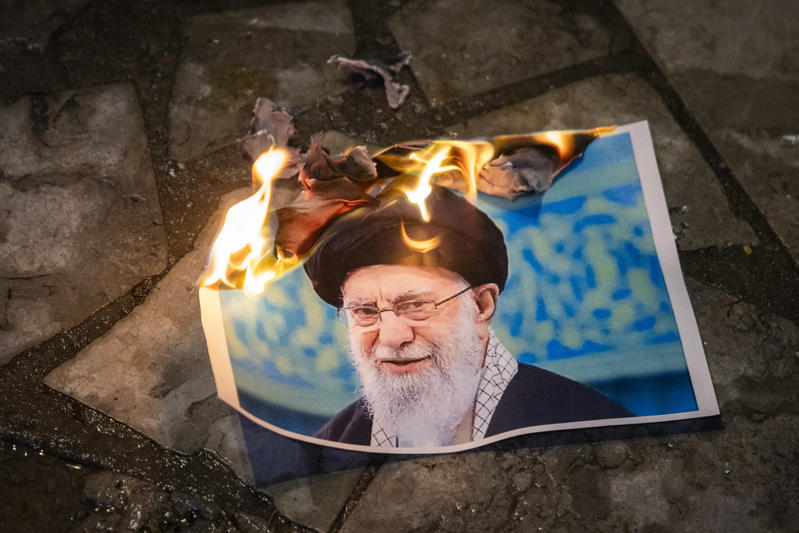 Burning an image of Ali Khamenei (Photo: Shutterstock)
She also notes the surprising role of the Basij.
“While the Basij are known as a regime force used to suppress protests, they are actually a large volunteer organization. Some members joined only for benefits. Today, some Basij members are helping the regime, but others are doing the opposite. They are burning their Basij cards and publicly declaring that they refuse to serve as tools of oppression.”
In several cases, families of killed protesters rejected the regime’s claim that their loved ones died as Basij fighters.
“One of the first victims was a 15 year old Basij member. Officials came to his funeral, but his family chased them away, shouting ‘Shame.’ They refused to let the regime claim him.”
As a linguist, she noticed something striking in online language.
“Persian has different classifiers for humans and animals. Some users deliberately use the classifier for cows when referring to Basij members, and the classifier for dogs when referring to clerics.”
Fighting Without Giving Up
Are Iranians still hopeful?
“At first there was a sense of ‘now or never,’” she says. “People feared that if it failed, they would never try again. Despite massive violence and countless deaths, the spirit has not been broken. There is enormous anger, but it is being channeled into determination.”
She adds that doctors later reported that many of the security forces sent to suppress protests were not Iranian at all, but Iraqi and Sudanese.
“That tells you the regime cannot rely on its own people to fight their brothers.”
Who Comes After the Regime?
This time, the protests are not only about opposition.
“People are also saying what they want. There is massive support for Crown Prince Reza Pahlavi. Protesters chant ‘Long live the King’ and ‘This is the final battle, Pahlavi is coming back.’ Even after internet shutdowns, his messages reached tens of millions, mostly from inside Iran.”
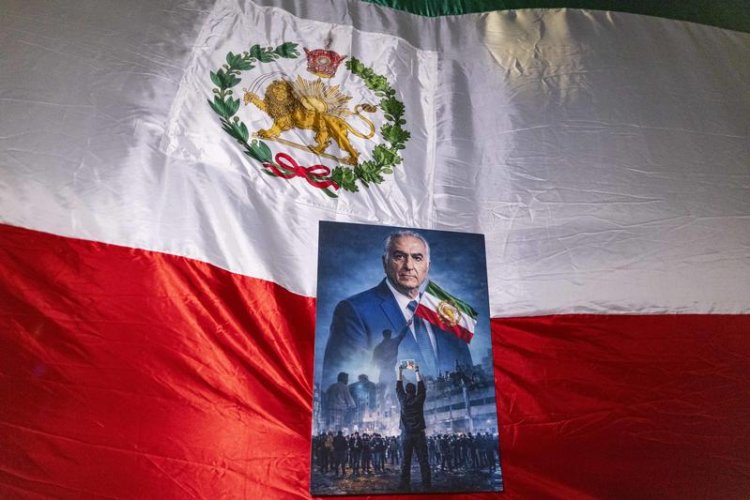 Reza Pahlavi against the backdrop of Iran’s pre-revolution flag (Photo: Haim Goldberg, Flash90)
She says that even ethnic minorities, whom the regime has long used to delegitimize protests, are now chanting for unity under Pahlavi.
“Even anti monarchists understand the need for a unifying figure. Many believe he can stabilize Iran and then transfer power democratically.”
Will Tehran’s wall fall soon?
“I am not a prophet,” she says carefully. “But we are closer than we were yesterday. Change feels inevitable, even if we do not yet know what the day after will look like.”
Truth, Lies, and the Limits of Prediction
Social media remains both vital and dangerous.
“There is a huge amount of propaganda and disinformation. I cross check constantly. But the overall picture is clear. Iranians are united in their anger at the Islamic Republic. They want change and new leadership.”
She ends with a personal story.
“After a lecture, a woman told me she had visited Iran in 1978 with her mother. Standing by the Caspian Sea, her mother asked, ‘Do you think we’ll ever be able to visit the Soviet Union?’”
Eilam Gindin pauses.
“Things happen without us predicting them. Reality often surpasses anything we can imagine.”
When she finally reaches Tehran, what will she do first?
“I probably won’t rush to the food. Persian cuisine is heavy on gluten, which isn’t for me. But I absolutely plan to lead city tours. I already do this online. I’m just waiting for the day we’ll do it in real life.”

