

Purim
Parashat Zachor and Purim: From Shaul’s Failure to Esther’s Redemption
How the battle against Amalek, Haman’s rise, and Esther’s courage shaped Jewish destiny
- Rabbi Eli Amar
- | Updated
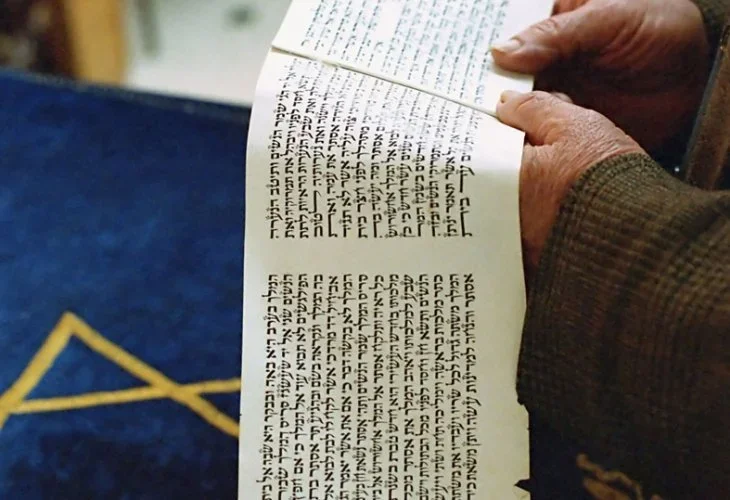
On the Shabbat preceding Purim, we read the haftarah of Parashat Zachor, because Haman was a descendant of Amalek, whom we are commanded to erase. As stated at the end of Parashat Beshalach: “For a hand is on the throne of God; the Lord will wage war against Amalek from generation to generation.”
A Missed Opportunity to Erase Amalek
The haftarah describes a rare, historic opportunity to completely destroy the seed of Amalek, that was ultimately missed. After Shaul was crowned as the first king of Israel, the prophet Shmuel commanded him in God’s name to eradicate Amalek entirely: man and woman, old and young, infant and suckling, ox and sheep, camel and donkey.
Two hundred and ten thousand Israelites mobilized for this war. They went out to battle and were victorious. Yet here Shaul failed: he did not kill Agag, the king of Amalek. Shaul and the people showed mercy to Agag, as well as to the finest sheep and cattle.
Misplaced Mercy and Its Consequences
This mercy was misplaced. God is the ultimate source of compassion, and if He commands destruction, can a human claim greater mercy than the Creator? As a result of Shaul’s failure, the prophet Shmuel was informed that God had rejected Shaul as king. When Shmuel confronted Shaul, asking, “What then is the sound of sheep and cattle that I hear?” Shaul blamed the people for showing compassion. He was then told that he had lost the kingship, which would be given to one more worthy than he.
The price of this failure was enormous.
From Agag to Haman
The Midrash explains that on that very night, a maidservant was brought to Agag, and she conceived from him. From this union eventually emerged Haman the Agagite. Haman later sought to annihilate the entire Jewish people — men, women, and children, in a single day.
Repairing Shaul’s Failure: Mordechai and Esther
Those who ultimately stood against Haman were Mordechai the Jew, son of Yair, son of Shimi, son of Kish (the father of King Shaul), a Benjaminite, and Esther, daughter of Avichail. When Esther feared approaching King Achashverosh without being summoned, Mordechai said to her: “If you remain silent at this time, relief and deliverance will arise for the Jews from another place, but you and your father’s house will perish. And who knows whether it was for such a time as this that you attained royalty?”
Mordechai was telling Esther that this moment was an opportunity to repair Shaul’s failure. If she did not act, the sin of her ancestor could not be rectified. Perhaps she had been chosen from among all the women of the empire precisely so that Heaven could place her in a position to correct Shaul’s mistake.
Indeed, Esther and Mordechai risked their lives, the Jewish people were saved, and Haman was hanged.
The Ongoing Battle with Amalek
Although the salvation was great, it was not yet complete. We still await, in our own days, the final eradication of the seed of “Amalek” which has the same numerical value (gematria) as the word safek (doubt), the force that represents denial of God.
Then all the inhabitants of the world will recognize and know that “every knee will bow and every tongue will swear allegiance”, as the prophet Zephaniah foretold: “Then I will transform the peoples to a pure language, that they may all call upon the name of the Lord and serve Him together.”
May this happen speedily in our days. Amen.

