

Purim
Parashat Zachor Explained: Remembering Amalek and Preparing for Purim
Halachic guidelines, meaning, and spiritual depth of the Torah commandment to erase Amalek
- Behalacha Ube'agadah
- | Updated
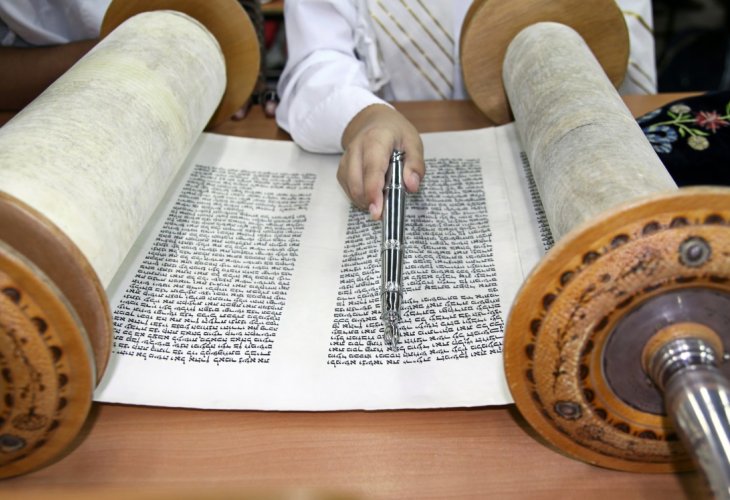 (Photo: Shutterstock)
Parashat Zachor consists of the final three verses of Parashat Ki Tetze, which address the mitzvah to erase Amalek. We are commanded to remember, once each year, what Amalek did to the Jewish people while they were in the wilderness after the Exodus from Egypt — how they came to wage war against Israel and cooled the awe and dread that the nations of the world felt toward them.
After all the nations heard of God’s mighty deeds — the Ten Plagues and the splitting of the Sea — they trembled and melted in fear, not daring to fight Israel, as the Torah describes in the Song at the Sea: “Peoples heard and trembled; terror seized the inhabitants of Philistia. Then the chiefs of Edom were confounded; trembling seized the mighty ones of Moab; all the inhabitants of Canaan melted away. Dread and fear fell upon them; by the greatness of Your arm they were stilled like stone.”
When the wicked Amalek attacked Israel, he cooled that fear and emboldened other nations, over time, to fight Israel as well. That is why we are commanded to remember specifically what Amalek did, and not what other nations did, even though they too later fought against Israel.
Woe to the Wicked and Woe to His Neighbor
The Sages instituted that this passage be read on the Shabbat before Purim, in order to juxtapose the erasure of Amalek with the erasure of Haman, who was also descended from Amalek, as stated in the Megillah: “Haman son of Hammedata the Agagite,” and Agag was the king of Amalek.
Mitzvot Require Intention
According to the majority of halachic authorities, the reading of Parashat Zachor is a Torah obligation, as it is written: “Remember what Amalek did to you.” This is the ruling of the Shulchan Aruch as well. Since mitzvot require intention, the prayer leader should remind the congregation before the reading to listen carefully to every word and to have in mind to fulfill the Torah commandment of remembering Amalek and erasing him. The reader, too, must intend to discharge the congregation’s obligation, and the congregation should not read along quietly with the reader.
For Parashat Zachor, the congregation should use the most beautiful and finely written Torah scroll available in the synagogue.
Those Without a Regular Minyan
People who live in a place without a regular Shabbat minyan must plan in advance and organize a minyan for Shabbat Zachor. If that is not possible, they should spend Shabbat in a place where there is a minyan in order to hear Parashat Zachor. If they are unable to secure a minyan at all, they should read Parashat Zachor from a Torah scroll without reciting the blessings.
Bar Mitzvah Reading
If a bar mitzvah boy is scheduled to receive an aliyah on Shabbat Zachor, it is preferable that he not read Parashat Zachor itself, but rather another aliyah from the weekly portion. Since the reading of Zachor is a Torah obligation, it is preferable that it be read by a fully mature adult who is fluent in pronunciation, vowels, and cantillation, and who can properly fulfill the congregation’s obligation. Nevertheless, if the bar mitzvah boy did read Parashat Zachor, the congregation has technically fulfilled its obligation. However, a minor under the age of thirteen should not be given the maftir aliyah of Shabbat Zachor at all.
One Who Was Ill
Someone who was ill and could not attend synagogue should at least read the verses of Parashat Zachor from a Chumash. He should also remind himself that when Parashat Ki Tetze is read later in the year, near the end of Elul, he should ask the reader to have him in mind for fulfilling the mitzvah of Zachor. For this reason, it is good practice for the reader in Parashat Ki Tetze to announce that he intends to fulfill the obligation for anyone who did not hear Parashat Zachor in Adar.
A Torah Scroll Found to Be Invalid
If a congregation read Parashat Zachor and later discovered an error in the Torah scroll, it is proper that the reader have them in mind for fulfilling the mitzvah when Parashat Ki Tetze is read, as described above.
Sephardim and Ashkenazim
Although throughout the year Sephardim and Ashkenazim commonly pray in one another’s synagogues and fulfill their obligations through each other’s pronunciation and cantillation, on Shabbat Zachor it is preferable that each person hear the reading according to his ancestral tradition, since this reading is a Torah obligation.
Striking at the Mention of Amalek
Some have the custom to stamp their feet when the name “Amalek” is mentioned, such as during Parashat Beshalach or the Megillah reading. However, during Parashat Zachor it is preferable not to do so, lest it interfere with the congregation’s ability to hear the reading properly.
Women and Parashat Zachor
The halachic authorities differ as to whether women are obligated to hear Parashat Zachor. On the one hand, since the Torah did not assign a specific time to the mitzvah of remembering Amalek, women may be obligated, as they are in other mitzvot without fixed times. On the other hand, since the purpose of remembering Amalek is to bring about his eradication through warfare, and women do not go to war, there is reason to exempt them.
Therefore, women should make a strong effort to attend synagogue and hear Parashat Zachor. Just as many women come to hear the shofar on Rosh Hashanah, despite being exempt according to all opinions, so too it is fitting that they come to hear Parashat Zachor from the women’s section, thereby fulfilling all opinions. Nevertheless, a woman who finds it very difficult to attend may rely on the lenient view.
Women caring for small children who cannot be left unattended are exempt, based on the principle that one who is occupied with a mitzvah is exempt from another mitzvah. Women who do not attend synagogue should at least read the verses of Parashat Zachor from a Chumash.
A Special Reading for Women
Where possible, it is proper to organize a special Torah reading for women later in the day, read by a God-fearing reader, without the Torah blessings. If this is not feasible, and women are present for a Megillah reading, it is proper for the reader to read Parashat Zachor for them at that time.

