

Purim
The Four Mitzvot of Purim Explained: Megillah, Gifts, Charity, and Celebration
A clear guide to reading the Megillah, Mishloach Manot, Matanot La’Evyonim, and the Purim feast
- Yuval Golden
- | Updated
 (Photo: Shutterstock)
There are four mitzvot that form the essence of the day of Purim: reading the Megillah, sending gifts of food (mishloach manot), gifts to the poor (matanot la’evyonim), and the festive meal.
1. Reading the Megillah
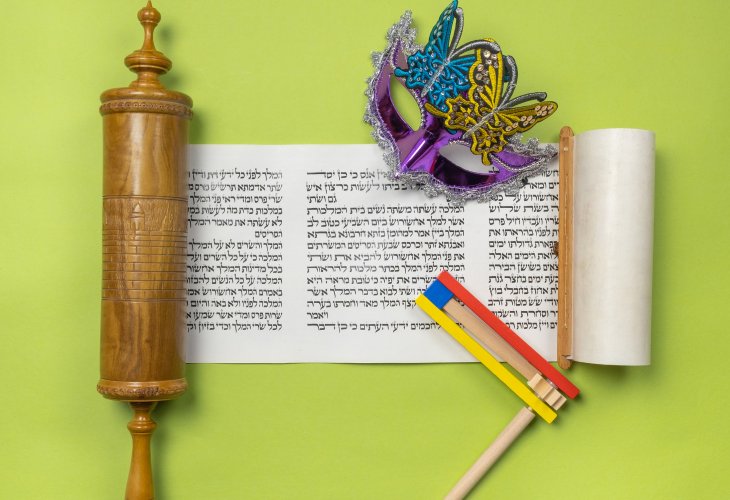
The Megillah must be read twice: once on the night of Purim after the evening prayer (Ma’ariv), and again in the morning after Shacharit.
It must be read from a valid parchment scroll, and the reader must be proficient in the cantillation. One is required to hear the entire Megillah, without missing even a single word spoken by the reader. It is advisable not to sit near small children who may make noise and interfere with hearing the reading properly.
Women are also obligated in the reading of the Megillah, even though it is a time-bound commandment. This is because women, too, were included in the miracle of Purim, and because Queen Esther played a central role in the events that led to the salvation.
2. Mishloach Manot – Sending Gifts of Food
Mishloach manot consists of food and drink, and must include at least two different food items. The basic obligation is to send one mishloach manot to one person, but whoever increases is praiseworthy.
The purpose of mishloach manot is to increase love, unity, and brotherhood among the Jewish people. In the days of Achashverosh, the Jewish people were described as divided and scattered, as Haman declared: “There is one nation scattered and separated” (Esther 3:8).
The holy Alshich explains: “Separated implies people who are divided, and who do not connect with one another.”
The remedy for that division is unity and closeness, which is why the mitzvah of mishloach manot was instituted. If there is someone with whom you have tension or strained relations, Purim is the perfect opportunity to mend the relationship by sending them mishloach manot. Take advantage of the moment and send gifts specifically to those relationships that need healing — not only to those where everything is already smooth. This is also a wonderful opportunity to express gratitude or to bring joy to people who may be lonely and overlooked.
3. Matanot La’Evyonim – Gifts to the Poor
On Purim we do not forget those in need. There is a mitzvah to give charitable gifts to the poor. These gifts do not need to be food; in fact, it is preferable that they be monetary donations. The amount given should be sufficient to purchase a basic meal, and one must give to two poor individuals.
It is customary to give the money a few days before Purim to synagogue trustees, rabbis, or reliable charitable organizations, who then distribute the funds on Purim itself, since this mitzvah must be fulfilled on that day.
Maimonides (the Rambam) writes about this mitzvah: “It is better for a person to increase gifts to the poor than to increase his festive meal or gifts to his friends, for there is no greater or more glorious joy than to gladden the hearts of the poor, the orphans, the widows, and the converts. One who gladdens the hearts of these unfortunate people is likened to the Divine Presence, as it is said: ‘To revive the spirit of the lowly and to revive the heart of the downtrodden’” (Laws of Megillah and Chanukah, 2:17).
4. The Purim Feast
The Purim meal is held during the day, usually in the afternoon. It includes good food, wine, singing, and abundant joy.
Over the generations, a Purim folklore and festive culture of joy and humor developed around this day. One of the symbols of Purim — though not a mitzvah, is wearing costumes, which alludes to the theme of v’nahafoch hu (“it was turned upside down”). On Purim, the day of destruction was transformed into a day of joy, as stated in the Megillah: “The month that was transformed for them from sorrow to joy, and from mourning to a festival” (Esther 9:22).
There are several explanations for why we eat the traditional Purim pastry known as hamantaschen (“Haman’s ears”), all meant to recall Haman’s downfall. One explanation connects the pastry to the humiliation Haman experienced when he was forced to lead Mordechai through the streets in royal garments — his ears, so to speak, were “cut off” in shame and disgrace.

