

Magazine
The City of Gold: Ten Fascinating Truths About Jerusalem
A journey through ten remarkable facts that reveal Jerusalem’s unique place in history, faith, and human memory.
- Rabbi Ovadia Chen
- | Updated
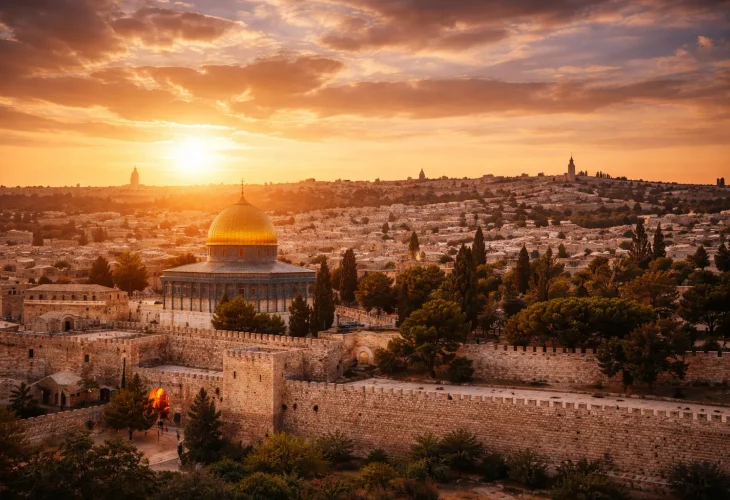
Jerusalem is a city of beginnings, continuity, and spiritual depth. Its story is not told through a single moment, but through layers of history, faith, and lived reality that stretch from the dawn of humanity into the future. Below are ten remarkable facts that highlight Jerusalem’s unique place in the world.
1. The First Human Settlement
According to Rabbeinu Bechaye on Genesis 4:14, the first human settlement on earth was inJerusalem. After Adam left the Garden of Eden, he wandered eastward and eventually settled on Mount Moriah. From the very beginning of human history, Jerusalem stands as a focal point of human presence and spiritual destiny.
2. A City of Many Names
Jerusalem has more names and nicknames than any other city. In the Tanach and the writings of Chazal, it is attributed approximately 290 names, including Zion, City of David, City of Shalem, Ariel, and City of Jebus, as noted in Bamidbar Rabbah 14:12.
These many names reflect the city’s many dimensions: beauty and joy, calm and longing, the merit of those who live there and of those who yearn to see it rebuilt. An entire book,Jerusalem Names All Around Herby artist Yaakov Bousidan, is devoted to this phenomenon. The Midrash in Bereishit Rabbah adds that in the future, Hashem will give Jerusalem yet another name, as it is written in Jeremiah chapter 3, “At that time they will call Jerusalem the throne of Hashem.”
3. The Most Mentioned City in Sacred Texts
Jerusalem is the most frequently mentioned city in Jewish sacred literature. In the Tanach alone it appears 659 times, and when its additional names are included, it is mentioned well over a thousand times. In the Oral Torah as well, Jerusalem surpasses all other cities in frequency, reflecting its unique bond with the Creator and with the Jewish people.
4. The World’s Oldest Active Cemetery
Jerusalem is home to some of the world’s oldest continuously significant sites. Among them is the Mount of Olives in eastern Jerusalem. This cemetery holds two records: it is both the first and the oldest cemetery in the world still in use.
Jews have been burying their dead there for nearly three thousand years, and the site contains approximately seventy thousand headstones. Its proximity to the Old City and the ease of quarrying stone made it an ideal burial site already in the First Temple period, when burial inside the city was forbidden. Among those interred there are the prophets Haggai, Zechariah, and Malachi, Avshalom, Rabbeinu Ovadia of Bartenura, the Or HaChayim, the Rashash, Rabbi Yehuda HeChasid, Rabbi Matzliach Mazuz, and many other righteous figures.
5. The Oldest Mikveh in the World
The oldest known mikveh in the world is located inJerusalem, in theCity of David. This is the immersion pool where Rabbi Yishmael the High Priest immersed himself approximately two thousand years ago.
Historical travel accounts describe this mikveh in detail. Zikhron Yerushalayim refers to a large and deep immersion pool at the head of the spring, known as the immersion of Rabbi Yishmael the High Priest. Sha’arei Yerushalayim recounts that pilgrims regularly immersed there and even attributed healing properties to its cold waters. Plans exist today to restore the mikveh to active use.
6. A City of Synagogues
Jerusalem’s synagogues are legendary. The Bucharian neighborhood alone contains approximately one hundred synagogues.
The largest synagogue in the world is also located in Jerusalem. The Great Synagogue of the Belz Hasidutstands in northern Jerusalem and is visible from afar. Its exterior subtly recalls the Beit HaMikdash, with prominent roof cornices.
Inaugurated on Pesach 5762 after eighteen years of construction, the building reconstructs the historic beit midrash of Belz in eastern Galicia. Stones from the original structure are embedded in the new building, and the chair of the previous Belzer Rebbe is preserved there. The main hall contains five thousand seats, with standing room for thousands more, and its ark rises twelve meters high.
7. The Largest Vatikin Minyan
The largest vatikin minyan in the world is held in Jerusalem, in the Meah Shearim neighborhood at the Or HaNe’elam synagogue of Breslov Hasidim. This minyan, held daily for many years, draws more than two hundred worshipers and begins early in order to reach prayer precisely at sunrise.
8. The Most Daf Yomi Classes in One Synagogue
The synagogue with the greatest number of daily Daf Yomi classes in the world is also in Jerusalem, at the Zichron Moshe synagogue. More than forty five Daf Yomi classes take place every twenty four hours, covering nearly every hour of the day, under the direction of Rabbi Pinchas Gutfarb.
9. The World’s Largest Yeshiva
Jerusalem is home to theMir Yeshiva, the largest yeshiva in the world. More than five thousand students study there across multiple batei midrash lining an entire street in the Beit Yisrael neighborhood.
The yeshiva enrolls students from around the world and offers classes in Hebrew, Yiddish, English, and French. Among its remarkable features is an eighty four year old avreich studying alongside four consecutive generations of his family.
10. Looking Toward the Future
When Mashiach arrives speedily in our days and Jerusalem reaches the height of its joy and glory, the Beit HaMikdash will be rebuilt. Then the city that has carried humanity, prayer, Torah, and longing from the very beginning will stand revealed in its full splendor.
Jerusalem is not only a city of records and ancient milestones, but a living thread that binds past, present, and future. From the first steps of humanity to the prayers and learning that fill its streets today, it carries memory, meaning, and hope. And as generations continue to walk its paths, Jerusalem remains a city not only remembered, but endlessly awaited.

