

Purim
Hidden Miracles of Purim: Coincidence or Divine Providence in the Book of Esther
Why the chain of events in the Megillah cannot be explained as chance and what it teaches about hidden Divine guidance
- Daniel Blass
- | Updated
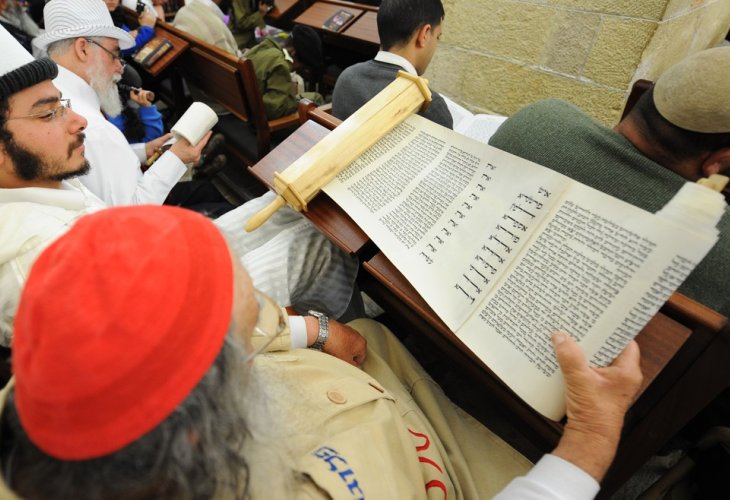 (Illustrative photo: Flash 90)
Devir asks: “Hello. Every year during the days of Purim I find myself wondering about the way the miracles in the Book of Esther unfolded, and to what extent they were concealed behind nature. Is it possible that someone who is not familiar with the Torah of Israel could interpret them as a chain of coincidences? Thank you very much.”
***
Hello Devir, and thank you for your thoughtful question.
Indeed, the Megillah conceals its miracles behind the workings of nature. For this reason, God’s Name is hidden in the Megillah, teaching us about the nature of hidden divine providence. Still, only a very biased person could view such a vast number of events as mere natural coincidence.
The list of apparent coincidences is so extensive that it is impossible, from any rational perspective, to attribute them to blind chance, as you asked.
Anyone who examines the chain of events in the Megillah as a single, ordered sequence will find it impossible to see it as coincidence. Remove even one link from this chain, and the entire story of the decree and the salvation of Purim would either never have occurred or would have ended, God forbid, in utter destruction.
Let us enumerate several of these key events through a series of questions.
Why Was Haman Elevated?
Why did King Achashverosh specifically elevate Haman, the enemy of the Jews, appointing him as the chief minister of the entire empire, and even granting him royal authority that no other minister possessed? These are highly unusual facts in the Persian kingdom. Furthermore, why did Haman seek to annihilate all the Jews in all the provinces, despite the fact that they lived peacefully under Persian rule? Such pathological hatred clearly does not stem from any rational calculation.
Mordechai and the Assassination Plot
Why was it Mordechai who overheard the plot of the two chamberlains to assassinate the king? Moreover, only because Mordechai had close access to Queen Esther was he able to warn her in time and save the king’s life.
The Forgotten Reward
Why did the king forget to reward Mordechai for saving his life from the two guards? This was no trivial matter. Logic dictates that a king whose life was saved from internal assassins would immediately shower his rescuer with gifts and honor.
A Decree Against an Entire Nation
Why did King Achashverosh agree to the destruction of the entire Jewish people without any substantial justification? This is especially striking given that he had already entrusted Haman with extraordinary authority that should have belonged only to the king himself.
Vashti’s Refusal
Why did Vashti dare to defy the king and refuse to appear before him, fully aware of the severity of such an act? The Midrash tells us that God afflicted Vashti at that moment with an unnatural disfigurement.
Esther’s Rise to the Throne
Esther was an orphan who grew up in secrecy in Mordechai’s home. How did it happen that out of all the beautiful women from 127 provinces, King Achashverosh chose Esther, a Jewish woman, as queen? Even more remarkably, she kept her identity hidden, despite not yet knowing of the decree that would come. Why did Esther grow up specifically in the home of Mordechai, a central figure in the story? Was it mere coincidence that the man most hated by Haman raised the very woman who would marry the king of Persia? It was only through her connection to Mordechai that Esther learned of the decree and was able to act to save the Jewish people.
Esther Approaches the King
Why did Achashverosh not become angry with Queen Esther when she approached him without permission, in direct violation of the law? He had already executed Vashti for a similar act of disrespect. Yet here, the king was overjoyed to see Esther and said, “What troubles you, Queen Esther, and what is your request? Even to half the kingdom it shall be granted.” See how God turns the hearts of kings to hatred or to love as He wills.
A Sleepless Night
Why was it specifically “on that night that the king’s sleep was disturbed”? Why did he choose to pass the time by reading the Book of Chronicles? And of all the entries, why did he focus specifically on Mordechai and the question of how he had been rewarded?
Haman at the Courtyard
How is it that on the very same night the king could not sleep, Haman happened to be in the king’s courtyard? How did it come about that the king was pondering how to honor Mordechai precisely when Haman arrived to ask permission to have Mordechai executed?
A Vague Question With Devastating Results
Why did Achashverosh pose his question to Haman in such an indirect way, asking what should be done for the man whom the king wishes to honor, instead of explicitly naming Mordechai? Haman knew well how much the king favored him.
How did it come to pass that Haman found himself leading through the streets, dressed in royal garments and riding the king’s horse, the one man he hated more than anyone else? This was an almost unimaginable humiliation. Moreover, it is worth noting that by granting Mordechai such honor, the king’s affection for him must have grown even stronger, for it is human nature to love those one honors. This public honor was far more significant to the story than any gift of gold or silver.
The Gallows Turn Against Their Builder
Why was it only after Haman built the gallows that he realized, to his horror, that he intended to hang on them the very man “whom the king desires to honor”? The sequence of events was so astonishing that even Haman’s own family recognized that his downfall was decreed from Heaven.
Before Haman could dismantle the gallows or destroy the evidence, he was hastily summoned to the royal banquet. Once his plan was exposed, Haman understood that he could no longer excuse his actions as ignorance or misunderstanding, for he himself had been commanded by the king to honor Mordechai.
Haman’s Fatal Mistake
Why did Haman fall upon Esther’s couch? Haman was a calculated and intelligent man, fully aware of Persian court etiquette. Such behavior was an extraordinary blunder. The Megillah describes how “Haman’s face fell” when he realized the magnitude of his foolish error, which left him no room for explanation.
Why did the king step out to the garden in anger, only to return at the exact moment when Haman was pleading on Esther’s couch? He could have returned earlier or later. This was timing of astonishing precision, sealing Haman’s fate.
Charvonah’s Timely Intervention
Why was a chamberlain named Charvonah present at that very moment, ready to inform the king that Haman had built a fifty cubit gallows intended for Mordechai?
Three Reasons Combined
It appears that three factors together led to Haman’s immediate and harsh sentence: the decree to annihilate Esther’s people, his disgraceful behavior toward the queen, and the gallows he prepared for Mordechai.
Had only two of these existed, Haman might have been able to defend himself. He could have claimed ignorance of Esther’s identity, or pleaded for mercy when he fell upon the couch, or explained that the gallows were built before he knew Mordechai was the king’s savior. It was the astonishing convergence of all three factors at once that sealed his fate. Who orchestrated such disparate elements to converge at the same moment?
Reversing an Irrevocable Decree
Why did King Achashverosh agree to overturn the decree after it had been sealed with the royal signet, when it was known that a royal decree could not be revoked? The decree was bound up with the king’s honor, and Persian kings did not reverse their word, just as Achashverosh did not spare Vashti. Yet he agreed not only to reverse the decree but to transform it entirely.
Why did he also grant Esther permission to kill many of those who sought to harm the Jews, even though they were Persian subjects? And why did he appoint Mordechai as his second in command in place of Haman?
A Perfectly Woven Tapestry
All of these “coincidences” did not arise solely from the choices of Achashverosh, nor only from those of Haman, nor even only from Mordechai or Esther. Events so different in nature are woven together into an astonishing tapestry, like a perfect puzzle with no missing piece.
I am certain that if you study the Megillah carefully, you will find many more such instances that I have not listed, all testifying that the entire story came “from another place,” and was carried out through people and events that served as divine instruments.
May we all be strengthened during Purim, and give thanks to our God for the miracles He performed for our ancestors in those days, and very soon, God willing, in our own time as well.

