

Wonders of Creation
Inside the Body’s Quality Control System: How Faulty Cells Are Destroyed
The human body possesses a remarkable internal quality control system. DNA replication occurs constantly, yet illness, stress, and viral attacks can disrupt the process. How does the body respond to such threats?
- Yosef Yabece
- | Updated
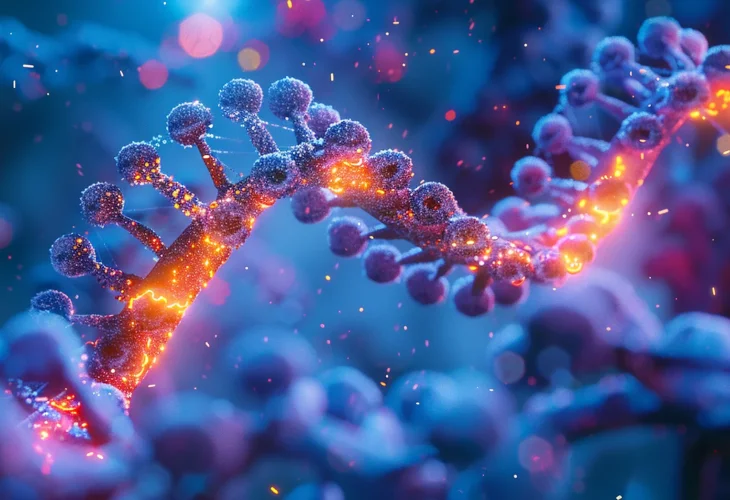
The human body is the most complex machine in the universe. It is capable of replicating itself and encoding the complete blueprint for creating a new human being within a microscopic DNA molecule. That molecule, wrapped in an RNA layer, “knows” how to read instructions and assemble the body from basic materials such as iron, magnesium, and proteins. A mother’s food intake is transformed into an entirely new person. This alone is a staggering wonder.
Built In Quality Control
One of the body’s most remarkable features is its internal quality control system. DNA replication takes place constantly, yet human life unfolds under imperfect conditions. Illness, stress, hunger, infections, and vitamin deficiencies all pose serious risks. Replication errors could easily occur when a virus attacks or when the body is under strain.
Does the body simply allow these errors to persist?
It does not. Just as the immune system conducts complex biological warfare against threats, the body also maintains a meticulous internal inspection system. Like factory inspectors examining each product before it leaves the assembly line, specialized mechanisms examine newly replicated cells. Each cell is either approved as fit for continued replication or identified as faulty and destroyed before it can cause damage.
A System That Cannot Be Accidental
These discoveries were recently discussed by Dr. Jonathan McLatchie, an evolutionary molecular biologist, in a conversation on Andrew McDiarmid Podcast. McLatchie explains that this quality control system is so complex that it could not have arisen through random evolutionary processes.
According to McLatchie, the system operates through three coordinated stages. Three distinct types of proteins are involved: sensors, transducers, and effectors. Each has a specific role. Sensors identify potential problems, transducers relay information, and effectors carry out the final response, including the destruction of defective cells. Together, they function like trained inspectors equipped to detect even subtle flaws.
Darwin’s Own Warning
Charles Darwin once admitted that if a biological system existed that could not be formed through small, gradual modifications, his theory would collapse. He was unaware of DNA, but this quality control mechanism is precisely the kind of system he feared.
Unlike simple evolutionary illustrations such as a zebra gradually developing a giraffe’s neck, which modern biology has shown would require coordinated changes in blood pressure, circulation, and anatomy, this cellular inspection system cannot function in partial form. It is an all or nothing mechanism. Either the entire system exists and works, or it does nothing at all.
McLatchie notes that the quality control system relies on interactions between different types of cells, including eukaryotic and prokaryotic systems, built from different materials and operating through distinct processes. Yet they act in perfect coordination, like a committee whose members follow precise instructions.
Ten Parts or Nothing
While the subject is technical, its implications are profound. The system requires at least ten specific proteins working together. If even one is missing, the entire mechanism fails. There could not have been a single early protein that performed part of the task while others evolved later. Partial systems accomplish nothing.
McLatchie compares this to software engineering. A program composed of ten interdependent codes cannot function if only one or two exist. Each piece is useless on its own. Such systems do not arise through chance, trial and error, or gradual self development.
According to McLatchie, this represents a decisive challenge to evolutionary theory. The body’s quality control system points not to randomness, but to intentional design built into life at its most fundamental level.

