

Purim
Hidden Miracles of Purim: Amalek, Doubt, and Discovering God’s Hand in Everyday Life
From the Megillah of Esther to modern times: how hidden providence transforms chance events into faith, joy, and meaning
- Rabbi Yeshayahu Wind
- | Updated
The Rebbe of Gur, author of Chiddushei HaRim, once related the following story:
When the incident with Queen Vashti occurred, someone entered the study hall and announced the latest news: a death sentence had been issued against Queen Vashti. Those present responded dismissively, “Don’t confuse us with the nonsense of the gentiles.”
But later, when the miracle unfolded and Haman’s downfall came about through Queen Esther and Mordechai, everyone understood just how deeply those earlier events had been connected to the fate of the entire Jewish people. It then became clear how seemingly unrelated fragments of history — Vashti’s execution (which later led to Esther’s coronation), the saving of the king from Bigtan and Teresh, Esther’s concealment of her Jewish identity, and many other details, had all joined together into one vast story of salvation.
The Megillah Yet to Be Written
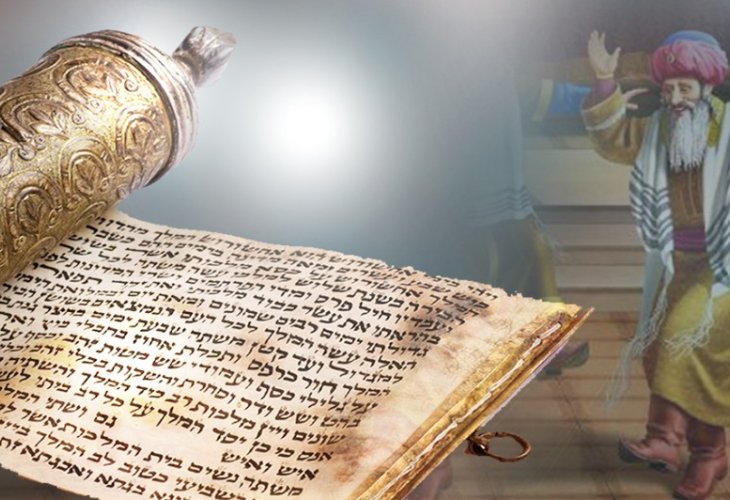
It is brought in the holy books that when Mashiach arrives, the great sages of Israel will gather, record all the events of the final period before his coming, and compile them into a scroll. All of Israel will assemble and read this scroll, just as we read the Megillah of Esther.
So too, each individual will compose a personal “megillah” from the events of his or her own life.
Then astonishing things will be revealed. Everything that happened to us — every event and every occurrence, will be seen as another chapter, another piece of the scroll, all joining together into one complete picture.
Suddenly it will become clear that everything was for our good, that everything was directed toward a single purpose: the perfect rectification of our souls. In an instant, our eyes will open, and we will look back at those very same events we experienced, but now see them in an entirely different light. Our understanding will shine when we grasp how and why each thing happened to us.
Remembering Amalek and Reading the Megillah
On the Shabbat before Purim, we gather to hear the Torah reading of “Remember what Amalek did to you.” When Purim begins, we will again gather in synagogues to hear the reading of the Megillah. Let us try to understand the connection between these two mitzvot and what binds them together.
Amalek: Cooling Faith
The Baal Shem Tov taught that Amalek was the only nation that dared to wage war against Israel immediately after the Exodus from Egypt. The miracles of Egypt and the splitting of the Red Sea were known throughout the world: “Then the chiefs of Edom were alarmed; the mighty of Moab were seized with trembling; all the inhabitants of Canaan melted away.” No one dared confront Israel after witnessing such clear Divine revelations.
Amalek was the first to dare. How was he not afraid? Amalek tried with all his might to explain everything in natural terms: the water turning to blood, the frogs, the lice. For every miracle, he offered a scientific explanation of how it could have happened. He ignored the obvious revelations and forced the miracles into a natural framework. Because of this, he saw no problem in fighting Israel.
Doubt as a Worldview
The numerical value of the word Amalek is 240, the same as the word safek — doubt. This was Amalek’s entire essence: to inject doubt and uncertainty into the clear faith that the whole world had witnessed firsthand. “Who happened upon you along the way” — from the word mikreh (chance) and from kerirut (cooling). Amalek cooled the burning faith and claimed that everything happened by chance.
Indeed, Amalek succeeded in fighting Israel only after Israel themselves had cooled in their faith, as the Torah states just before the episode of Amalek, when the people asked, “Is God in our midst or not?”
From Open Miracles to Hidden Ones
The story of the Megillah took place after the destruction of the First Temple, when prophecy had diminished and the era of open miracles was coming to an end. When Haman, the wicked descendant of Amalek, sought to destroy, kill, and annihilate all the Jews, Heaven showed Israel that although they would no longer merit open miracles, God’s kindness had not ended. They would continue to experience miracles — but these would now be hidden within the framework of nature.
Thus, precisely through the descendant of Amalek, who had cooled Israel’s faith and claimed that open miracles were merely chance and natural phenomena, there occurred wondrous miracles that, although following natural pathways, left no doubt that a guiding hand was directing all events toward their intended outcome. Here it was revealed that even nature itself is a tapestry of hidden miracles.
Why We Read the Megillah
For this reason, our Sages commanded us to read the Megillah of Esther, and even to repeat it. The Megillah of Esther, true to its name, reveals the hidden. It instills within us an awareness of Divine providence in every chapter and movement of our lives, in every event and occurrence of daily existence.
“When Adar Enters, We Increase in Joy”
This also explains why our Sages established the rule: “When Adar enters, we increase in joy.” Many ask: what is the source of this joy? Is the miracle of Purim greater than the Exodus from Egypt and all the other miracles God performed for us since we became a nation?
The answer is that one who merits to live with this outlook, of seeing the hand of God in every natural event, merits a life of happiness in this world and the next. Such a person lives with constant joy, free of tension and anxiety. His mouth is filled with song and praise to the Creator for His kindnesses and wonders that surround him, for “Your miracles that are with us every day,” and for every single breath he praises God.
Therefore, when Adar enters and we internalize that there is a guiding hand behind every event, that alone is reason enough to increase our joy.
The author is a spiritual director and lecturer with the Hidabroot organization, and head of the Ahavat Torah Kollel.

