

Purim
Not the Megillah of Mordechai: The Quiet Power of Esther
How faith, courage, and self-sacrifice made Esther the key to the Purim miracle
- Rabbi Eliyahu Rabi
- | Updated
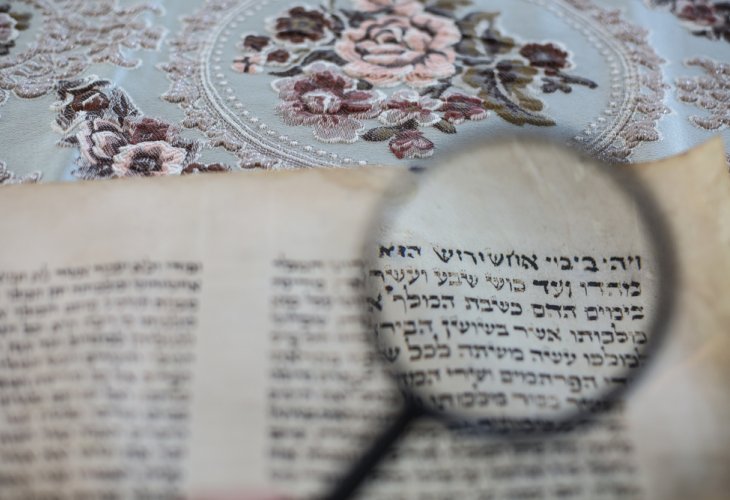 (Photo: Shutterstock)
In the miracle of Purim, Mordechai and Esther were equally involved, and one could even argue that Mordechai was the one who led the strategy while Esther merely carried it out. Add to this the fact that Mordechai was among the leaders of the Sanhedrin, while Esther until then was a seemingly ordinary young woman, and the conclusion appears obvious: the core of the miracle in the Megillah was brought about by Mordechai, and he should have received the primary credit. By that logic, had the decision been ours, the scroll itself would have been called “The Megillah of Mordechai.”
Why Is It Called the Megillah of Esther?
But this is not how the Holy One, blessed be He, saw it, and not how the Sages of Israel saw it either. “Queen Esther wrote, together with Mordechai the Jew, all the authority…” Esther requests, Esther writes, and Mordechai joins her. And in the end, the scroll is called the Megillah of Esther.
It was Esther who carried out the miracle in practice. Her self-sacrifice and unwavering determination for the sake of her people and her God stood up to the most difficult tests, and only because of this did the nation merit salvation and the miracle occurred.
The Megillah of Esther teaches us that you can be the most “ordinary,” the most “unknown,” the most “simple” woman, and yet the keys to the salvation of the entire Jewish people can be placed in your hands.
Success does not depend on size, power, or talent, but on faith, devotion, and the determination that flows from them.
Women, Greatness, and Jewish History
Judaism does not speak in terms of “equal rights” in the modern sense. Rather, the woman is often placed before the man and regarded as even greater, in her modesty, her inner royalty, and her achievements. Time and again, Judaism has attributed miracles and wonders to the merit of women, and the Megillah of Esther is one of the clearest examples.
Every Jewish woman is a princess. Every Jewish woman is a daughter of the King. Every Jewish woman possesses inner spiritual strength to save and redeem herself, her husband, her children, her family, and when necessary, even the entire Jewish people.
Through prayer and the recitation of Tehillim, every woman can plead on behalf of the Jewish people, the exile, and the honor of God, and such prayers will certainly not return empty-handed.
Let every woman recognize her strength, appreciate her abilities, and above all, learn to value herself.

