

Relationships
Why Do Two People Remember the Same Event Differently?
The same event, two different memories. Discover how associative memory shapes our reality and why understanding this can save relationships from pointless arguments.
- Rabbi Eyal Ungar
- | Updated
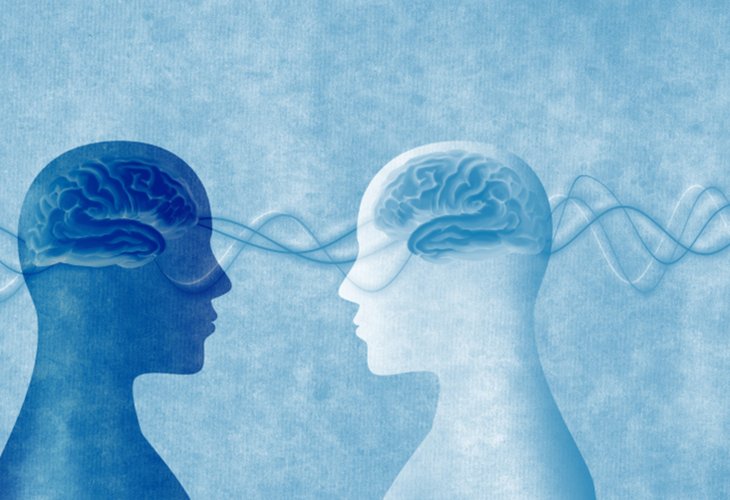 (Photo: shutterstock)
A person has a memory capacity equivalent to ninety thousand books. Of course, we do not focus on remembering books alone. We recall our neighbor’s car color and our little cousin’s name, remember what we ate yesterday and where we plan to travel next week. From a very early age, our memory stores an immense amount of information about our lives.
Have you ever seen a library with ninety thousand books? Imagine how difficult it would be to locate a single, specific volume. Without a doubt, you would need help from a librarian.
Inside our heads, there is no librarian. So how do we manage to retrieve the information we need so quickly?
How Associative Memory Works
To illustrate this, imagine a minor car accident involving two vehicles, one white and one black. Ten people witness the accident. A week later, one insists both cars were gray, another is certain one of them was blue, and a third is convinced they were white. Each person is completely confident, and all of them witnessed the exact same event.
What is happening here?
Because our memory is so vast and filled with detail, it is organized into mental folders by subject. There is a folder for accidents, a folder for colors, a folder for fear. Each folder is connected to many others. The accident folder, for example, may also connect to near misses or other frightening driving experiences.
This system allows us to retrieve information quickly through associations rather than sorting through millions of isolated details. It is called associative memory.
When Memory Becomes Unreliable
The downside of associative memory is that it can blur details. Information stored in the same mental folder can become confused. A witness may believe the car was blue because at some point in their life, a blue car was involved in a shocking accident. Over time, the color blue becomes linked in their mind with accidents in general.
Associative memory is efficient and fast, but it is not always accurate.
Why Couples Argue Over Facts
This explains why couples often argue over facts, with each partner completely convinced they are right and unable to understand how the other could see things differently. In many cases, each person truly remembers the event in a different way.
Since there is no objective third party to determine whose memory is correct, these arguments quickly become pointless and exhausting.
When we recognize that we are trapped in a circular debate about facts, we should exit it as quickly as possible. It is a bottomless pit. If the argument exists purely for the sake of arguing, it has no value. And if the goal is to reach agreement, there are far more effective ways to do so than reliving the past. Instead, shift focus to the present and the future.
The Bigger Picture
In moments of conflict, our sense of justice becomes intense. We are certain we are right. We feel an urgent need to explain ourselves and make our partner understand. At times, this leads to harsh words, criticism, and accusations. Sometimes we are hurt, and the urge to retaliate takes over.
This is precisely when we must remember the bigger picture.
Our true goal is not to win an argument. It is to create a pleasant atmosphere at home, to maintain a loving relationship, to reach agreement, and to solve problems efficiently. Achieving this often requires restraint. It may mean biting our tongue, setting aside our ego, and choosing closeness over being right.
If we fail to do this, we may enjoy a brief sense of victory, but in the long run, we lose what truly matters.
Choosing Understanding Over Being Right
So how do we succeed?
First, we must internalize that our perspective is limited. Our judgment is subjective, even when it feels absolute. The fact that we are convinced we are right does not guarantee that we are.
Second, we must genuinely believe that our partner does not intend to hurt us and wants what is best for both the relationship and us. Just as our perspective is limited, so is theirs. When hurtful behavior occurs, it usually stems from misunderstanding or emotional pain, not malicious intent. We are speaking here about normative relationships, not extreme situations.
Healthy dialogue begins with the understanding that we share a goal greater than any single argument: to live together in love, peace, and harmony.

