

Purim
Purim Made Simple: Understanding the Traditions, Readings, and Mitzvot
A practical and approachable guide to Purim that walks through its key traditions, prayers, and mitzvot, helping you observe the day with clarity, confidence, and joy.
- Hidabroot
- | Updated
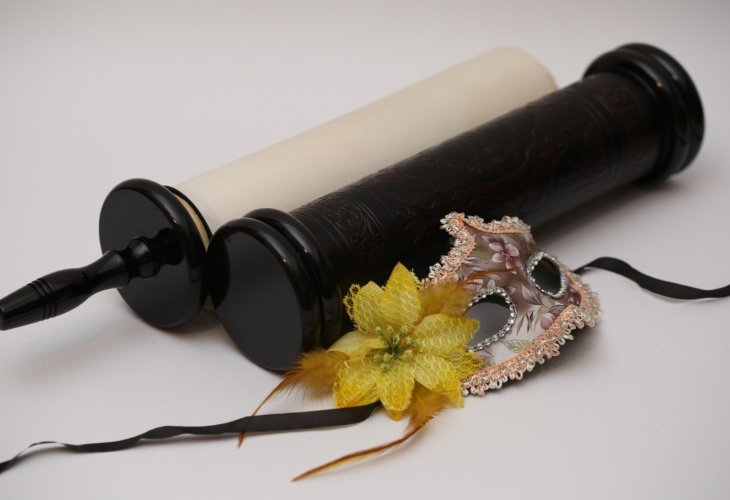 (Photo: Shutterstock)
Purim is a day filled with joy, gratitude, and deep spiritual meaning. Alongside celebration and festivity, it is guided by clear mitzvot and halachic structure that shape how the day is observed. From remembering the half shekel to reading the Megillah, giving to the poor, sharing food, and rejoicing with intention, each detail connects us to the miracle of Purim and to one another. What follows is a clear overview of the central practices of Purim and the principles behind them.
Machazit HaShekel (Half Shekel)
When the Beit HaMikdash stood, the people of Israel brought a half shekel donation to the Temple once a year. This obligation is from the Torah, as explained in Parashat Ki Tisa: “This is what everyone who is counted shall give, half a shekel of the sacred shekel.” The purpose was that all of Israel would have a share in the communal offerings brought daily on the altar.
After the destruction of the Temple, this commandment ceased. Even though we give a half shekel remembrance today, it is a custom.
The Talmud Yerushalmi in Masechet Megillah (1:5) teaches that Rabbi Yehoshua ben Levi said it was known before Hashem that Haman would one day weigh out silver against Israel, as it is written, “I will weigh out ten thousand talents of silver into the hands of those who carry out the work.” Therefore, Hashem caused the shekels of Israel to precede his. Hashem said, “Better that the money of My children should come before the money of that wicked one.”
By the letter of the law, those obligated are men over the age of twenty. Ideally, one should also give on behalf of his wife and the rest of the household, and some have the custom to give even for fetuses.
If one’s financial situation is difficult, it is sufficient to give a half shekel coin as a remembrance, and he fulfills the practice. For each family member, he may give a smaller coin according to his means.
The half shekel remembrance funds are given to Torah institutions and yeshivot and to organizations that spread Torah and awe of Heaven. Since the Temple was destroyed, Hashem has in His world only the four cubits of halacha.
We try to give the half shekel remembrance before Purim. If one did not manage to do so, he may give it even after Purim.
Shabbat Zachor
On the Shabbat before Purim, we read the portion “Remember what Amalek did to you.” Since many authorities hold that reading Parashat Zachor is a Torah level obligation, one should make a special effort to come to synagogue on this Shabbat and hear the Zachor reading.
By the letter of the law, women are exempt from hearing Parashat Zachor. One who is meticulous and goes to synagogue to hear it is praiseworthy.
Taanit Esther
The fast of Esther begins at dawn and ends at nightfall.
Pregnant and nursing women, the ill, the elderly, and similar individuals are completely exempt from the fast. One who is unwell should consult a rabbi regarding whether he is obligated to fast.
Megillah Reading: Essential Guidelines
The Megillah is read at night and again by day. The night reading may take place any time until dawn, and the daytime reading is until sunset.
It is best to hear the Megillah in a synagogue with a large congregation, because “In a multitude of people is the King’s glory.” However, if noise prevents proper concentration, it is better to hear the reading with a smaller group where one can focus.
Women are obligated in Megillah reading and must hear it both at night and by day. A man may read for women and fulfill their obligation even if he has already fulfilled his own.
If one reads the Megillah at home without a minyan, he recites the three opening blessings but not the closing blessing. If there is a minyan of people who have not yet heard the Megillah, even if they are women, the closing blessing may be recited.
At night, three blessings are said before the reading: Al Mikra Megillah, Sheasah Nissim Laavoteinu, and Shehecheyanu. By day, Al Mikra Megillah and Sheasah Nissim are recited, but not Shehecheyanu.
One must hear the Megillah from beginning to end without interruption. Missing even a single word invalidates the obligation. Therefore, one who dozes off during the reading has not fulfilled it.
If one missed words due to noise, he may immediately make them up from a printed text. Even an entire phrase may be completed from a text that is not a kosher scroll.
It is forbidden to eat before hearing the Megillah, whether at night or by day. One may taste fruit, drink tea or coffee, or eat less than fifty four grams of bread or cake. One who refrains entirely is praiseworthy.
Matanot LaEvyonim
There is a mitzvah to gladden the poor on Purim. Therefore, our Sages instituted matanot laevyonim.
One must give to two poor individuals, and the essence of the mitzvah is giving money.
By strict law, a small coin to each poor person suffices. Today, the minimum is a ten agorot coin. Nevertheless, it is proper to give a respectable amount. Some are stringent to give twenty five shekels so the recipient can purchase a meat meal.
One may give a lump sum to a charity administrator who will distribute the funds properly.
Matanot laevyonim must be given during the day, preferably after the morning Megillah reading.
Mishloach Manot
The purpose of mishloach manot is to increase friendship and unity. The obligation is to send one person two different ready to eat items.
The items must be food or drink. Utensils, clothing, or cigarettes do not fulfill the mitzvah. One food and one drink suffice, as do two beverages.
Even sweets fulfill the obligation. If the recipient cannot eat the items immediately due to dietary restrictions, the mitzvah is still fulfilled.
The Purim Seudah
It is a mitzvah to enhance the Purim meal. One festive meal during the day fulfills the obligation.
It is fitting to eat bread, but one who finds it difficult is not obligated. Ideally, one should eat meat, but poultry or fish also suffice.
One should drink wine slightly more than usual. There is no obligation to become drunk. If drinking may lead to any transgression, even minor, one should refrain.
A general Purim rule is that whoever extends a hand is given. We do not examine whether the person is worthy. One who acts this way merits that Heaven responds in kind.
Al HaNissim
In all prayers of Purim day, Al HaNissim is added in the Modim blessing. It is also said in Birkat HaMazon.
If one forgot to say Al HaNissim, he does not repeat the prayer or the blessing.
Costumes on Purim
The custom is to wear costumes and masks on Purim. This symbolizes the hidden way in which Hashem guides the world and how the Purim miracle unfolded behind the scenes.
One should not dress as negative or impure figures. Avoid costumes connected to idolatry, superstition, or Haman. A clown costume is permitted.
Even on Purim, the prohibition remains that a man may not wear women’s clothing and a woman may not wear men’s clothing.
It is permitted to pray while wearing a costume, provided proper coverage is maintained and prayer is conducted with seriousness and presence of mind. Since on Purim people appear this way even before important individuals, there is no prohibition.
Carrying the Joy of Purim Forward
May the joy of Purim be filled with meaning, generosity, and connection. Through careful observance of its mitzvot and a heartfelt appreciation of its message, may we merit gratitude, unity, and lasting blessing for ourselves and all of Israel.

