

Purim
Parashat Shekalim: Remembering the Machatzit HaShekel
Why do we read Parashat Shekalim before Adar, and what does the machatzit hashekel represent today? This article explores the halachic details and deeper meaning behind the reading and its message of collective service.
- Hidabroot
- | Updated
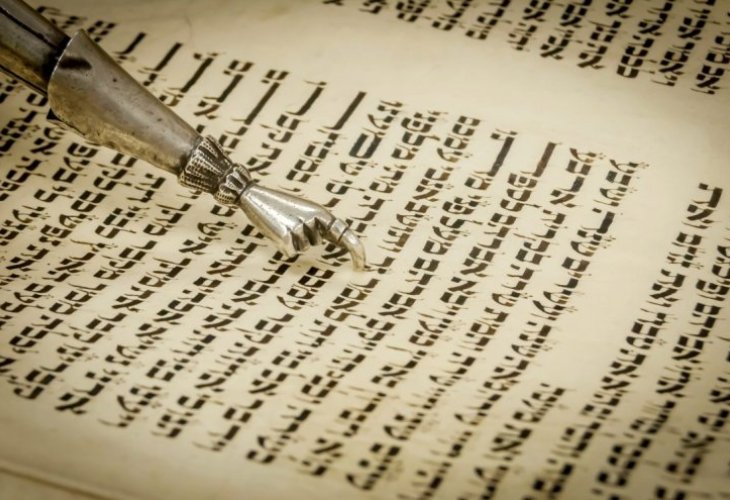 (Photo: Shutterstock)
As the month of Adar approaches, the Torah draws our attention to one of the foundations of communal responsibility in Jewish life. The reading of Parashat Shekalim reminds us that the service of Hashem was never meant to be individual alone, but shared by all of Israel together. This reminder prepares the nation spiritually for the coming month and for the unity that Purim demands.
The Reading of Parashat Shekalim
On the Shabbat before Rosh Chodesh Adar, or in a leap year the Shabbat before Rosh Chodesh Adar Two, two Sifrei Torah are taken out. From the first, we read the weekly Torah portion. From the second, the maftir reads Parashat Shekalim, which appears in the book of Exodus at the beginning of Parashat Ki Tisa.
The reason for this reading is rooted in Temple practice. When the Beit HaMikdash stood, the Torah commanded that before the month of Nisan, every Jew contribute the machatzit hashekel to the Temple treasury. From Rosh Chodesh Nisan of that year until the next, all communal offerings were brought from this new fund. These included the daily morning and afternoon offerings, the additional offerings, the showbread, and other communal sacrifices.
As it states in Numbers, “This is the burnt offering of the month in its month for the months of the year.” The repetition of the word month teaches that offerings must be brought from a newly collected fund. The Torah is instructing that with the arrival of a new cycle, the offerings must come from a renewed contribution. This teaching appears in Tractate Yoma and elsewhere.
In Temple times, the rabbinic courts throughout the Land of Israel would announce on Rosh Chodesh Adar that the time had come to give the machatzit hashekel. This is why we read about it on the Shabbat before Rosh Chodesh Adar.
When Rosh Chodesh Falls on Shabbat
If Rosh Chodesh Adar itself falls on Shabbat, Parashat Shekalim is read on that very Shabbat and is not moved earlier. Rosh Chodesh is the most appropriate time for this reading, since it marks the beginning of the period when people would begin giving the machatzit hashekel.
The Use of Three Torah Scrolls
When Rosh Chodesh Adar falls on Shabbat, three Sifrei Torah are taken out.
From the first scroll, six people are called up to read the weekly portion. From the second scroll, the seventh person reads the Rosh Chodesh portion and then Kaddish is recited. From the third scroll, the maftir reads Parashat Shekalim and then recites Kaddish.
Kaddish is not recited after the first scroll because seven people have not yet been called up and the obligation of the day has not yet been completed. Once seven have been called, Kaddish is recited. If seven people were already called to the first scroll, Kaddish is said at that point as well, resulting in three Kaddish recitations on that Shabbat.
Honoring the Torah
Whenever three Sifrei Torah are taken out, such as on Rosh Chodesh Tevet, Rosh Chodesh Adar, Rosh Chodesh Nisan that falls on Shabbat, or on Simchat Torah, there is an ancient and beautiful custom observed by many communities.
As the heichal is opened, the shaliach tzibbur together with the congregation recites verses from the prophet Jeremiah: “There is none like You, Hashem; You are great, and great is Your name in might.” “Who would not fear You, King of the nations? For it is fitting for You; for among all the wise of the nations and in all their kingdoms, there is none like You.” “Hashem God is truth; He is the living God and everlasting King. At His wrath the earth trembles, and the nations cannot endure His indignation.”
Afterward, the congregation recites “Hear O Israel, Hashem our God, Hashem is One,” followed by the verses of supplication and success.
The Haftarah
On this Shabbat, the haftarah of Parashat Shekalim is read. Afterward, the first and last verses of “Hashamayim Kisi,” the haftarah for Shabbat and Rosh Chodesh, are read as well.
Renewal Through Shared Responsibility
Parashat Shekalim reminds us that our service of Hashem is built on shared responsibility and renewal. By recalling the machatzit hashekel, we reconnect to the idea that every individual contribution matters and that the strength of the community comes from unity, participation, and collective commitment.

