

Purim
Shabbat Zachor Explained: The Torah’s Command to Remember Amalek
Why memory becomes a Mitzvah and what it teaches us before Purim
- Orit Groskot
- | Updated
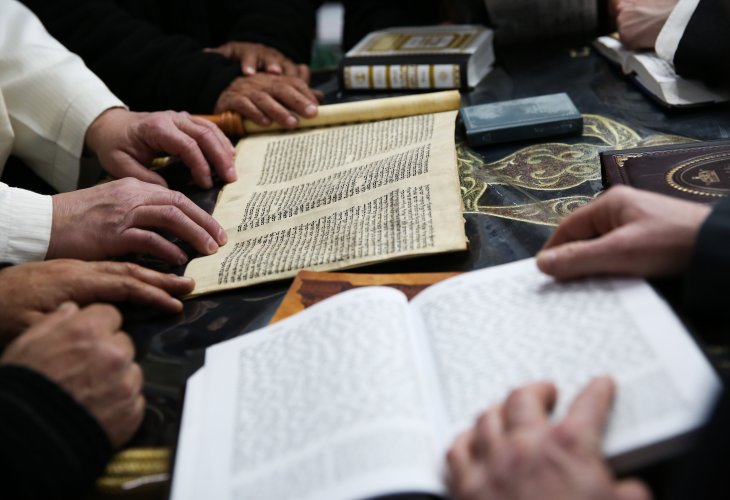 (Photo: David Cohen / Flash 90)
Human memory has fascinated researchers and scientists for many years. The Torah also gives significant attention to the power of human memory, with one of the clearest examples being one of the 613 commandments: “Remember what Amalek did to you.” This mitzvah asks us to do one thing — to remember and not to forget.
The Shabbat before Purim is called Shabbat Zachor. In the synagogue, two Torah scrolls are taken out: from one we read the weekly portion, and from the second we read the passage of Zachor — “Remember what Amalek did to you.” The verses read on this Shabbat are taken from the book of Devarim: “Remember what Amalek did to you on the way as you left Egypt — how he met you on the road and struck those who were weakest at your rear, when you were weary and exhausted, and he did not fear God. And when the Lord your God grants you rest from all your enemies around you, in the land that the Lord your God gives you as an inheritance to possess, you shall erase the memory of Amalek from beneath the heavens — do not forget.”
How Is This Mitzvah Fulfilled?
The reading of Parashat Zachor is considered a Torah-level commandment. The main element of the mitzvah is to verbally recall the wickedness of Amalek — to actually say the verses aloud and thereby fulfill the commandment.
Why is the act of remembering so important that it becomes a mitzvah in its own right? Halachic authorities and commentators have offered several explanations.
Remembering in Order to Erase
Maimonides writes in Sefer HaMitzvot: “The 189th commandment is that we are commanded to remember what Amalek did to us when he hastened to harm us, and that this be spoken of constantly, stirring the soul with words to fight him, urging the people to hate him so that the mitzvah will not be forgotten and the hatred will not weaken over time.”
He similarly writes in Hilchot Melachim that it is a positive commandment to always remember Amalek’s evil deeds and that one must not forget his enmity.
Nachmanides expresses a similar idea: “In my view, the correct meaning is that we must not forget what Amalek did to us until his name is erased from beneath the heavens. We must tell this to our children and future generations — ‘Thus did this wicked one act against us, and therefore we were commanded to erase his name.’”
Both Maimonides and Nachmanides explain that the purpose of the mitzvah is the eradication of Amalek. Remembering Amalek’s actions awakens opposition to his ideology and leads to the fulfillment of that command.

