

Purim
Healthy Purim: How Families Celebrate Without the Sugar Overload
Three mothers share their journey to nutrition and raising health conscious children during the sweetest holiday
- Tamar Schneider
- | Updated
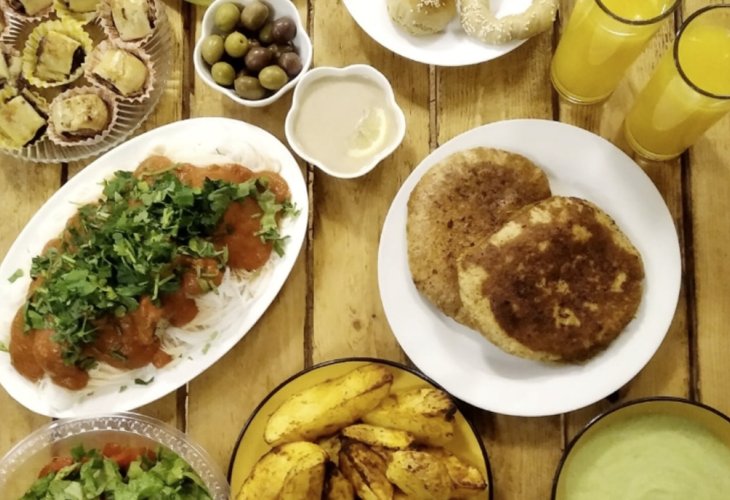 A meal at the natural center
On the eve of Purim, packages of snacks, chocolates, and candies pile up inside all our shopping carts. Children celebrate in a sea of sweets, thrilled to the brim, constantly asking for yet another treat from the mishloach manot that have accumulated on the table. And as if that were not enough, the celebration continues until Passover, with the treasures stored away in the pantry.
We know it is unhealthy, yet the tempting taste and colorful appearance win every time. Still, every now and then we wonder whether it might be possible to drown a little less in this sugary, brightly colored ocean and perhaps even celebrate Purim differently.
The three women I spoke with believe it is possible. They have maintained healthy nutrition in their homes for years and are convinced it is the right path. They share the pain that led them there, the long learning process they experienced, the mistakes along the way, and their challenges with children. Miri Wolf, Chenia Hirschfeld, and Rivka Arbiv speak about choosing a healthier lifestyle and reveal what their children actually eat on Purim.
Nine Months of Antibiotics
“I started forty years ago as a mother of four young daughters who were constantly ill,” begins Miri Wolf, describing the exhausting struggle she endured. “One suffered from recurring infections, another from bronchitis, a third always had a green runny nose, and the youngest had severe ear infections from the age of two weeks. For nine months she was on antibiotics, and the infection would disappear for a few days only to return again.”
Doctors felt almost like divine messengers to her at the time, and she followed their instructions precisely, yet nothing truly solved the problem.
Her turning point came through a neighbor who practiced natural living and healthy eating. Desperate for relief, Miri turned to Yitzchak Ben Uri, who introduced natural health methods locally. After receiving a detailed dietary plan for the entire family, they began immediately. Within days, symptoms disappeared. Over time, the bronchitis stopped recurring, infections eased, and her youngest daughter finally recovered.
Seeing these changes, Miri decided to transform her home permanently. She studied nutrition deeply and removed sweets entirely from her children’s diets. The early years were difficult, especially socially for her daughters, but as adults many of them eventually returned to healthier habits and even expressed gratitude for what they had learned.
Candy in the Freezer
Rivka Arbiv’s journey began after the birth of her first daughter. Suddenly she experienced ongoing nausea that seemed connected specifically to unhealthy foods, while her daughter developed severe atopic dermatitis that no cream could heal.
Under guidance from a nutrition therapist, the family began with small changes, eliminating white flour and sugar. The results were immediate: the skin condition disappeared, and the family witnessed firsthand how strongly nutrition affects the body.
At first the boundaries were strict. The children were not allowed sweets at all, and snacks from preschool were replaced. Over time, however, Rivka realized that a softer approach worked better. Today, sweets are not entirely forbidden, but they are carefully managed. Excess candy is saved for Shabbat or stored in small portions. Some treats are frozen until later holidays, allowing children to feel that nothing is being wasted.
Interestingly, the family found that healthy eating did not necessarily cost more. By eliminating sugary drinks, processed foods, and snacks, grocery expenses balanced out.
What happens on Purim? The children still collect sweets like everyone else. Candies go into the freezer, snacks into a drawer, and healthy alternatives remain readily available. The atmosphere stays relaxed and positive.
Her advice for families starting a healthier lifestyle is simple: begin from the heart, not just logic. Make gradual changes that feel enjoyable rather than restrictive, and remember that nutrition is not the ultimate goal. A healthy body matters, but an emotionally happy home matters even more.
Without Pressure, With Joy
For Chenia Hirschfeld, a mother of six, healthy living developed gradually through a lifelong connection to nature. After witnessing her father’s prolonged illness, she felt compelled to explore natural healing more deeply. Together with her husband, she studied natural nutrition, Chinese medicine, and holistic therapy, eventually opening a retreat and healing center.
Their guiding principle is simple: no pressure.
If a child is denied cake at a birthday party, the body may avoid sugar, but the heart can become resentful. Instead, they maintain a completely natural environment at home while allowing children to choose what they eat outside.
Cooking is a shared family experience. From a young age, the children help in the kitchen, learning to prepare vegetables, salads, and creative dishes. Although natural cooking may seem time consuming, Chania believes the real effort lies in learning new habits rather than in food preparation itself.
Even on Purim, her children enjoy some sweets. Because healthy food is the norm at home, occasional treats do not become a source of tension. When large amounts of candy accumulate, the family often prepares a generous package to deliver to soldiers in the area, keeping the celebration meaningful while maintaining balance.
At their retreat center, Chenia and her husband emphasize gradual change, joy, and emotional wellbeing. They believe that when healthy living comes from love rather than pressure, the body responds quickly and positively.
Her advice to those beginning the journey is to start by learning, progress slowly, and seek guidance when needed. Gratitude, patience, and a joyful mindset, she says, make all the difference.

