

Israel News
40% of Poles Now Say They Dislike Jews
New CBOS data shows negative attitudes toward Jews at their highest level in decades, as sympathy for Palestinians outweighs support for Israel
- Brian Racer
- | Updated
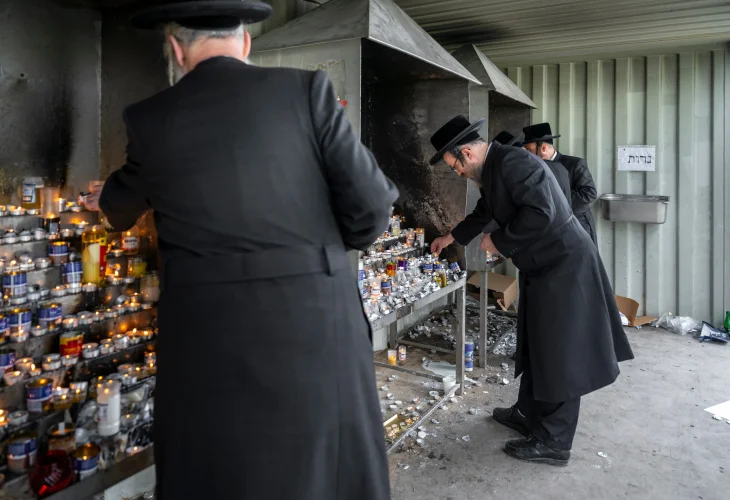 Lezajsk, Poland (Shutterstock)
A new survey released by Poland’s Centre for Public Opinion Research (CBOS) shows that 40% of Poles say they dislike Jews, the highest level recorded in decades. The figure marks an 8-percentage-point increase compared to last year.
The share of respondents expressing positive views toward Jews fell to 22%, the lowest level measured since 2006. The annual survey, conducted since 1993, asks Poles whether they like or dislike 21 national and ethnic groups.
The latest poll was carried out between January 8 and January 20, 2026, among a representative sample of 938 adults. CBOS used a mixed methodology, including face-to-face, telephone and online interviews.
The rise in negative attitudes toward Jews was sharper than for any other group examined. Dislike of Americans also rose by eight percentage points, reaching 18%, while negative views toward Ukrainians increased by five points to 43%. Despite the rise, Russians remain the most negatively viewed group in Poland, with 74% of respondents expressing dislike.
Americans, who ranked as the most positively viewed group in 2023, now rank fifth, according to the survey.
A separate CBOS study examining Polish attitudes toward the Israeli-Palestinian conflict found that 14% of respondents express sympathy for the Palestinian side, compared to 10% who say they sympathize with Israel. The majority of respondents reported no clear preference or said they found it difficult to take a definite position.
The survey highlighted generational differences. Younger respondents were more likely than older age groups to lean toward the Palestinian side.
Reporting indicates that public criticism in Poland of Israel’s military actions in Gaza may be influencing shifts in public attitudes. Polish media have noted that views on foreign nations appear increasingly shaped by current political developments and public debate.
The CBOS report stated that national sympathies are no longer stable or predictable and are becoming more dependent on contemporary events and narratives.
The findings come as ongoing discussions in Poland surrounding national identity, Holocaust memory and the country’s wartime history pick up. Public debate has in recent years included renewed emphasis on Polish suffering during World War II, alongside tensions over how to address historical responsibility and relations with Israel.
CBOS noted that for the third consecutive year, attitudes toward nations perceived as having gained influence since the outbreak of the war in Ukraine, including Americans, English and Ukrainians, have continued to deteriorate.
The data suggests a broader shift in public mood in Poland, with attitudes toward multiple national and ethnic groups becoming more volatile and closely tied to political developments.

