

Purim
From Persia to Europe: What Ancient Megillot Reveal About Jewish History
Illustrated Megillat Esther scrolls reveal how Jewish communities across centuries saw their own lives reflected in the Purim story, blending history, art, and identity.
- Michal Arieli
- | Updated
 Credit: The National Library
What can ancient Megillat Esther scrolls teach us, and how have they shaped Jewish memory across generations?
Most of us know that Megillat Esther tells the story of the Purim miracle in the kingdom of Media and Persia. But when we look closely at historic scrolls, we discover something more. These megillot do not only tell an ancient story. They reflect the lives, hopes, and identities of the Jewish communities that created them in later centuries.
A careful look at illustrated Megillat Esther scrolls reveals that every era decorated its megillah differently. The illustrations do more than help us follow the narrative. They anchor the story in the historical world of the Jews who read it, showing how each generation understood itself through the Purim story.
In a conversation with Vered Yerushalmi of the National Library, she explains that the Library holds one of the largest and most important collections of illustrated Megillat Esther scrolls in the world. The collection includes nearly two hundred scrolls, ranging from the eleventh century to works created just in recent years.
The Megillah of the Anusim
One of the most remarkable scrolls in the collection was written and illustrated in Amsterdam in the early eighteenth century. Surrounding each column of text are fifty-seven ink-drawn scenes from the Megillah, some inspired by midrashic traditions. The richness and sophistication of the illustrations give this scroll a unique place in the history of illustrated megillot.
According to the National Library, the figures in this megillah are dressed in contemporary clothing, and the scenes unfold in settings familiar to the Jews of that time. The biblical story is visually translated into the world of early modern Amsterdam.
Although the original owners of the scroll are not known for certain, it is widely believed that it was commissioned by Portuguese Jews, descendants of the anusim. Toward the end of the seventeenth century, many of these families had fled Portugal and settled in Amsterdam, where they were finally able to return openly to Jewish life.
For them, reconnecting to Judaism meant reconnecting to the Jewish calendar. Purim, with its themes of hidden identity, danger, and redemption, held deep personal meaning. Commissioning an illustrated Megillah was a way of declaring continuity and survival. The story of near destruction followed by Jewish victory mirrored their own lived experience. Interestingly, the National Library also notes that the Purim costume tradition in Amsterdam is among the earliest documented.
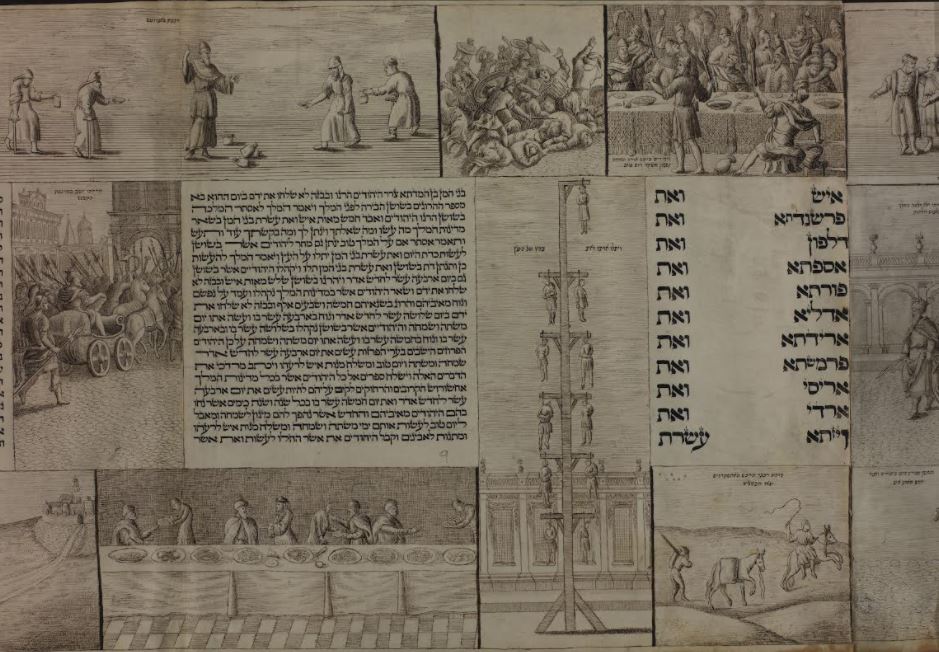 A Megillah from Amsterdam, early 18th century (credit: the National Library)
An Italian Megillah of the Renaissance
Another significant scroll in the Library’s collection was created in Italy in the seventeenth century. Here, we know both the scribe and the illustrator: Moshe ben Avraham Peshkarol of Ferrara. We also know the name of the patron, Mordechai ben Eliyahu HaLevi of Brisilo.
This megillah is richly decorated with colorful illustrations that depict scenes from the Purim story. What makes it especially striking is how vividly it reflects Renaissance life. Clothing, dining customs, and domestic spaces all mirror the Italian world familiar to the artist and his community.
Through this scroll, the Megillah becomes a bridge between biblical Persia and Renaissance Italy, showing how Jewish tradition was lived and visualized within a broader cultural setting.
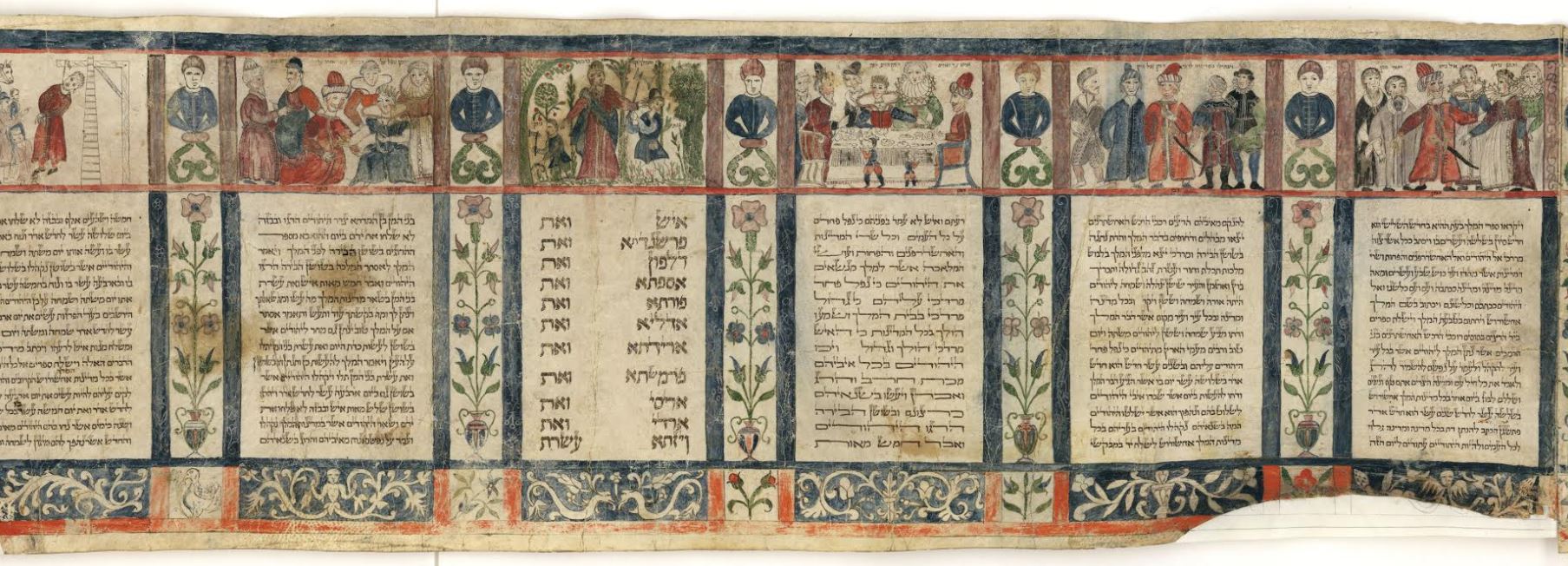 A colourful Megillah created in Italy, 17th century (credit: the National Library)
A Moroccan Diaspora Megillah
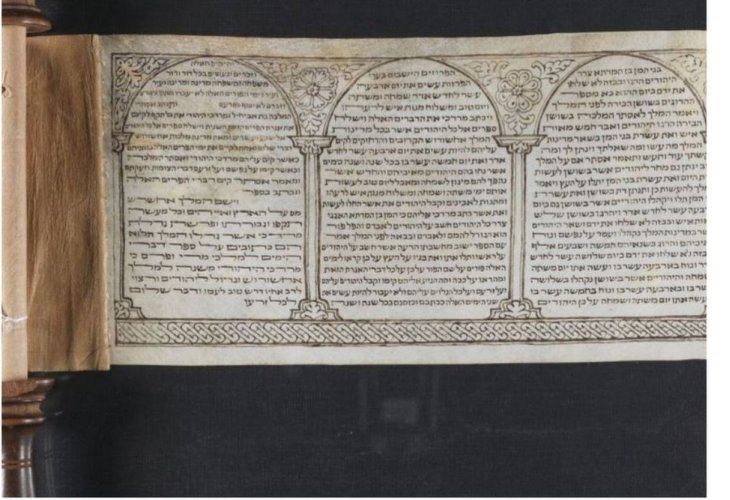
A third example comes from the nineteenth century and was created in the Azores, part of Portugal. This megillah was written for David ben Avraham Tzabach, a respected member of the Moroccan Jewish community on the island of São Miguel.
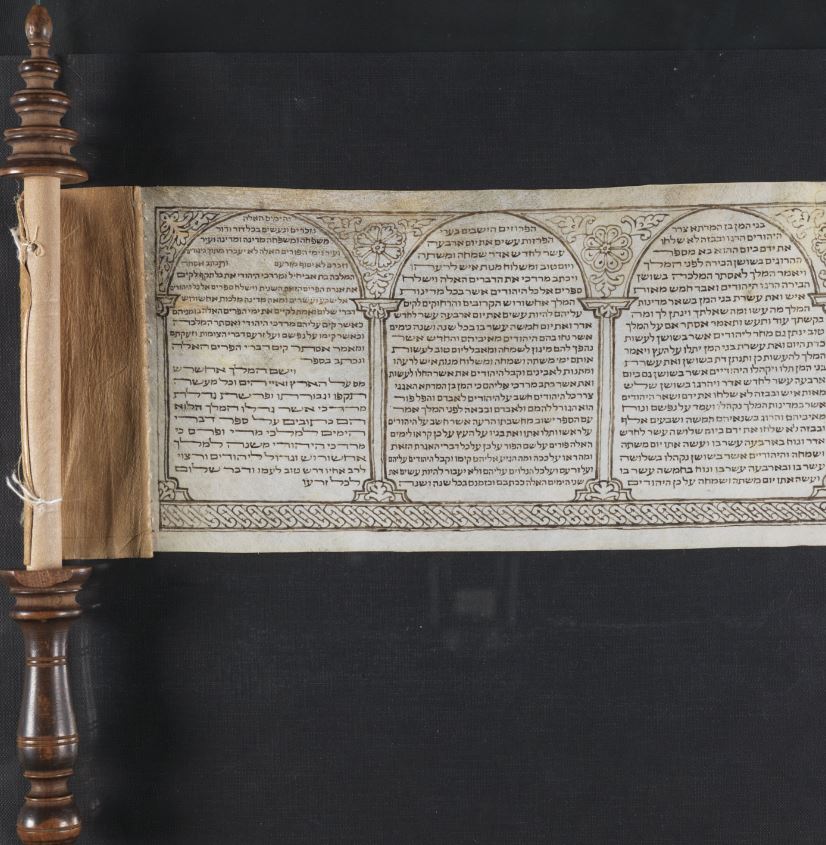 a 19th century Megillah from Azores. (Credit: the National Library)
The scroll is mounted on a wooden roller and adorned with decorative elements typical of the region. Though simpler in style than some European examples, it reflects the dignity and continuity of a Jewish community living far from major centers of Jewish life, yet firmly rooted in tradition.
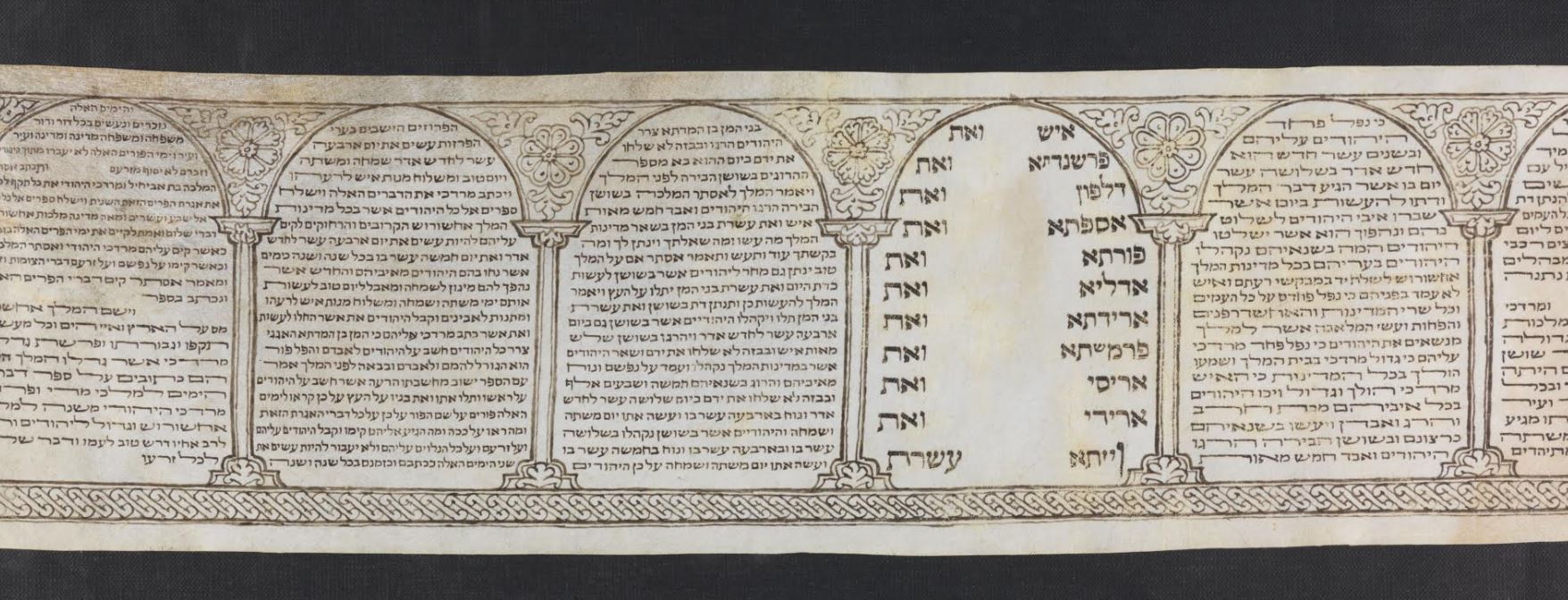 a 19th century Megillah from Azores. (Credit: the National Library)
A Living Story
These illustrated megillot remind us that Megillat Esther has never been a static text. Each scroll tells two stories at once: the ancient tale of Purim and the lived reality of the Jews who read it.
Across centuries and continents, Jews have seen their own struggles, hopes, and triumphs reflected in the Megillah. Through ink, illustration, and careful craftsmanship, each generation left its mark on the scroll. In doing so, they turned Megillat Esther into a living document, one that continues to connect Jewish history, identity, and faith from past to present.

