

The Doctor Is Asleep—Go Ahead and Drink: How Purim Lifts Us Above Nature
Purim lives above nature. Through joy, generosity, unity, and even a bit of wine, the day’s practices can help hasten the writing of the redemption’s Megillah.
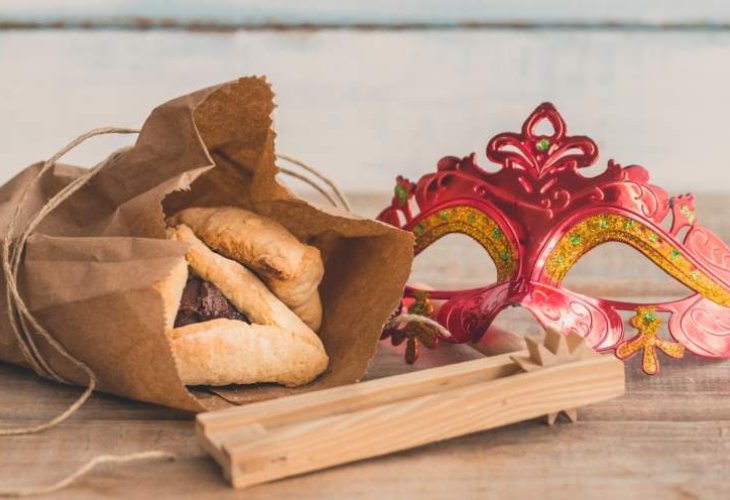 (Photo: Shutterstock)
Pfizer announced that it loved the concept of mishloach manot—two portions for every person—and it is going big with it.
Still, with all due respect to Pfizer and its vaccines, the future is still shrouded in fog, and the threat of variants continues to cast a shadow over our calm.
"When will they finally write the Megillah?" asked the Kotzker Rebbe, of blessed memory, of his followers on the eve of Purim.
No one understood his intent, so his followers sent his son, R. David, to find out what he meant.
The Kotzker explained: "Nine years the story of Megillat Esther continued, and after the suffering of Israel ended, the Megillah was written; studying it shows how precisely out of suffering salvation for Israel sprang.
"And so it will be in the future," said the Kotzker Rebbe. "In the end a Megillah will be written from all the many troubles we have gone through, and we will see that salvation grew from them. That is why I asked: When will that word finally be written?".
Well, the news about Pfizer’s vaccines still does not reveal the time for writing that Megillah, but know that we can speed the date—and especially on Purim!
Before we learn how to do that, let’s open with a few questions about the customs of Purim day.
* * *
A. The holiday of Purim was established as "a day of feasting and joy".
We need to understand: Why are we more joyful on Purim than on Chanukah? I’ll explain.
Our Sages (Numbers 21:5) taught that one who causes another to sin is worse than one who would kill him, for the sinner has lost his soul, whereas the murdered has only lost his body.
Well, Haman sought to kill the bodies of Israel, whereas the Greeks sought to make them sin—"to make them forget Your Torah and to turn them from the statutes of Your will." It follows that the Greeks’ incitement to sin was more severe than Haman’s decree. So why, then, are we more joyful on Purim than on Chanukah?
B. Since Judaism condemns drunkenness—as the wisest of all warns, "Do not be among wine drinkers" (Proverbs 23:20)—why did our Sages instruct us to get tipsy on Purim (Megillah 7)?
C. What is the meaning of the custom to wear costumes on Purim?
D. Why was it instituted specifically on Purim to give gifts to the poor and to send portions one person to another?
And one last question from the Megillah: Why did Hashem arrange that Haman’s house, he who worshiped idolatry (Esther 7:8), would be given to Mordechai (Esther 8:2)? Wouldn’t it have been more fitting for Hashem to provide Mordechai with abundant funds so he could build for himself a pure house to his own taste?
One year, on Purim, the righteous Rabbi David of Lelov, of blessed memory, came to Rabbi Elimelech of Lizhensk, of blessed memory.
Rabbi Elimelech poured his guest a glass of aged wine, but the latter apologized that the doctor had forbidden him from drinking wine, certainly not aged.
Rabbi Elimelech replied: "At this hour the doctor is asleep. You may, therefore, drink without any concern"...
His words are not a directive for the public, but a message: Purim is above nature! The anxieties belong to the days of the year that are subject to the framework of nature.
On Purim the people of Israel were saved above nature, and so it was established for generations: "Purim is an auspicious time for all... and anyone can act with Hashem, may He be blessed, so that He will fulfill all the wishes of his heart for good" (Chiddushei HaRim on the Torah, matters of Purim).
On Purim, it is in our hands to help hasten the time when the Megillah of redemption will be written, and observing the day’s customs leads there.
One Is Obligated to Get Tipsy
Rabbi Tzadok HaKohen of Lublin, of blessed memory (Pri Tzadik), writes that a person’s main spiritual decline is "that it is hidden from him that he is in a state of hiddenness of the Face". In other words, his distance from Hashem feels natural to him rather than strange.
The people of Israel also felt Hashem’s hiddenness when Haman’s decree fell upon them. But they were not willing to accept that hiddenness, and they did teshuvah in order to merit closeness to Hashem again—"and by feeling the hiddenness, their mourning was turned to a festival day" (there).
By this path we too can turn our mourning into a festival, by awakening ourselves to uncover the hiddenness of Hashem’s Face in our lives—to demand closeness to Hashem and to be repulsed by distance from Him!
And so the rabbi promises (there): "Anyone who knows the afflictions of his heart, how low he has fallen, and is pained by it—by that very pain it becomes known and illuminated in his heart, and his sorrow turns to joy".
The Shem MiShmuel (Purim, year 5677) writes: "Every Jew has the power to say to the King (Hashem) to hang Haman (the evil inclination) and erase his name from his heart... but the saying must not be lip service; it must come from the full desire of his soul, and then his words will surely bear fruit".
So we learn that if, on Purim, we rouse ourselves to ask with all our hearts that the hiddenness of Hashem’s Face be revealed in our lives, we will indeed merit it!
This is the secret of becoming inebriated. "The soul is a piece of the Divine from on high, and it yearns for its place. Only the murky body holds it back; when the body’s lowly mind is muddled by drinking wine, the soul finds breathing room to cleave to its Source" (Vetzivah HaKohen, by R. Eliezer of Ostroh).
Wine’s warmth blurs the physical senses that shackle the soul. And when the body is mellowed—this is the time to cry out to Hashem from the depths of the soul, that He release the chains of our inclination and let us serve Him with the light of His countenance, with love and with joy.
A Day of Feasting and Joy
The Ohev Yisrael (Shemot, Parashat Zachor) writes: By truly and wholeheartedly giving thanks and praise to the Creator, blessed be He, and with great attachment for all the miracles He did for our ancestors—we thereby arouse the supernal source to bestow every good upon us, to perform wonders and miracles for our benefit, and to be in joy all year long.
Do you get it? The joy of Purim is not only about the miracle itself; through that joy we can influence our joy for the whole year, and our redemption overall. Therefore, specifically Purim was set as a day of feasting and joy.
Gifts to the Poor and Sending Portions
The Sfat Emet (Purim, year 5637) writes that thanks to Mordechai’s sensitivity—walking daily before the palace to inquire about Esther’s welfare (Esther 2:11)—he merited to defeat Haman.
Our redemption is shaped by our unity. Therefore, on Purim, which has the power to hasten our redemption, we increase brotherhood by sending portions to one another and by supporting the poor.
The Costume Tradition
The Piaseczno Rebbe, of blessed memory (Esh Kodesh), writes: "On the joy of Purim... even if a person is lowly and brokenhearted—there is a rule that he must, at the very least, bring some spark of joy into his heart", and then "the salvation and joy that Purim works for Israel—it works and acts even now!".
That is why we dress up—to awaken joy, even by means of a little mili d’shtusa (see Likkutei Moharan, part II, teaching 24).
* * *
Rabbi Yoel of Satmar, of blessed memory, explains that Hashem repaid Mordechai by giving him Haman’s house, which was presumably magnificent, rather than simply giving him money—because, out of Mordechai’s modesty, he would surely have limited the splendor of his home.
Perhaps for that reason the Third Temple will descend from Heaven already built—so that it will be complete and magnificent in the ultimate perfection.
May we merit it.

