

Purim
The Book of Esther in 60 Seconds: The Purim Story, Explained
A clear, chapter by chapter overview of the Book of Esther. In just minutes, it traces the Purim story from palace intrigue and hidden identity to courage, reversal, and celebration.
- Yonatan HaLevi
- | Updated
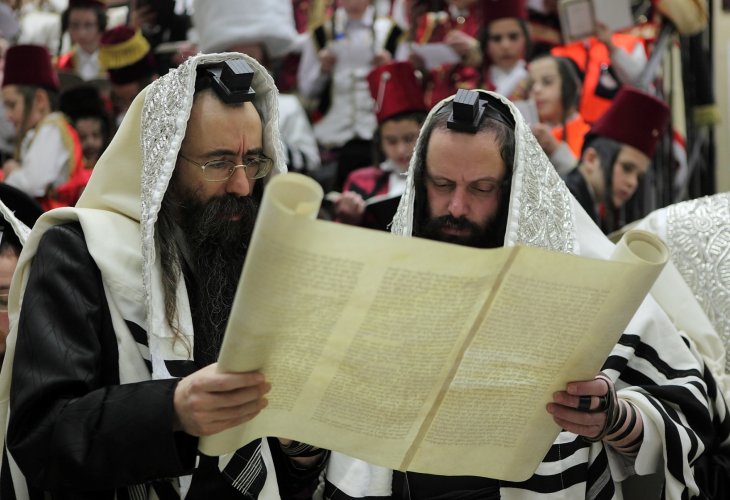 (Photo: Flash 90)
Behind the costumes, noise makers, and celebrations lies a dramatic story of danger, courage, and unexpected reversal. This quick, chapter by chapter overview of Megillat Esther traces how a hidden threat to the Jewish people was transformed into one of the most joyous days on the calendar.
The Purim Story in 60 Seconds
Chapter One: King Ahasuerus’s Banquet
King Ahasuerus of Persia holds an extravagant celebration that lasts six months, marking the third year of his reign.
At the same time, Queen Vashti hosts a separate banquet for the women. When the king orders her to appear before his guests and display her beauty, she refuses.
The king’s advisers warn that Vashti’s defiance could undermine royal authority. In his drunken state, Ahasuerus accepts their counsel and orders that Vashti be executed.
Chapter Two: Esther Becomes Queen
Messengers are sent throughout the Persian Empire to gather the most beautiful young women to the royal palace, from whom a new queen will be chosen.
Among them is Esther, a Jewish orphan raised by her cousin Mordechai. At his instruction, Esther conceals her Jewish identity.
Esther finds favor in the king’s eyes and is crowned queen.
For years, Mordechai regularly visits the king’s gate to check on Esther’s well being. During this time, he uncovers a plot by the guards Bigthan and Teresh to poison the king. Mordechai informs Esther, who reports it to Ahasuerus in his name. The plotters are executed, and the incident is recorded in the royal chronicles.
Chapter Three: Haman Rises to Power
Ahasuerus appoints Haman as his chief minister, second only to the king. All the king’s subjects are commanded to bow to him, but Mordechai refuses.
Infuriated, Haman seeks revenge not only against Mordechai but against all the Jews of the empire. He persuades the king to approve a plan to annihilate them.
A royal decree is issued throughout Persia, setting the thirteenth of Adar as the day the Jews are to be killed and their property plundered.
Chapter Four: Esther Steps Up to Save Her People
Mordechai dons sackcloth and ashes in mourning and distress.
He sends a copy of the decree to Esther, urging her to plead with the king on behalf of her people.
Esther explains that approaching the king without being summoned is punishable by death. Mordechai responds that perhaps she has attained royalty for precisely this moment.
Esther agrees and asks Mordechai to gather the Jews to fast and pray for three days before she goes before the king.
Chapter Five: Esther Invites Ahasuerus to a Banquet
Esther approaches the king, who receives her graciously and promises to grant her request.
She invites Ahasuerus to a private banquet she has prepared. At the banquet, she asks that he and Haman attend a second banquet the following day.
Meanwhile, Haman’s wife Zeresh advises him to prepare a tall gallows and request permission to hang Mordechai.
Chapter Six: The Turning Point Begins
That night, the king cannot sleep. He orders the royal chronicles to be read aloud.
The account of Mordechai saving the king from assassination is read, and Ahasuerus realizes that Mordechai was never rewarded.
At that moment, Haman arrives to ask permission to hang Mordechai. Instead, the king asks him how to honor a man the king wishes to reward. Assuming the honor is meant for him, Haman suggests royal garments, the king’s horse, and a public procession.
The king commands Haman to carry out this honor for Mordechai the Jew.
Chapter Seven: V’nahafoch Hu, The Tables Turn
At the second banquet, Esther reveals her Jewish identity and declares that her people are facing destruction.
She identifies Haman as the architect of the plot. Enraged, the king orders Haman to be hanged on the very gallows he prepared for Mordechai.
Chapter Eight: The Jews Gain the Upper Hand
Mordechai is appointed to Haman’s former position.
The king gives Mordechai his signet ring, empowering him to issue a new decree. Jews throughout the empire are permitted to defend themselves against anyone who seeks to harm them.
Chapter Nine: Establishing the Days of Purim
On the thirteenth of Adar, the day set for their destruction, the Jews defeat their enemies.
Haman’s ten sons are executed, and the victory is celebrated. The fourteenth and fifteenth of Adar are established as days of rejoicing, known as Purim.
Mordechai institutes the mitzvot of Purim for all generations: reading the Megillah, holding a festive meal, sending portions to one another, and giving gifts to the needy.
Chapter Ten: Mordechai’s Rise
Ahasuerus appoints Mordechai to a senior position in the kingdom.
Mordechai’s leadership and positive influence on the Persian Empire are recorded in the royal chronicles.
Closing Thoughts
The story of Purim reveals how hidden turns of events can lead to redemption. Through courage, faith, and timely action, a decree of destruction is transformed into a lasting celebration of survival, unity, and joy for generations to come.

