

Purim
Inside Ahasuerus’s Palace: The Columns Behind the Megillah
An excerpt from Rabbi Zamir Cohen’s commentary on Megillat Esther, exploring Midrashic testimony and physical evidence of the immense marble columns that once stood in the king’s palaces.
- Rabbi Zamir Cohen
- | Updated
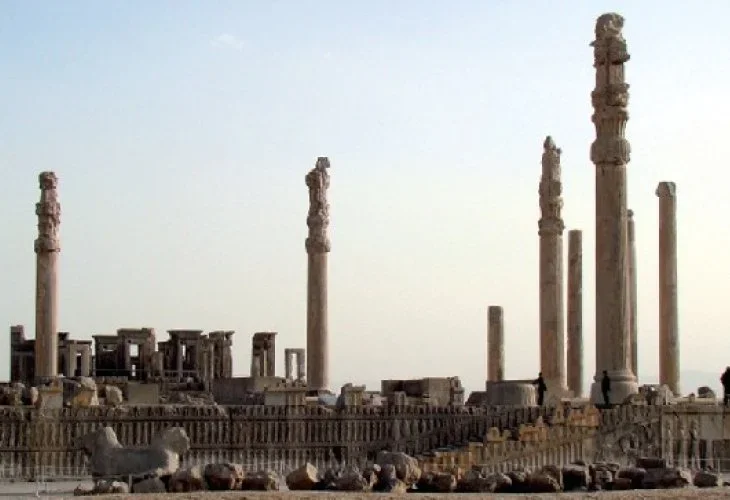
This excerpt from Rabbi Zamir Cohen’s book on Megillat Esther explores the vivid descriptions of King Ahasuerus’s palace found in the opening chapters of the Megillah. While these portrayals may seem exaggerated at first glance, rabbinic sources and archaeological discoveries reveal that the grandeur described was very real.
The Monumental Shesh Columns
One especially intriguing detail is the mention of the shesh columns, which our Sages explain were made of a special kind of marble, as noted by Ibn Ezra on Megillat Esther (1:6). The Midrash adds a striking eyewitness account that brings their immense scale vividly to life.
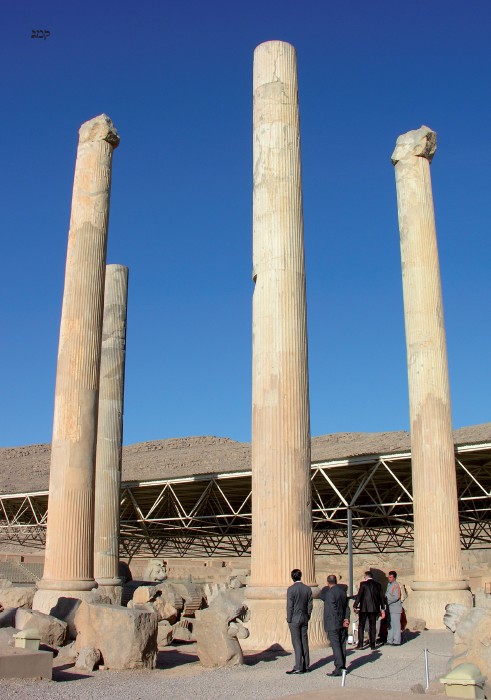 Tall marble columns in Ahasuerus’s palaces still stand on their original bases.
A Midrashic Testimony Brought to Life
The Midrash relates that Rabbi Matna personally saw these columns while in Persia. He stated that he slept on the “flower” of one of them and that it fit a full human stature, with arms and legs outstretched (Esther Rabbah 2:7). His description emphasizes the extraordinary diameter of the column base or capital, so wide that a person could lie on it comfortably.
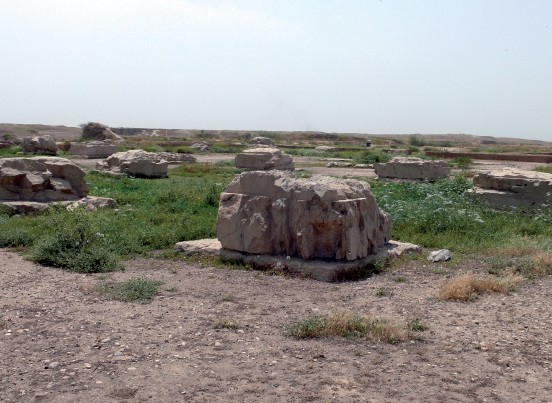 Bed-sized column “flowers” in King Ahasuerus’s palace in Shushan.
Some scholars of other nations initially dismissed this account as exaggerated. Yet archaeological discoveries have shown that several of these colossal columns still exist today. Their height reaches close to twenty meters, and each weighs at least twenty five tons, making Rabbi Matna’s testimony remarkably precise and grounded in reality, as documented by Yehuda Landy in his study of Ahasuerus’s palaces (pp. 49–50).
Architecture of the Royal Palaces
These columns were constructed in a uniform architectural style across Ahasuerus’s main palaces, particularly in Shushan and Persepolis. Atop each column stood a distinctive marble sculpture, often in the form of two bulls or horses. The sheer size and weight of these sculptures further attest to the immense breadth and strength of the columns that supported them.
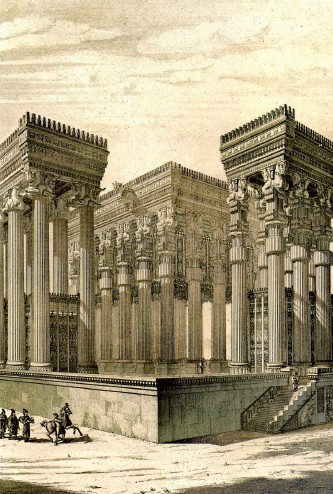 Reconstruction of King Ahasuerus’s palace with its colossal columns.
What Remains Today
Some columns remain standing on their original bases, though many fell or were toppled during the numerous wars that swept through the region. What often remains are massive fragments and round bases nearly two meters in diameter, along with rectangular bases roughly the size of a bed. Several such bases still exist in the palace complex of Shushan, and one can indeed lie on them with arms and legs fully outstretched, just as Rabbi Matna described.
Even the monumental statues of bulls and horses that once crowned the columns are so large that when they lie on their sides, a person can stretch out fully upon them. These remnants can be seen today in Shushan and Persepolis, as well as in major museum collections such as the Louvre.
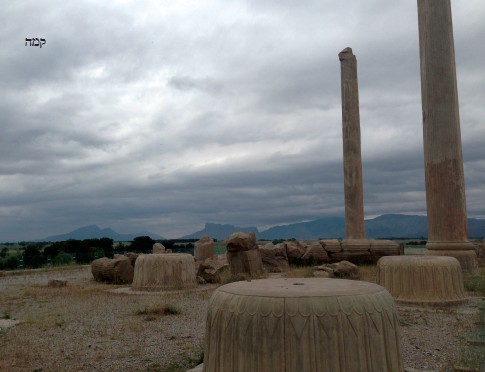 Giant column “flowers” in Ahasuerus’s palaces.
Together, the Midrashic testimony and the archaeological remains form a compelling picture. Ancient rabbinic descriptions, once thought symbolic or exaggerated, align closely with physical evidence, offering a powerful glimpse into the grandeur of Ahasuerus’s royal architecture and the historical depth behind the words of Megillat Esther.

