

Purim
Where Are Mordechai and Esther Buried? Two Traditions, One Mystery
Two ancient traditions trace the burial places of Mordechai and Esther to Hamadan and the Galilee. This excerpt from Rabbi Zamir Cohen’s book explores the sources behind both claims and the mystery that remains.
- Rabbi Zamir Cohen
- | Updated
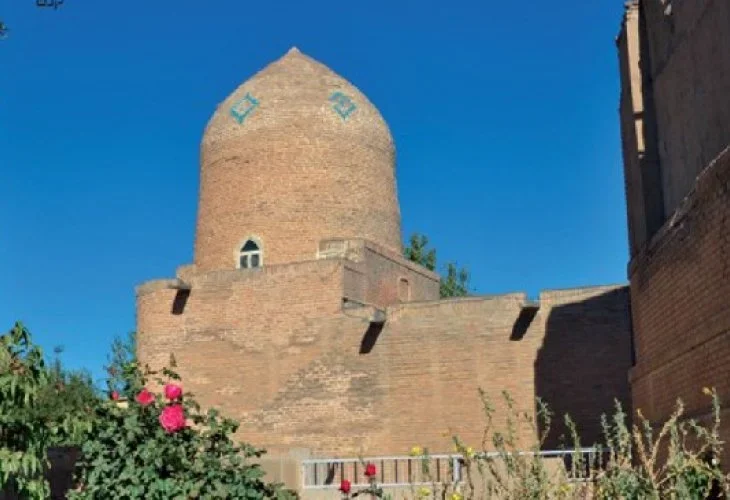 The Tomb of Mordechai and Esther in Hamadan, as it looks today
This excerpt from Rabbi Zamir Cohen’s book on Megillat Esther explores the traditions surrounding the burial places of Mordechai and Esther. Alongside the story of Purim itself, Jewish tradition preserves memories of where its central figures were laid to rest. Over the centuries, two main traditions emerged, each grounded in early sources and the testimony of Jewish travelers.
The Tradition of Hamadan
Among Iranian Jews, it has been accepted for generations that Mordechai and Esther were buried in the city of Hamadan in northwestern Iran. According to this tradition, they were laid to rest in an ancient burial cave, above which a distinctive and imposing structure was later erected.
The building still stands today and serves as a place of prayer for Jews and people of other faiths. An English sign on the fence identifies the site as the “Mausoleum of Mordechai and Esther.”
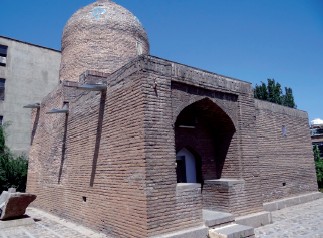 The Tomb of Mordechai and Esther in Hamadan
This tradition already appears in the writings of the medieval Jewish traveler Benjamin of Tudela, who visited the region about nine hundred years ago. In his travelogue, he writes: “Hamadan… it is the great city in Media, and there are about fifty thousand of Israel there, and there, before one synagogue, Mordechai and Esther are buried.”
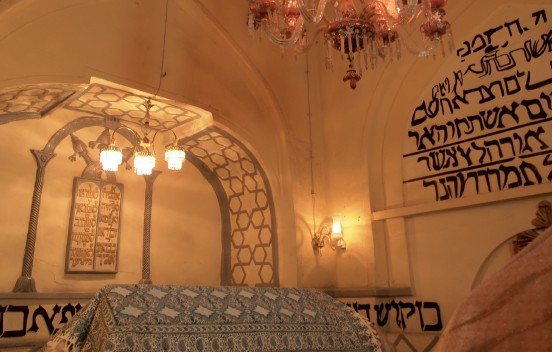 Inside the tomb of Mordechai and Esther in Hamadan
The Galilean Tradition of Bar’am
Another tradition places Esther’s burial near the village of Bar’am. According to this account, Esther’s remains were brought to Eretz Yisrael by her son Cyrus, who buried her there, a tradition cited in later compilations of holy sites in the Galilee, including the work Holy Sites and Graves of the Righteous in the Galilee by Rabbi Yisrael Meir Gabbai and Rabbi Yisrael Hertzberg.
Over the generations, several Jewish travelers and writers described a grave associated with Esther in Bar’am. One account, preserved in a letter by Rabbi Menachem son of Peretz of Hebron, states: “And I saw one rock, and inside the rock the grave of Queen Esther, who in her lifetime commanded Cyrus, her son, to bring her up there.” Another description appears in the work Gelilot Eretz Yisrael by Gershon ben Eliezer HaLevi Yidlash, who writes: “The village of Bar’am… and there, Queen Esther is in a stone niche.”
Some traditions add that Mordechai is buried there as well, as noted in the book Kadmonenu: Sich Machmadei Eretz, published by the Committee for the Rescue of Ancient Graves in Eretz Yisrael.
The Site and Its Memory
The location identified with Esther’s grave is known even today. It lies in a forest roughly two kilometers from the Hiram Junction, where a deep cave is concealed beneath a pile of large stones. In earlier generations, Jews from Safed would travel there on Purim, read the Megillah, and hold a festive meal at the site.
Together, these traditions reflect the enduring connection to the figures of Mordechai and Esther. Whether in Hamadan or in the Galilee, their remembered resting places continued to inspire pilgrimage, prayer, and living memory across the centuries.

