

Parashat Mishpatim
The Haftarah of Parashat Mishpatim Explained: Freedom, Covenant, and Divine Accountability
A clear overview of Yirmiyahu's prophecy, its connection to the laws of servitude in Parashat Mishpatim, and the timeless message about responsibility, faithfulness to God’s covenant, and the promise of redemption
- Yonatan HaLevi
- | Updated
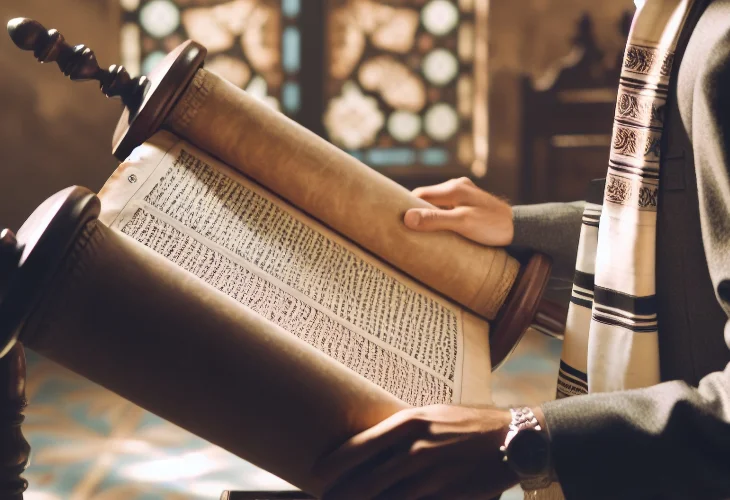
The Haftarah of Parashat Mishpatim is read from the Book of Yirmiyahu, from chapter 34 verse 8 until chapter 34 verse 22, and it concludes with two verses from chapter 33 (verses 25–26).
The Haftarah of Parashat Mishpatim
The word of the Lord came to Yirmiyahu from the Lord after King Tzidkiyahu made a covenant with all the people in Jerusalem to proclaim liberty to them:
That each man should release his Hebrew male servant and each woman her Hebrew maidservant, so that no one would enslave his fellow Jew.
All the princes and all the people who had entered into the covenant listened and released their servants and maidservants, no longer enslaving them. They obeyed and set them free.
But afterward they turned back and took again the servants and maidservants whom they had freed, and forced them once more into servitude.
Then the word of the Lord came to Yirmiyahu, saying: So says the Lord, God of Israel: I made a covenant with your forefathers on the day I brought them out of the land of Egypt, out of the house of bondage, saying: “At the end of seven years, each of you shall release your Hebrew brother who has been sold to you. He shall serve you six years, and then you shall send him away free from you.” But your forefathers did not listen to Me and did not incline their ear.
And now you had returned today and done what is right in My eyes, proclaiming liberty each to his fellow, and you made a covenant before Me in the House that bears My Name.
Yet you turned again and profaned My Name, and each of you took back his servant and maidservant whom you had set free, and you forced them again to be your slaves.
Therefore, so says the Lord: Since you did not listen to Me to proclaim liberty each to his brother and each to his fellow, behold, I proclaim liberty for you—declares the Lord—to the sword, to pestilence, and to famine; and I will make you a terror to all the kingdoms of the earth.
I will deliver the men who violated My covenant, who did not uphold the words of the covenant they made before Me when they cut the calf in two and passed between its parts—
The princes of Yehuda and Jerusalem, the officials, the priests, and all the people of the land who passed between the parts of the calf — I will give them into the hands of their enemies and into the hands of those who seek their lives, and their corpses shall be food for the birds of the sky and the beasts of the earth.
And Tzidkiyahu king of Yehuda and his princes I will deliver into the hands of their enemies and into the hands of those who seek their lives, and into the hands of the army of the king of Babylon that has withdrawn from you.
Behold, I command—declares the Lord—and I will bring them back to this city; they shall fight against it, capture it, and burn it with fire. And I will make the cities of Yehuda a desolation without inhabitants.
Thus says the Lord: If My covenant with day and night, the laws of heaven and earth, were not established— Then I would also reject the offspring of Yaakov and My servant David from ruling over the descendants of Avraham, Yitzchak, and Yaakov. But I will restore their fortunes and have mercy upon them.
The Connection Between the Haftarah and the Parashah
Parashat Mishpatim opens with laws concerning servitude and freedom, reflecting the elevated spiritual status of the people of Israel, whom God redeemed from slavery so that they might accept the Torah and commandments and become His treasured nation. Even those who sell themselves into servitude — or whose actions lead them into bondage, return after six years to their higher spiritual standing.
The haftarah describes a later historical period, when the people of Israel were under siege by Nevuchadnezzar, king of Babylon, who gathered a great army to conquer the land and destroy the Temple. King Tzidkiyahu and his leaders feared that the slaves might rebel and join Nevuchadnezzar in hopes of gaining their freedom. Therefore, they made a public covenant in Jerusalem to release their slaves, hoping to prevent unrest.
Initially, they upheld the covenant and freed the slaves. But when the siege temporarily lifted, the masters regretted their decision and forced the slaves back into bondage. By doing so, they violated the commandment of releasing slaves (according to the Malbim) and even entered into a covenant of rebellion against God (Rashi). As punishment, the prophet Yirmiyahu announced that God would remove His protection from them, leaving them vulnerable to their enemies — for one who seeks freedom from God’s commandments ultimately falls under the forces of fate (Malbim). Even King Tzidkiyahu would be punished for failing to protest.
The haftarah concludes with two verses of consolation, promising that just as God’s covenant establishing day and night and the laws of heaven and earth endures, so too will His covenant with Israel remain forever. The descendants of David will continue to hold the monarchy, and Israel will remain His chosen nation (Rashi and Radak). Our sages further interpreted this covenant as referring to Torah study, teaching that “Were it not for Torah, heaven and earth would not endure” (Pesachim 68).
