

Wonders of Creation
Secrets Beneath Our Feet: Discovering the Wonders of Earth
Beneath our feet lies more than solid ground. What makes earth so essential for life? You'll be surprised by the answers.
- Yosef Yabece
- | Updated
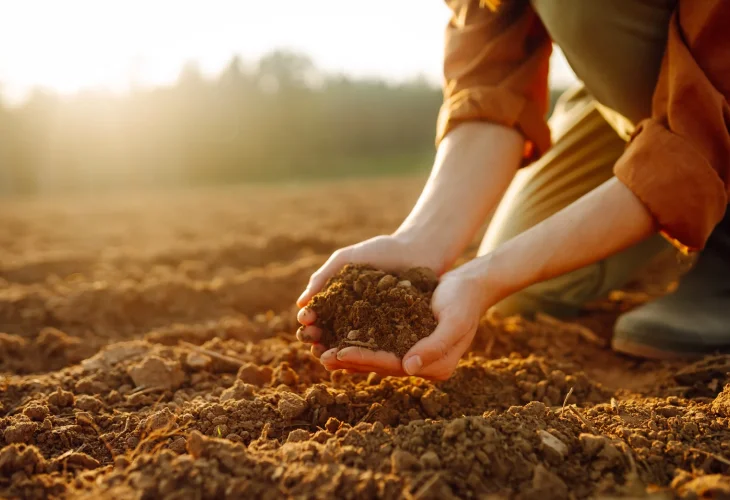 (Photo: shutterstock)
We often take for granted the ground beneath our feet, yet earth is far more than a solid surface. It is one of the essential foundations of life. In previous discussions, we explored the remarkable properties of water. Now, we turn our attention to the wonders of earth itself.
Earth as the Foundation of Life
Earth serves as a nurturing bed for countless plant species. It stores water and minerals in precise quantities, allowing plants to absorb nutrients gradually and efficiently. These plants then feed animals, which ultimately sustain human life. In addition, plants are responsible for producing oxygen, making life possible for all air breathing creatures.
For this system to work, earth must strike a delicate balance. It must be soft enough to retain water and minerals, yet firm enough to support trees, animals, and human built structures. This balance is achieved through a precise composition of particles, each contributing unique properties.
The Three Building Blocks of Soil
Soil is made up of three primary types of particles.
Sand consists of mineral particles ranging from sixty three micrometers to just under two millimeters in size. It provides structural strength and stability to the soil.
Silt is composed of intermediate sized particles, measuring between two and sixty three micrometers. It contributes to soil fertility and smooth texture.
Clay contains particles smaller than two micrometers. Though tiny, clay plays a crucial role in water and mineral retention.
While sand gives soil its strength, clay gives it life sustaining power.
How Clay Holds Water and Minerals
When rain falls, water initially seeps through the earth. Without clay, it quickly drains to deeper layers beyond the reach of plant roots. Soil lacking clay dries out within a week, causing plants to wither.
Clay acts like a network of tiny magnets. Its atomic structure resembles the pages of a book, with alternating layers of oxygen and silicon atoms. This structure allows clay to attract and hold water molecules and mineral ions.
Microscopic droplets of water cling to clay particles. This water, known as capillary water, remains near the surface where plant roots can absorb it gradually. Thanks to clay, plants continue to thrive long after the rainy season ends.
Clay also holds essential minerals in place, preventing them from being washed away by rain. However, soil composed entirely of clay is inefficient. Its fine particles are easily carried away by water currents. The ideal soil contains a blend of fine clay and coarser grains that anchor the clay in place. This balance exists naturally in earth.
Why Water Is Essential for Soil
Remarkably, despite clay being vital for soil formation, without water there would be no soil at all. Planets without water lack the textured earth found on our planet.
The moon, for example, is covered in regolith, a dusty layer formed by repeated asteroid impacts. Regolith lacks the structure and chemistry of earth soil. Recent research suggests that attempts to grow plants in it are unlikely to succeed.
It is the unique combination of mechanical and chemical erosion involving water that creates the perfect blend of particles we call soil.
The Problem of Erosion and Mineral Loss
Water shapes the outer layer of the earth, but it also creates a challenge. Each year, millions of tons of rock erode from landmasses and migrate to the ocean floor. Over time, erosion alone should flatten the continents.
In addition, millions of tons of essential elements such as potassium, carbon, nitrogen, and sulfur sink into the ocean depths through deceased marine organisms. These minerals become inaccessible to land based life.
If this process continued unchecked, both land and sea would gradually lose the resources required to sustain life.
Earth’s Ingenious Recycling System
A sophisticated solution was needed to address these interconnected problems. Continents must be preserved and rebuilt. Minerals must be replenished on land. Balance must be maintained in the oceans.
The solution is rock recycling.
Over recent decades, scientists have discovered that the lithosphere, the earth’s outer crust of rock and stone, is not static. It is a dynamic system of renewal known as plate tectonics.
Geologist Marcia Bjornerud describes it beautifully. The earth’s surface and what lies beneath it are like the skin and organs of the human body, constantly renewing themselves. The structure remains, even as individual components change. Nothing is permanent, yet everything endures.
How the Earth Renews Itself
This complex system moves massive rock plates across the planet. Unlike water, rocks cannot evaporate and are difficult to melt. When they do melt, it requires extreme heat that would be incompatible with life if it occurred at the surface.
The solution is both elegant and precise.
The earth’s outer crust is divided into solid yet mobile plates that float atop the mantle, much like icebergs on water. Beneath them lies magma, molten rock that drives movement through convection currents.
These currents are safely contained deep within the earth, far from the surface where life exists. There, intense heat causes rocks to melt and circulate. Over time, molten material resurfaces through volcanic activity, returning essential minerals to the land.
Through this process, continents are renewed, oceans remain balanced, and life sustaining materials are continually recycled.
A System Designed for Life
Earth is not merely a passive platform for life. It is an active, finely tuned system of support and preservation. From soil formation to continental renewal, every process reflects extraordinary wisdom and precision.
Our planet is, in every sense, a masterpiece of life support.

